深圳溯源
无法加载取货服务可用情况
衣服尺寸:
胸围/腰围/臀围:// 厘米
衣长: 厘米
细节描述:
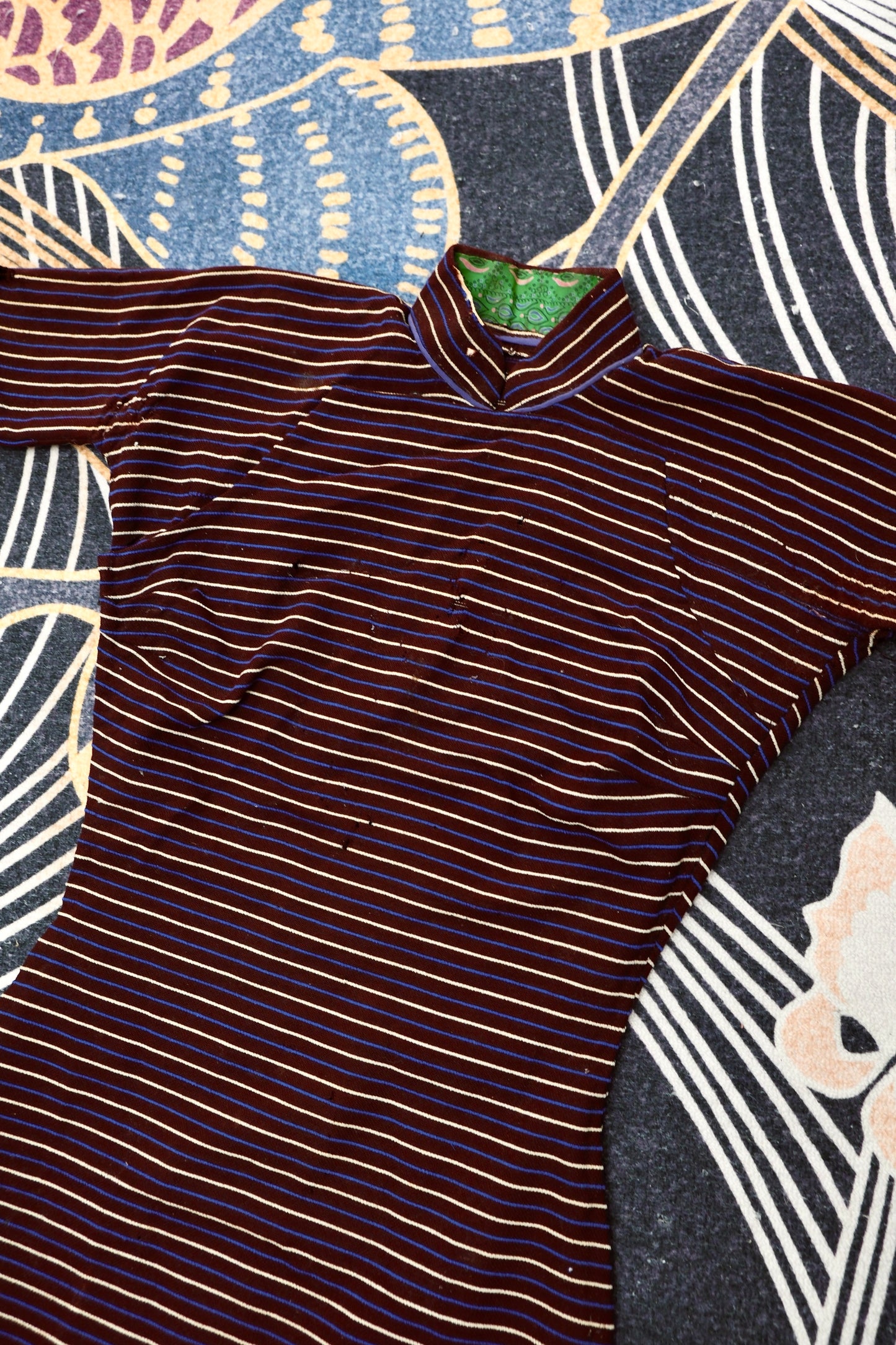
这件深褐色底、饰以蓝白细条纹的羊毛双襟旗袍,是这位加拿大华侨女性衣橱中“日常实用美学”的典范。它摒弃了浮夸的装饰,以最朴素的条纹和最温暖的面料,诠释了民国四十年代海外华人女性在异乡生活的务实与优雅。
条纹为骨,实用为本
旗袍的面料为厚实的羊毛,质地紧密,保暖性极佳,是冬日或春秋季节的理想选择。衣身通体以深褐色为底,间以细密的蓝色与米白色横条纹,形成一种低调而富有节奏感的视觉效果。
- 条纹设计:这种细条纹在民国时期被称为“文明条”,它源自西方的纺织工艺,象征着现代与进步。条纹的排列并非完全均匀,而是通过色彩的微妙变化,营造出一种“流动感”,使整件旗袍在视觉上显得更加修长。
- 双襟结构:旗袍采用经典的右衽双襟设计,襟线从领口斜向延伸至腋下,再以盘扣固定。这种结构不仅方便穿脱,更在视觉上拉长了身形,使穿着者显得更加挺拔。
无垫肩,回归自然曲线
与之前那件夸张的大垫肩旗袍不同,这件旗袍完全摒弃了垫肩,回归了旗袍最本真的曲线美学。
- 自然肩线:无垫肩的设计,使肩线自然下垂,贴合身体,展现出女性柔美的肩颈线条。这种设计在四十年代后期开始流行,它标志着女性审美从“力量感”向“柔美曲线”的回归。
- 修身剪裁:旗袍的腰身收得恰到好处,紧贴身体曲线,勾勒出女性的S型身姿。下摆的开衩高度适中,既方便行走,又若隐若现地露出腿部线条,充满了东方的含蓄与性感。
海外华人的“静奢”哲学
这件旗袍,是那位加拿大华侨女性的“静奢”宣言。在异国他乡,她不需要用夸张的纹样或繁复的工艺来证明自己的身份,而是通过一件极简却极致的旗袍,展现自己对东方美学的深刻理解。
它是一件艺术品,更是一段历史。它见证了那个时代的开放与包容,也见证了海外华人对文化的坚守与创新。
Measurements / Size Guide:
Bust / Waist / Hips: / / cm
Total Length: cm
Detailed Description:
This dark brown wool double-front Qipao, adorned with fine blue and white stripes, is a paragon of "everyday practical aesthetics" in this Canadian overseas Chinese woman's wardrobe. It abandons flamboyant decorations, using the most modest stripes and the warmest fabric to interpret the pragmatism and elegance of overseas Chinese women living in a foreign land during the 1940s.
Stripes as the Bone, Practicality as the Essence The fabric is thick wool with a tight texture and excellent warmth retention, making it an ideal choice for winter, spring, or autumn. The body features a dark brown base interspersed with dense horizontal stripes of blue and off-white, creating a low-key yet rhythmic visual effect.
Stripe Design: These fine stripes were known as "Civilization Stripes" (Wenming Tiao) during the Republic of China era. Originating from Western textile processes, they symbolized modernity and progress. The stripes are not perfectly uniform; instead, through subtle color variations, they create a "sense of fluidity" that visually elongates the Qipao.
Double-Front Structure: The Qipao adopts the classic right-side double-front design, with the lapel line extending diagonally from the collar to the underarm, secured by frog buttons. This structure is not only convenient for dressing but also visually stretches the silhouette, making the wearer appear more upright and slender.
No Shoulder Pads: A Return to Natural Curves Unlike the previous Qipao with exaggerated large shoulder pads, this piece completely abandons them, returning to the most authentic curve aesthetics of the Qipao.
Natural Shoulder Line: The design without shoulder pads allows the shoulder line to fall naturally and cling to the body, showcasing the soft neck and shoulder lines of a woman. This design began to gain popularity in the late 1940s, marking a return of female aesthetics from "power" to "feminine curves."
Slim-Fit Tailoring: The waist is cinched perfectly to follow the body's curves, outlining a woman's S-shaped silhouette. The height of the side slits is moderate, facilitating movement while subtly revealing the leg lines, full of Oriental reserve and sensuality.
The "Quiet Luxury" Philosophy of Overseas Chinese This Qipao is a "quiet luxury" manifesto for that overseas Chinese woman in Canada. In a foreign land, she did not need exaggerated patterns or complex crafts to prove her identity; instead, through a minimalist yet ultimate Qipao, she showcased her profound understanding of Oriental aesthetics.
It is a work of art and a piece of history. It witnessed the openness and inclusivity of that era, as well as the perseverance and innovation of the Chinese diaspora.