深圳溯源
无法加载取货服务可用情况
衣服尺寸:
胸围/腰围/臀围:94/80/100 厘米
衣长:104 厘米
细节描述:
一、格纹经纬间的东方美学
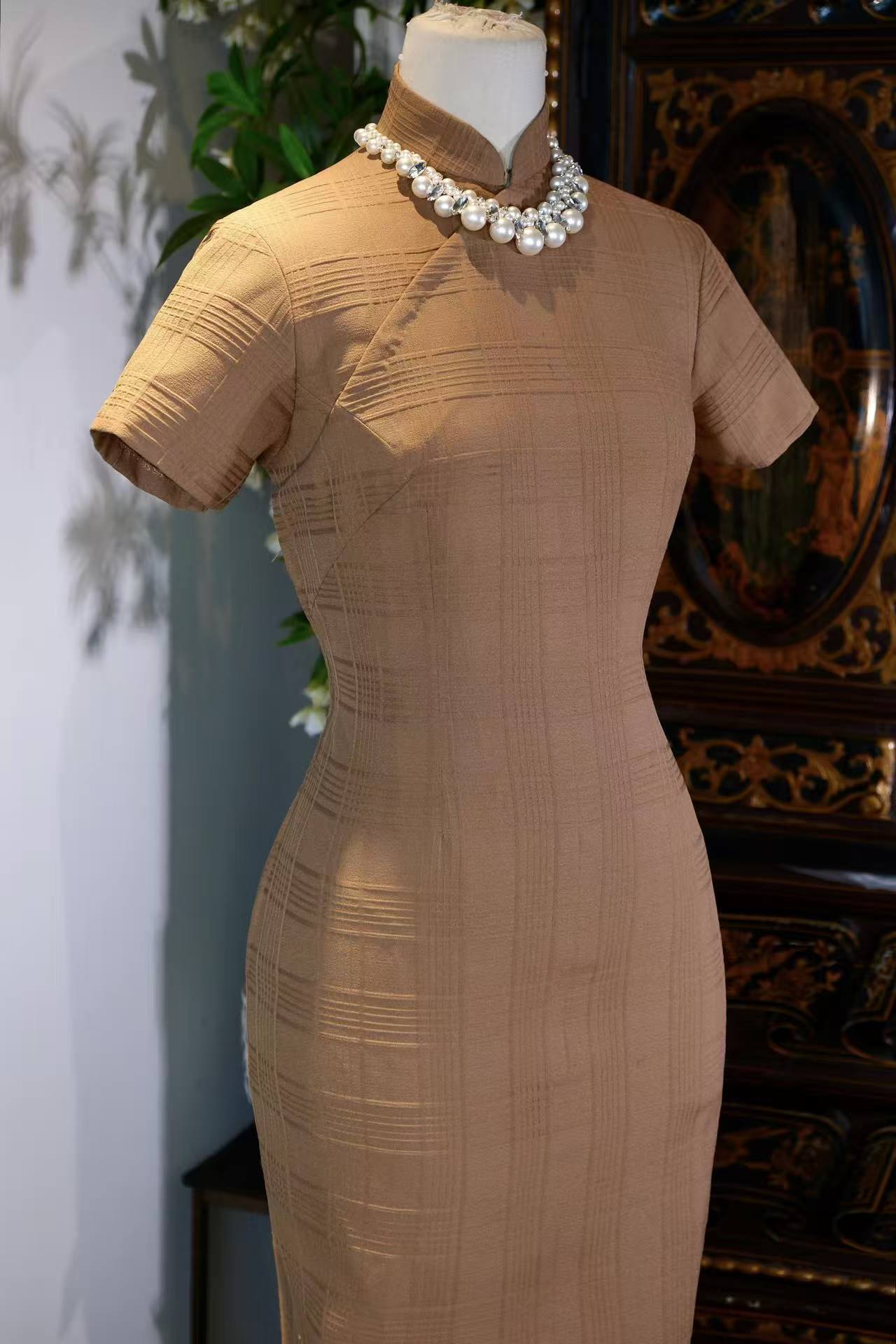
这件五十年代香港产的古董旗袍,以西装面料为骨,织就东方神韵。面料采用经典的格纹图案,经纬交错间形成规整的几何秩序,细密的线条在驼色底布上勾勒出深浅相间的方格,似传统窗棂的剪影,又如老香港街巷的棋盘格局。格纹并非呆板的重复,而是通过线条粗细变化与色彩渐变,在严谨中透出灵动——深色线条如墨线勾勒,浅色区域似留白意境,恰合中国艺术“计白当黑”的美学理念。这种将西式面料解构重组的巧思,让格纹超越了实用功能,成为连接东西方文化的视觉符号。
二、时光沉淀的匠心故事
上世纪五十年代的香港,正值东西文化碰撞的黄金时代。彼时的旗袍制作,既承袭苏杭裁缝的精湛技艺,又吸纳西方立体剪裁的精髓。这件旗袍的格纹西装面料,原为男士正装所用,却被匠人以“移花接木”之巧,化作女性曲线上的流动诗篇。每一道格纹的对接都需精准计算,确保肩线、腰省、开衩处的图案连贯自然,仿佛格纹本就该如此贴合女性身体。
在那个没有电脑排版与激光裁剪的年代,裁缝需凭借经验与目测完成对格,稍有不慎便会破坏整体韵律。这种“以布为纸、以针为笔”的创作,让每一件古董旗袍都成为孤品。如今抚过面料,仍能感受到当年匠人指尖的温度,以及时光在经纬间留下的温润包浆。
三、艺术风格与稀缺性的双重印记
从艺术风格看,这件旗袍是“海派旗袍”向“港式旗袍”转型的典型代表。相较于上海旗袍的柔美婉约,港式旗袍更强调利落与挺括,格纹西装面料的选择正是这一风格的具象化——它摒弃了传统丝绸的柔媚,以硬朗的线条凸显现代女性的独立气质,却又通过修身剪裁与细节保留东方韵味,形成“刚柔并济”的独特美学。
其稀缺性更在于时代与工艺的双重绝版。五十年代香港旗袍产业虽盛,但采用西装面料制作旗袍的案例并不多见,多为定制或特殊场合所用。加之历经七十余载岁月,保存完好的古董旗袍已是凤毛麟角,而格纹图案完整、剪裁精良者更是难得。它不仅是服饰,更是研究五十年代香港社会文化、时尚变迁的实物史料,其价值早已超越衣物本身,成为凝固的时光标本。
四、结语
当格纹遇见旗袍,当西装面料邂逅东方剪裁,这件古董衣便成了时光的信使。它诉说着五十年代香港的繁华与包容,记录着匠人的心血与智慧,更以独一无二的艺术风格与稀缺性,成为衣橱里永不褪色的传奇。穿上它,仿佛与旧时光对话,让历史在举手投足间悄然绽放。
Measurements / Size Guide:
Bust / Waist / Hips: 94/80/100 cm
Total Length: 104 cm
Detailed Description:
This antique cheongsam (qipao), crafted in 1950s Hong Kong, utilizes suit fabric as its skeleton to weave an Eastern charm. The fabric features a classic checked pattern, creating a structured geometric order where interlacing lines etch out a rhythmic grid. Against the camel-colored base, these fine lines resemble the silhouettes of traditional window lattices or the chessboard-like layout of old Hong Kong alleys. The checks are not a dull repetition; instead, through variations in line thickness and subtle color gradients, they evoke a sense of agility within rigor. Darker lines act as ink outlines while lighter areas suggest the "white space" (Liu Bai) of Chinese art, aligning with the aesthetic philosophy of "using white to define black." This clever deconstruction of Western fabric allows the check pattern to transcend utility, becoming a visual symbol connecting East and West.
In the 1950s, Hong Kong stood at the golden intersection of Eastern and Western cultures. Cheongsam making at the time inherited the exquisite skills of Suzhou and Hangzhou tailors while absorbing the essence of Western 3D tailoring. The checked suit fabric of this garment, originally intended for men’s formal wear, was transformed by artisans into a fluid poem upon the female curve—a feat of "grafting one branch onto another." Every intersection of the grid required precise calculation to ensure that the patterns remained continuous and natural across the shoulder lines, waist darts, and side slits, as if the checks were destined to contour the female form.
In an era without computer-aided layout or laser cutting, tailors relied solely on experience and eyesight to complete the pattern matching (Dui Ge). A slight error would disrupt the overall rhythm. This creation, using "fabric as paper and needle as pen," makes every antique cheongsam a unique masterpiece. Running your fingers over the cloth today, you can still feel the warmth of the artisan’s touch and the gentle patina left by decades within the weave.
Artistically, this cheongsam is a quintessential representative of the transition from the "Shanghainese Style" to the "Hong Kong Style." Compared to the soft elegance of Shanghai qipaos, the Hong Kong style emphasizes crispness and structure. The choice of checked suit fabric is the embodiment of this shift—it discards the seductive softness of traditional silk in favor of sturdy lines that highlight the independent temperament of modern women. Yet, through its slim-fit cut and traditional details, it retains an Eastern soul, forming a unique aesthetic of "Strength tempered by Softness."
Its scarcity lies in the double extinction of its era and its craft. Although the cheongsam industry flourished in 1950s Hong Kong, the use of suit fabrics was uncommon, reserved mostly for bespoke orders or special occasions. Furthermore, after seventy years, well-preserved antique cheongsams have become rare; those with intact patterns and superior tailoring are even rarer. It is more than a garment; it is a physical artifact for researching 1950s Hong Kong social culture and fashion evolution—a solidified specimen of time.
When checks meet the cheongsam, and when suit fabric encounters Eastern tailoring, this antique garment becomes a messenger of time. It speaks of the prosperity and inclusivity of 1960s Hong Kong, records the wisdom of its artisans, and stands as an unfading legend in the wardrobe. To wear it is to engage in a dialogue with the past, letting history bloom quietly in every gesture.