五十年代香港古董旗袍:织锦上的东方诗学与跨文化回响
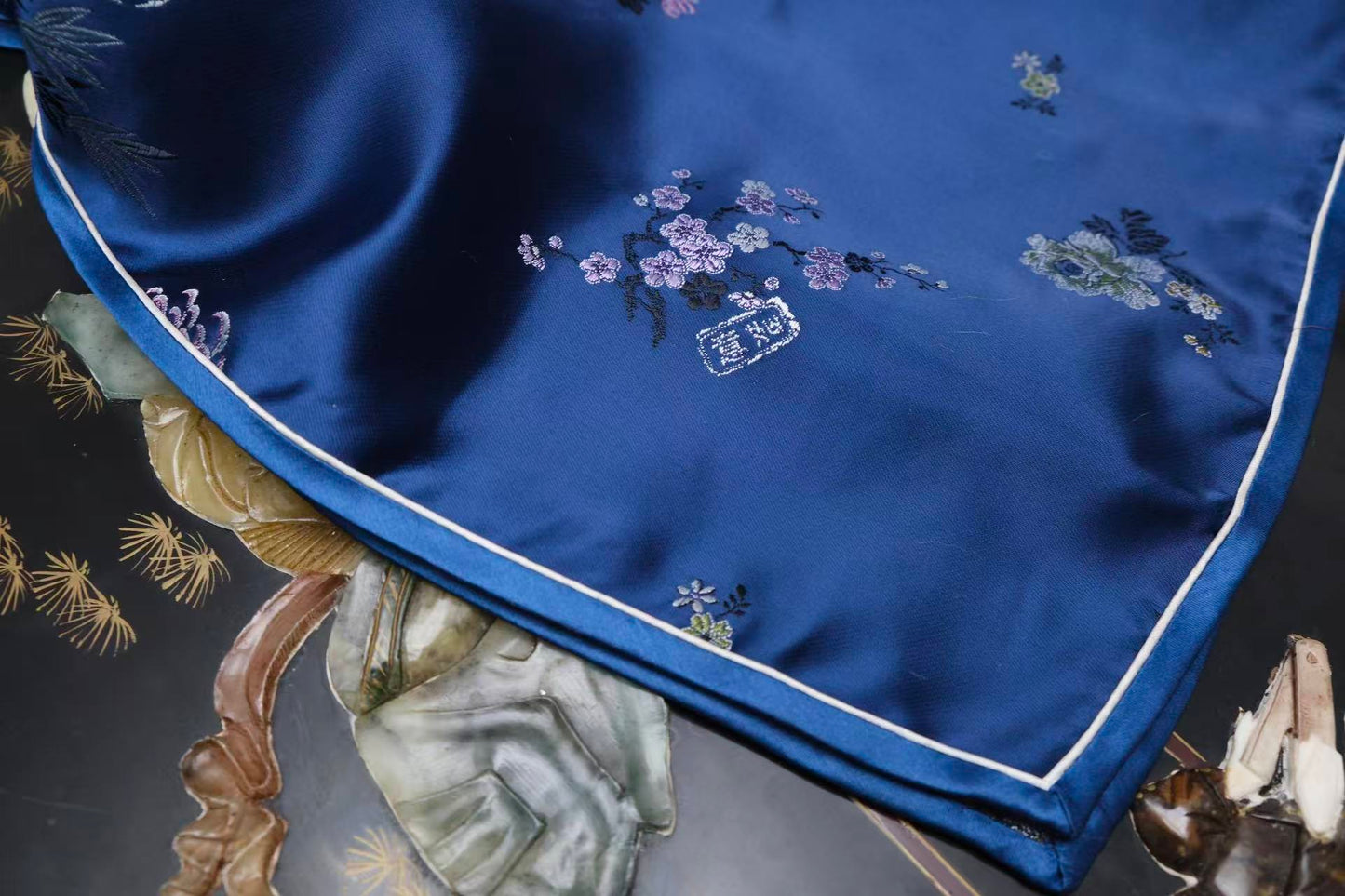
此件藏品为上世纪五十年代中期香港产提花织锦缎旗袍,恰逢海派旗袍技艺随沪上裁缝南下香港的黄金年代。彼时香港作为中西文化交汇点,既保留了民国旗袍的修身骨相——高领、琵琶袖、侧开衩的经典形制,又融入了岭南审美中对繁花意象的偏爱。
衣身散点分布的竹叶纹,以浅绿与银灰双色丝线绣出「疏影横斜」之态。竹在中国文脉中早非单纯植物,《诗经·卫风》「瞻彼淇澳,言采其竹」已将竹喻为「有匪君子,如金如锡」的德行象征。宋代苏轼更直言「宁可食无肉,不可居无竹」,将竹的空心、挺直、节节向上提炼为士人精神的物化载体。此袍以竹为纹,既暗合香港移民社会对中原文化的追摹,亦是战后华人身份认同的柔性表达。
领口与袖口点缀的粉梅,取「梅报春信」之意。《齐民要术》载「梅以冬花,故谓之信」,五十年代香港裁缝刻意保留梅枝「疏影横斜」的写实形态,而非民国初年的几何化折枝,暗含对宋代院体画「格物致知」精神的复归。
衣襟与下摆的白菊,花瓣层叠如丝,呼应《东京梦华录》「九月重阳,士女皆插菊花」的民俗。香港地处亚热带,菊纹既是对中原节令的遥祭,亦暗合岭南「菊」与「吉」的谐音祈福。
侧摆间的紫兰,叶片舒卷如篆书,取《琴操》「孔子自卫返鲁,见幽兰于谷」的「王者香」典故,隐喻乱世中坚守的文人风骨。
从《诗经》的「绿竹入幽径」,到宋徽宗《瑞鹤图》的「竹鹤同框」,再到五十年代香港的织锦纹样,这件旗袍以丝线为笔,勾连起中国审美「以物载道」的千年脉络。它的稀缺性不仅在于面料与工艺的不可复制,更在于它见证了特殊历史节点下,东方美学如何以「柔软」的姿态完成文化的自我更新。今日观之,这件蓝缎旗袍恰如钱钟书所言「文化是摆在中国人胸前的镜子」,既照见过去,亦映照未来。
1950s Hong Kong Antique Qipao: Oriental Poetics on Brocade and Cross-Cultural Echoes
The Golden Age of Southern Migration This collection piece is a mid-1950s Hong Kong jacquard brocade qipao, crafted during the "Golden Age" when the master tailoring skills of the Shanghai School (Haipai) migrated south to Hong Kong. As a crucible of Eastern and Western cultures, Hong Kong at the time preserved the elegant "bone structure" of the Republic-era qipao—classic high collars, pipa sleeves, and side slits—while embracing the Lingnan aesthetic’s penchant for lush, floral imagery.
Bamboo: The Silhouette of Integrity Scattered across the body are bamboo leaf motifs, embroidered with pale green and silver-gray silk threads to evoke "sparse and slanting shadows." In the Chinese cultural lineage, bamboo long ago transcended its botanical nature. The Classic of Poetry (Shijing) likened bamboo to a "refined gentleman, as tempered as gold and tin," a symbol of moral virtue. Echoing Su Shi’s famous remark that one "would rather eat without meat than live without bamboo," this garment uses the bamboo’s hollow core and upright nodes as a materialized vessel of the scholar’s spirit. Within the immigrant society of 1950s Hong Kong, these motifs represented a soft expression of cultural yearning and post-war Chinese identity.
A Botanical Allegory: Plum, Chrysanthemum, and Orchid
-
The Plum Blossom: Dotted along the collar and cuffs, pink blossoms herald the "message of spring." Following the realism of Song Dynasty Academy paintings, these branches retain a naturalistic grace, marking a return to the spirit of "investigating things to extend knowledge" (Gewu Zhizhi).
-
The Chrysanthemum: On the bodice and hem, layered white petals recall the folk traditions of the Double Ninth Festival described in The Eastern Capital: A Dream of Splendor. In the subtropical climate of Hong Kong, these motifs served as a ritualistic nod to ancestral seasons and a Lingnan homophonic blessing (where "Chrysanthemum" sounds like "Auspiciousness").
-
The Orchid: Curled like seal script along the side slits, purple orchids evoke the "King’s Fragrance," referencing the legend of Confucius discovering orchids in a secluded valley—a metaphor for the scholar’s integrity amidst chaotic times.
Conclusion: A Mirror of Culture From the "secluded bamboo paths" of ancient poetry to the jacquard patterns of 1950s Hong Kong, this qipao uses silk threads as a brush to connect a thousand-year lineage of Chinese aesthetics—the concept of "carrying Dao through objects" (Yi Wu Zai Dao). Its rarity lies not just in the irreplaceable craftsmanship, but in its witness to how Oriental beauty achieved cultural self-renewal through a "soft" resilience. Today, this blue brocade piece stands as a testament to Qian Zhongshu’s remark: "Culture is a mirror held before the Chinese people"—reflecting our past and illuminating our future.