深圳溯源
无法加载取货服务可用情况
岁月馨香:五十年代台湾印花缎旗袍
一缕线香燃尽的东方美学
当时间的针脚停驻在二十世纪五十年代的海峡彼岸,
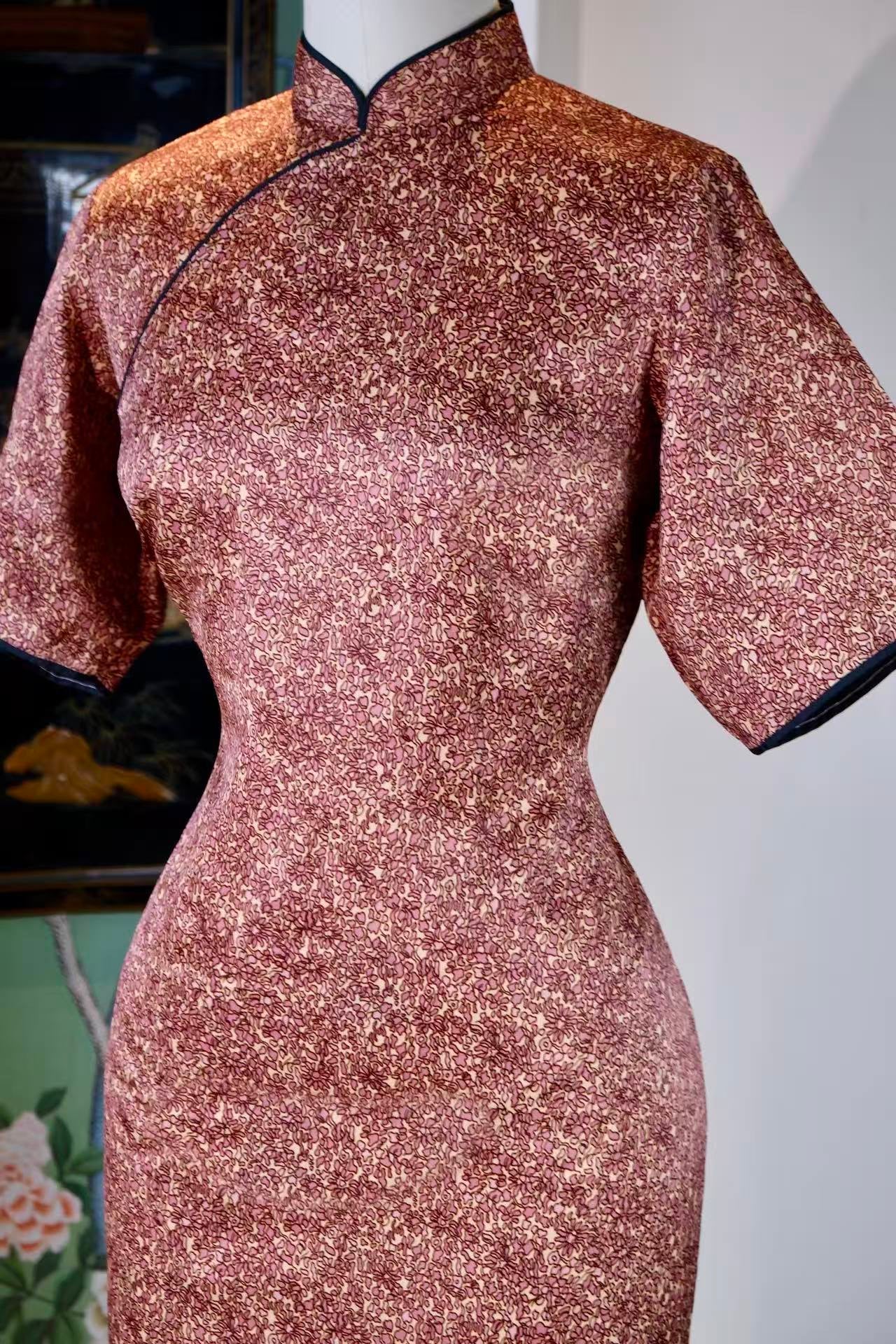
衣身遍布的碎花印花,是那个年代台湾纺织工艺的独特印记。
在工业化浪潮席卷前夜,台湾纺织业仍保留着对手工温度的执着。
今日再观此袍,
"A lingering scent of burning incense within Oriental aesthetics."
When the needlework of time halted on the other side of the Strait in the 1950s, this Taiwanese antique Qipao became a vessel for frozen history. The standing collar and diagonal closure (slanted bodice) outline the subtle curves of the Oriental female, mirroring the graceful imagery of "The beloved one among the reeds" from The Classic of Poetry. The "Incense-string" piping (Xianxiang Gun) winds along the edge of the bodice like the deep, haunting beauty of Li Qingzhao’s poem: "Dark fragrance fills the sleeves," condensing the warmth of decades into millimetric precision.
The sprawling floral prints across the body are a unique hallmark of Taiwanese textile craftsmanship from that era. Tiny petals scatter like stars, performing a visual poem of "wild flowers confusing the eye" upon the satin surface. Each flower was created using traditional woodblock printing techniques, requiring dozens of steps to achieve this intricate yet orderly rhythm. The pale pink base evokes the haziness of misty rain in Jiangnan, while the deep brown floral shadows resemble strokes of ancient ink—aligning with the "sparse shadows leaning slanting" composition of Song Dynasty bird-and-flower paintings. This skill of weaving natural vitality into the warp and weft is clear evidence of Taiwan’s mid-century textile industry inheriting Central Plain traditions while merging them with local aesthetics.
On the eve of the industrial tide, Taiwan’s textile industry maintained a persistence for the warmth of the human hand. The "Incense-string" piping technique required artisans to measure fabric with their fingertips, sewing bindings as uniform as strands of hair—a time-consuming craftsmanship that has now become a lost art. Even more remarkable is the preservation of this printed satin; after seventy years of erosion, the fabric retains a gentle luster, and the prints remain vivid, testifying to the meticulous selection of materials. This is not merely attire; it is a material witness to Taiwan’s economic takeoff during the Cold War era. As the textile industry served as an export pillar, it propelled Oriental aesthetics onto the world stage. The exquisite pieces remaining today are like amber in the river of history, sealing within them the industrial memory and cultural consciousness of an era.
To behold this robe today is to hear the faint footsteps of 1950s Taipei streets through the opening of the diagonal bodice; in the slight lift of the sleeve, one can glimpse the resilience and elegance of women during years of migration. Without the need for ostentation, it speaks through every stitch of the philosophy: "Clothes are better when new, but people are better when old." It waits for a kindred spirit who understands its beauty to allow this frozen Oriental aesthetic to walk through the present time once more.