深圳溯源
无法加载取货服务可用情况
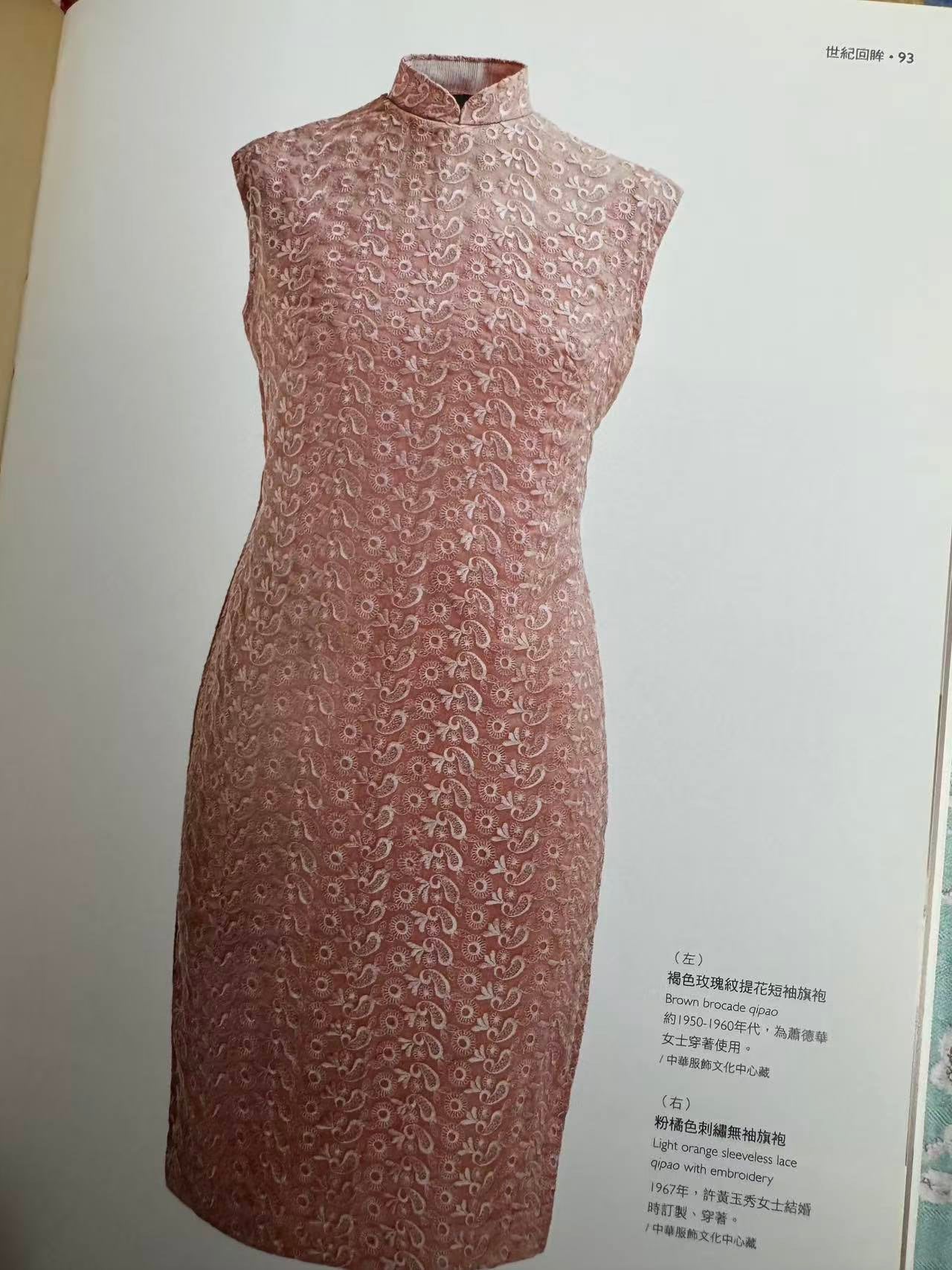
分享一件上世纪五十年代满机绣青瓷地嵌丝硬花扣古董港式旗袍。
衣身满布机绣花卉:花瓣舒展如《宣和画谱》“写生折枝,
机绣工艺的精妙,源于其历史沉淀与技术创新——
古董机绣旗袍的稀缺性,不仅在于其物质材料的珍贵,
当刺绣的细腻遇见青瓷绿的温婉,当花扣的精巧撞上花卉的烂漫,
Set on a base of celadon green silk (青瓷绿绸), the silver-white embroidered flowers bloom like spring morning dew within the interwoven threads. This celadon green hue is reminiscent of the "celadon from Yue, whose color surpasses frost and snow" from the Drinking Tea Song to Governor Cui Shi, yet it also holds the vitality of "pine flowers vast as the sea" described in the Compendium of Materia Medica. The short sleeves are slightly rolled, the stand collar is crisp, and the waistline is gracefully curved, seemingly stitching the elegance of 1950s Shanghai longtangs (alleys) and the stylish charm of Hong Kong's modernity into every inch and every stitch.
The body of the robe is entirely covered with machine-embroidered flowers: the petals are unfurled like the "life-like sketches of folded branches, all attaining natural vitality" found in the Xuanhe Huapu (宣和画谱); in the minute density of the stitches, one can see the pinnacle of 1950s machine embroidery craftsmanship. Silver-white embroidery threads outline the stamens, like the "thousand strands of golden thread floating" in the Daolianzi (捣练子), creating ripples on the celadon green base. Intertwined among the flowers and leaves is the auspicious hidden meaning of "joined branches, united hearts" (连枝同心), which resonates with the sentiment of "though united in heart, separated by distance, sorrow lasts until old age" from the Nineteen Old Poems.
The brilliance of the machine embroidery technique stems from its historical accumulation and technological innovation: in the early 19th century, the French cotton manufacturer J. Heilmann invented the embroidery sewing machine, pioneering the mechanization of embroidery. By the 1930s, the technique was introduced to China, with Shanghai and Qingdao being among the first cities to adopt it, replacing manual work with sewing machines. This exponentially increased efficiency while retaining the fine needlework. The 1950s marked the maturity of Chinese machine embroidery. The technique used on this cheongsam had already broken through early single-stitch limitations, integrating traditional skills like "stuffed embroidery" (包梗绣). The threads flew like shuttles, reaching over a hundred stitches per minute, yet could still precisely outline the floral forms—a perfect fusion of machinery and handicraft.
The scarcity of vintage machine-embroidered cheongsams lies not only in the preciousness of their material but also in the fact that they record the golden age of China's textile industry in the 1950s—when Western technology flowed into the East, artisans ingeniously transformed the coldness of machinery into the warmth of art, engraving a unique imprint of tradition interwoven with modernity onto the small space of the cheongsam. Two handmade floral buttons (硬花扣), shaped like crabapples (海棠), are set on the diagonal closure, echoing the flowers on the body. These buttons required hand-wrapping iron wire, with each one taking half an hour to complete, truly a "sculpture on the fingertip."
When the delicacy of the embroidery meets the gentleness of the celadon green, and the exquisite floral buttons collide with the luxuriance of the flowers, this cheongsam transcends mere clothing. It becomes a living fossil of 1950s Oriental aesthetics—possessing both the elegance of Song brocade and the vibrancy of the modern era, forever radiating a unique spring brilliance in the torrent of time.