深圳溯源
无法加载取货服务可用情况
在古董衣的收藏谱系中,上世纪五十年代的香港旗袍占据着一种独特的“双城”地位——它既延续了上海海派旗袍的余韵,又开启了现代剪裁的先声。眼前这件港产古董旗袍,以其极具欺骗性的“阴丹士林蓝”视觉效果,实则运用了更为繁复的印花工艺,向我们诉说着那个流金岁月的审美密码。
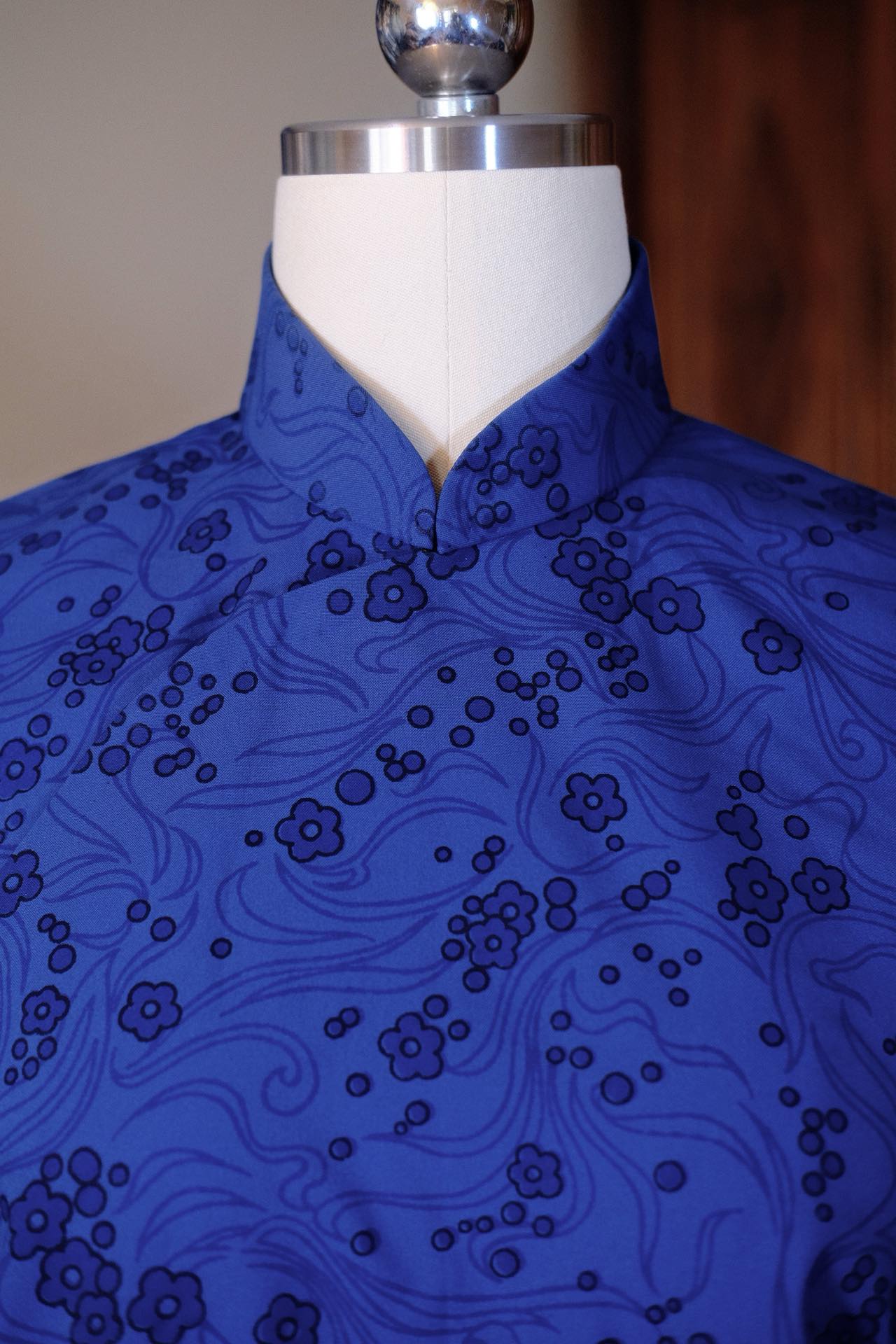
图案:蓝调里的“错视”美学
这件旗袍最引人入胜之处,在于其面料纹样的“二元性”。初看之下,它呈现出阴丹士林布特有的均匀、深沉的靛蓝质感,这是一种被称为“国泰蓝”或“港蓝”的经典色调,象征着五十年代都市女性的独立与冷静。
然而,细察其面料肌理,我们会发现这并非单色织造,而是精妙的满地印花。
- 纹样解构:面料上的图案采用了抽象化的卷草纹与缠枝花卉的变体。设计师巧妙地利用深浅不一的蓝色系进行套印,深蓝色的线条如行云流水般在略浅的宝蓝底色上游走,形成了一种视觉上的“错视”效果。
- 艺术风格:这种图案设计带有明显的装饰艺术运动遗风,同时也隐约可见西方现代主义绘画(如马蒂斯的剪纸或米罗的抽象线条)的影响。花朵不再是具象的牡丹或梅花,而是被简化为圆润的几何符号,散落在如波浪般的藤蔓之间。这种“似花非花,似水非水”的朦胧感,打破了传统旗袍纹样的写实桎梏,展现出一种流动的韵律美。
故事:维多利亚港畔的摩登回响
这件旗袍诞生于五十年代的香港,那是一个人口流动剧烈、文化激荡重组的特殊时期。
- 面料的隐喻:为何要模仿阴丹士林蓝?在当时的语境下,阴丹士林布代表着“耐洗、耐晒、不褪色”,是进步与科学的象征。而这件印花旗袍,通过印染工艺复刻了这种色泽,却在质感上更显轻盈与华丽。它暗示着穿着者既向往现代女性的干练,又无法割舍对精致生活的追求。
- 港式剪裁的崛起:与四十年代上海旗袍的宽大不同,这件旗袍的剪裁更加贴合人体曲线,肩线圆润,腰身收紧,袖口呈现出典型的五十年代“荷叶袖”或“微喇袖”特征。这种剪裁不仅修饰了女性的身形,更赋予了肢体活动的自由度,是当时香港“新女性”在职场与社交场中自信姿态的物化。
稀缺性与艺术价值:不可复制的孤品
从服装史的学术角度来看,这件旗袍具有极高的研究价值与收藏价值:
- 工艺的绝响:五十年代的印花工艺受限于当时的印刷技术,色彩的过渡往往带有独特的颗粒感与手工调色的温度,这是现代数码印花无法模拟的“模拟信号”之美。
- 色彩的稀缺:这种特定的蓝色调,在历经半个多世纪的光照与氧化后,依然保持如此鲜亮而不失沉稳,实属罕见。它没有褪成苍白,反而沉淀出一种如青金石般的温润光泽。
- 时代的切片:它不仅是一件衣服,更是一个时代的切片。它见证了海派裁缝南下后的技术革新,见证了东西方审美在香港这个熔炉中的第一次剧烈碰撞与融合。
结语
“青,取之于蓝,而青于蓝。”这件旗袍以其独特的印花工艺,致敬了经典的阴丹士林蓝,却又在艺术表现力上超越了它。它如同一首写在布料上的十四行诗,在时光的冲刷下,愈发显现出那种“绚烂之极归于平淡”的东方美学意境。
Within the genealogy of antique clothing collection, 1950s Hong Kong qipaos occupy a unique "dual-city" status—preserving the lingering charm of Shanghai’s Haipai style while pioneering the dawn of modern tailoring. This Hong Kong-made antique qipao, with its deceptive "Indanthrene Blue" visual effect, actually employs a more complex printing process, whispering the aesthetic codes of that golden era to us.
The most captivating aspect of this qipao lies in the "duality" of its fabric pattern. At first glance, it presents the uniform, deep indigo texture characteristic of Indanthrene cloth—a classic tone known as "Cathay Blue" or "Hong Kong Blue," symbolizing the independence and composure of 1950s urban women. However, a close inspection of the fabric texture reveals that this is not a monochrome weave, but a sophisticated all-over print (Man-di).
Motif Deconstruction: The patterns on the fabric utilize abstracted variations of scrolling grass (Juan-cao) and intertwining floral motifs. The designer skillfully used overprinting with varying shades of blue; deep blue lines wander like flowing clouds over a slightly lighter royal blue base, creating a visual "optical illusion."
Artistic Style: This pattern design carries clear vestiges of the Art Deco movement, while also showing the subtle influence of Western modernist painting (such as Matisse’s paper cut-outs or Miró’s abstract lines). Flowers are no longer figurative peonies or plum blossoms but are simplified into rounded geometric symbols scattered among wave-like vines. This hazy "is it a flower, is it water?" quality breaks the literal shackles of traditional qipao patterns, showcasing a fluid, rhythmic beauty.
This qipao was born in 1950s Hong Kong, a unique period of intense population mobility and cultural restructuring.
Fabric Metaphor: Why mimic Indanthrene Blue? In the context of that era, Indanthrene cloth represented "wash-fast, sun-fast, and fade-resistant" qualities—a symbol of progress and science. This printed qipao replicates that hue through dyeing and printing techniques but achieves a texture that is lighter and more luxurious. It suggests that the wearer yearns for the efficiency of the modern woman while refusing to sacrifice a refined lifestyle.
The Rise of Hong Kong Tailoring: Unlike the broader silhouettes of 1940s Shanghai qipaos, the tailoring of this piece fits the body’s curves more closely, with rounded shoulder lines and a cinched waist. The sleeves exhibit the typical 1950s "lotus leaf" or "slight flare" characteristics. This cut not only flatters the female figure but also grants freedom of movement—the physical manifestation of the confident posture of Hong Kong's "New Woman" in both the workplace and social spheres.
From an academic perspective of costume history, this qipao holds immense research and collection value:
A Lost Craft: The printing processes of the 1950s were limited by the technology of the time; color transitions often possess a unique graininess and the warmth of manual color mixing. This is an "analog signal" beauty that modern digital printing cannot simulate.
Rarity of Color: It is rare for this specific blue tone to remain so vibrant yet steady after more than half a century of light exposure and oxidation. Instead of fading into paleness, it has settled into a warm, lapis lazuli-like luster.
A Slice of an Era: It is more than a garment; it is a slice of an era. It witnessed the technical innovations of Shanghainese tailors after their migration south and the first intense collision and fusion of Eastern and Western aesthetics in the melting pot of Hong Kong.
"Blue comes from the indigo plant, yet it is bluer than indigo." With its unique printing process, this qipao pays homage to the classic Indanthrene Blue while surpassing it in artistic expression. It is like a sonnet written on fabric; under the wash of time, it increasingly reveals that Oriental aesthetic realm of "returning to simplicity after reaching the pinnacle of splendor."