深圳溯源
无法加载取货服务可用情况
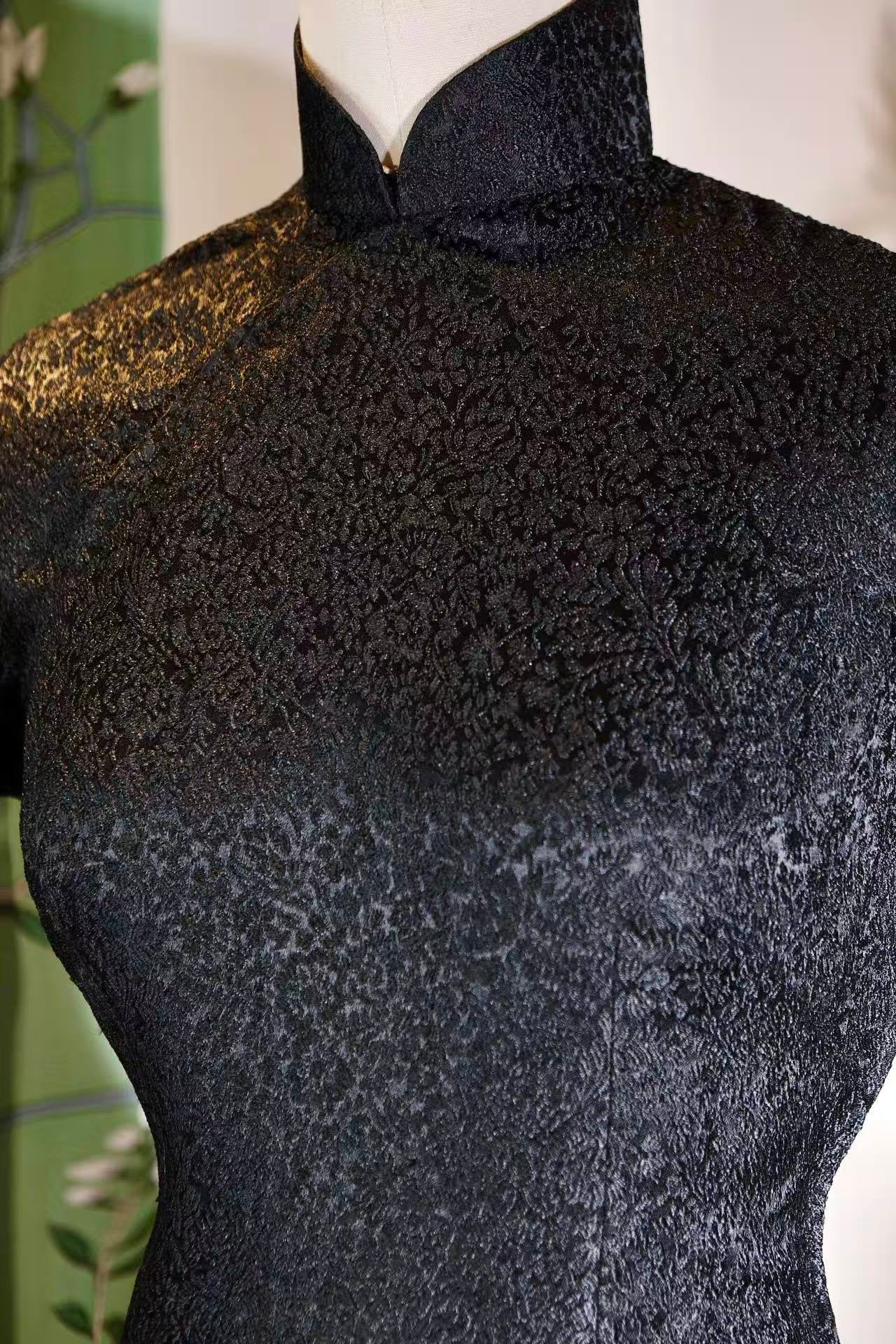
这是一件非常精美的五十年代香港产古董旗袍。
一、 衣上风华:暗香浮动的提花纹样
这件旗袍最迷人的地方,在于其面料本身。
- 图案描述:在深邃的黑色底布之上,布满了细密而立体的暗纹。
- 工艺美学:这种不张扬的装饰手法,
二、 衣中故事:浮世绘里的东方美人
这件旗袍诞生于20世纪50年代的香港,那是一个风云际会、
当时,上海的裁缝大师们带着“海派旗袍”的精湛技艺南下香港,
它不仅是一件衣服,更是一个时代的缩影。在那个没有PS的年代,
三、 引经据典:衣香鬓影里的文学意象
若要为这件旗袍寻找文学注脚,张爱玲的《更衣记》
“对于不会说话的人,衣服是一种语言,随身带着的是袖珍戏剧。”
这件黑色旗袍,便是那一出“袖珍戏剧”的最佳剧本。黑色,
它让人联想到《倾城之恋》中的白流苏,或是《第一炉香》
四、 艺术风格与稀缺性
艺术风格:
这件旗袍完美融合了中国传统织造工艺与西方现代立体剪裁。
稀缺性:
五十年代的香港古董旗袍,存世量极少。
结语:
穿上它,你便不仅仅是穿了一件衣服,而是穿越了时空,
This is an exquisite antique qipao produced in 1960s Hong Kong. From its unique fabric texture and form-fitting silhouette to the classic mandarin collar, it perfectly interprets the elegance and reserve of Oriental women from that era.
The most captivating aspect of this qipao lies in the fabric itself. Rather than employing traditional heavy embroidery, it utilizes black velvet or heavy-weight jacquard satin.
Pattern Description: Upon the profound black base lies a dense and three-dimensional subtle pattern. This motif presents an abstract fusion of scrolling grass and intertwining floral vines. Under the light, the raised silk threads emit a low-key, luxurious metallic luster, resembling the swaying shadows of flowers in the dark night under moonlight. This "hidden floral" technique (also known as Zhijin or Jacquard) requires superb weaving skills to integrate the patterns into the fabric, creating a delicate and layered touch. It appears solemn and dignified from afar, but reveals a shimmering brilliance upon closer inspection—the epitome of "quiet luxury."
Artistic Aesthetics: This understated decorative style is a hallmark of 1950s Hong Kong qipaos. It abandoned the complex borders and heavy embroidery of the early Republican era in favor of the fabric’s own texture, reflecting a new understanding of "sophistication" among urban women under the fusion of Eastern and Western cultures.
Born in 1950s Hong Kong, this qipao hails from a turbulent yet golden age. During this time, master tailors from Shanghai brought the refined skills of "Shanghai-style Qipao" south to Hong Kong, pushing the garment's tailoring to its zenith. This piece is highly representative: the high collar outlines a swan-like neckline, while the short sleeves (cap sleeves) preserve tradition while adapting to Hong Kong’s humid climate, adding a touch of modern efficiency.
It is more than a garment; it is a microcosm of an era. In an age without digital editing, the gorgeous qipaos worn by Maggie Cheung in the film In the Mood for Love were modeled after works from this very period. This black jacquard piece might have belonged to a socialite frequenting ballrooms or a pioneering businesswoman. It witnessed the initial transformation of Hong Kong from a small fishing village into the "Pearl of the Orient."
To find a literary footnote for this qipao, one need look no further than Eileen Chang’s Chronicle of Changing Clothes: "To those who cannot speak, clothes are a language; what one carries with them is a pocket drama."
This black qipao is the perfect script for such a "pocket drama." While black is often seen as a somber color in traditional Chinese culture, in qipao aesthetics, it is synonymous with mystery, sensuality, and eternity. Much like the "moon-white cicada-wing gauze qipao" in Chang’s writing exudes a cold elegance, this black jacquard piece radiates a "chilling beauty beneath flame-red lips." It evokes the image of Bai Liusu in Love in a Fallen City—not as direct or loud as red or green, but like a Song Dynasty poem, where "the words end but the meaning lingers."
Artistic Style: This qipao perfectly fuses traditional Chinese weaving with Western modern three-dimensional tailoring. Its lines flow like moving clouds, wrapping tightly around the body’s curves while remaining demure. The black jacquard fabric provides a "quiet tension," acting as a silent narrator of that era’s refinement.
Scarcity: 1950s Hong Kong antique qipaos are exceptionally rare. High-end bespoke pieces were privately commissioned with precious fabrics and complex craftsmanship. A full-patterned jacquard piece in such well-preserved condition is truly one in a million—a wearable work of art with immense collectible and historical value.
Conclusion: To wear it is not merely to put on a dress, but to travel through time and become the most moving silhouette in that "Oriental Ukiyo-e."