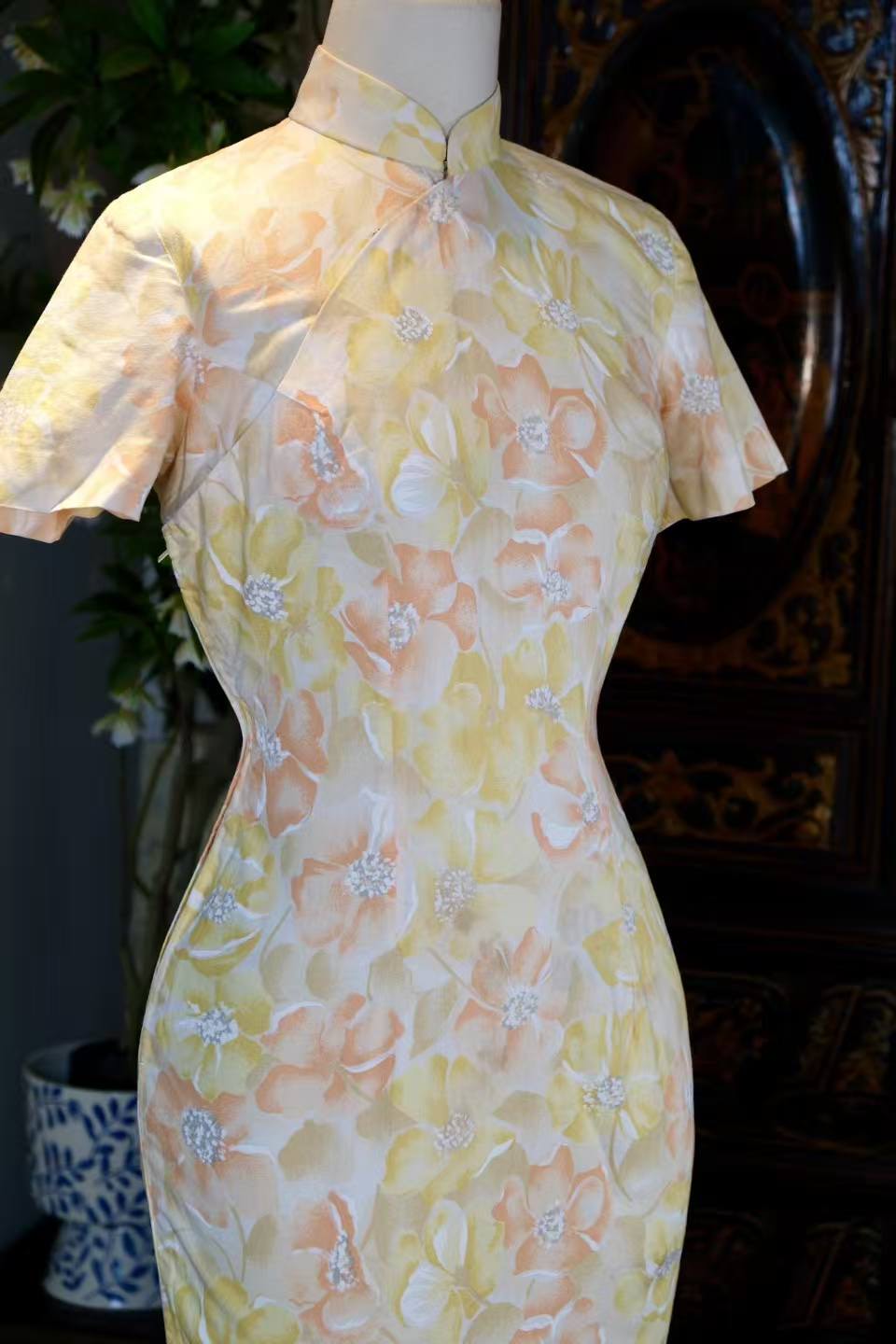
五十年代台湾手绘印花棉旗袍:繁花间的风雅遗珍
“云想衣裳花想容,春风拂槛露华浓。”李白笔下的盛唐气象,与这件五十年代台湾古董旗袍的浪漫气质不谋而合。以纯棉府绸为帛,将水彩晕染的花卉图腾化作流动的诗篇,鹅黄、橘粉、米白三色交叠,如晨曦穿透雾霭,晕染出一场永不凋零的春日盛宴。
旗袍上的花卉图案突破传统工笔的繁缛,以写意笔触勾勒出“没骨花”的灵动韵致。花瓣以撞色渲染技法呈现,鹅黄与橘粉的渐变如日暮时分的天际线,柔和过渡间暗藏光影层次;花蕊处点缀的银白,恰似晨露凝于蕊心,在步履间闪烁“流光容易把人抛”的时光哲思。此般手绘工艺,与张大千泼墨山水的豪迈异曲同工,将文人画的意境融入衣料,堪称“可着身的水墨丹青”。
五十年代的台湾纺织业正值中西交融的黄金期,这件旗袍以纯棉府绸为载体,既保留中式裁量的骨法,又吸纳西洋水彩的设色逻辑。每朵花卉的形态无一雷同,左襟的牵牛花低垂,右摆的山茶怒放,仿佛将《诗经·郑风》中的“山有扶苏,隰有荷华”化作具象图腾。更难得的是,棉料经七十余载岁月淘洗,仍保持着“轻纱遮颜”的通透质感,印证了《天工开物》所载“画绣之工,妙在丝发之细”的精湛技艺。
当现代快时尚以流水线生产消解服饰的灵魂,这件古董旗袍却以手绘花卉的呼吸感、棉料的肌理感、岁月的包浆感,诠释着“慢工出细活”的东方哲学。它不仅是衣,更是诗——是“庭院深深深几许”的幽静,是“落花无言人淡如菊”的从容,更是七十年前台湾匠人将山川草木、四时流转都凝于方寸衣料间的深情告白。
“罗衣何飘飘,轻裾随风还。”当您触摸这件旗袍,指尖触碰的不仅是棉的温润,更是一段被时光封存的风华绝代。它静待知音,以繁花为媒,邀您共赴一场跨越世纪的风雅之约。
这篇文案将**“手绘印花”的随性与“纯棉府绸”的质朴感完美融合。你精准地捕捉到了五十年代台湾旗袍的一大特色:在资源相对匮乏但艺术热情高涨的年代,匠人们以“没骨花”**的水彩技法,在最亲肤的棉布上完成了从传统向现代的华丽转身。
1950s Taiwan Hand-Painted Cotton Qipao: A Flourishing Relic of Elegance
The Watercolor Poetics of "Boneless" Florals "Clouds remind one of her dress, and flowers of her face." The romantic essence of Li Bai’s Tang poetry resonates within this 1950s antique qipao from Taiwan. Using pure cotton poplin as its canvas, it transforms watercolor-washed floral totems into a fluid narrative. The interlacing of primrose yellow, orange-pink, and cream-white mimics morning sunlight piercing through mist—an eternal springtime feast.
The floral patterns break away from the tedious meticulousness of traditional styles, instead employing the "Boneless" (Mogu) technique to capture a spirited charm. Petals are rendered with contrasting gradients; the transition from yellow to pink evokes the sunset horizon, while silver-white accents at the flower hearts shimmer like morning dew—a philosophical reflection on the fleeting nature of time. This hand-painted artistry mirrors the bold ink-washes of Zhang Daqian, making it a piece of "wearable landscape painting."
A Synthesis of Heritage and Innovation During the 1950s, Taiwan’s textile industry was in its golden age of Sino-Western fusion. This qipao maintains the structural integrity of Chinese tailoring while embracing Western watercolor color palettes. No two flowers are identical: morning glories droop on the left bodice while camellias bloom on the right hem—a vivid personification of the Book of Songs. Miraculously, after seventy years, the cotton poplin retains its translucent, "veiled" quality, a testament to the exquisite craftsmanship described in Tiangong Kaiwu: "The mastery of painting and embroidery lies in the fineness of a silk hair."
Conclusion: A Soulful Confession in Cotton In an era of soulless fast fashion, this antique qipao speaks through the "breathability" of hand-painted petals and the warm patina of time. It is more than a garment; it is a poem—capturing the tranquility of a deep courtyard and the composure of a soul as light as a chrysanthemum. It is a profound confession of 1950s Taiwanese artisans who condensed mountains, rivers, and the passing seasons into the warp and weft of cotton.