深圳溯源
无法加载取货服务可用情况
衣服尺寸:
胸围/腰围/臀围:78/64/84 厘米
衣长:108 厘米
细节描述:
凝固的时光
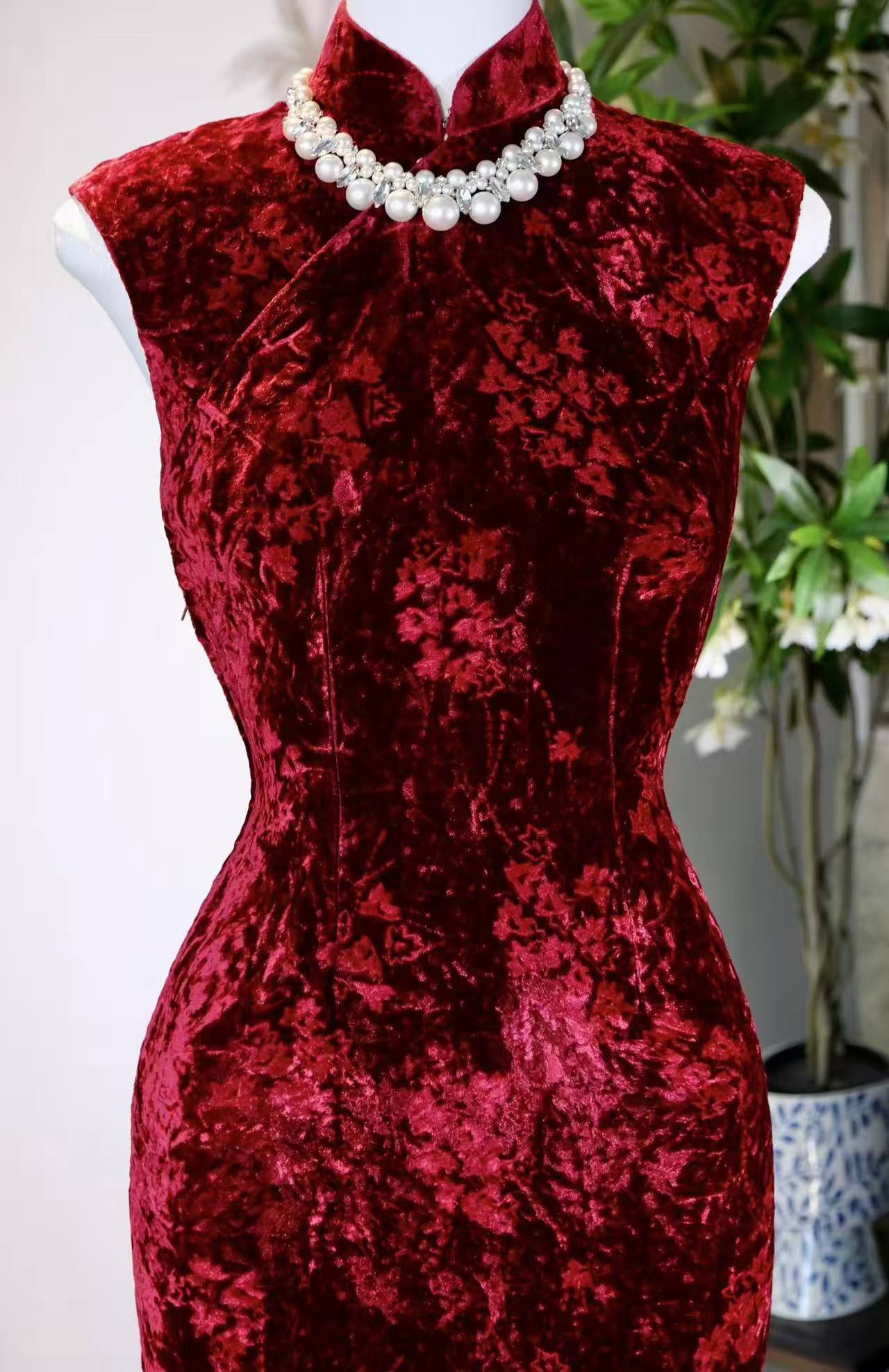
当指尖拂过这抹浓郁如红酒的丝绒,仿佛触碰到了一段被时光精心封存的往事。这不仅仅是一件旗袍,它是上世纪六十年代台湾的一封情书,是那个时代风骨与风华的物证。它静立于斯,不言不语,却道尽了“衣以载道”的东方美学。
图案与工艺:压花丝绒的“暗香疏影”
这件旗袍的灵魂,在于其独特的压花丝绒(Embossed Velvet)面料。
- 图案描述:与常见的印花或织锦不同,其上的花卉图案并非通过色彩描绘,而是通过物理压印工艺,在丝绒表面创造出凹凸有致的肌理。图案以缠枝花卉为主体,花叶舒展,枝蔓蜿蜒。在光线的流转下,丝绒的绒毛倒向不同,使得图案时而清晰如浮雕,时而隐没于深邃的底色之中,呈现出一种“暗香疏影”般的含蓄与灵动。这种工艺在六十年代极为考究,赋予了面料超越平面的立体感和奢华感。
- 色彩意蕴:这种深邃的酒红色,在传统色谱中近于“绛紫”或“赭红”,既有朱红的喜庆与贵气,又因丝绒的质感而沉淀出一份成熟、内敛的韵味。它不张扬,却足以在人群中彰显穿着者的不凡品味。
故事与风格:六十年代台湾的“黄金剪影”
这件旗袍的廓形,是解读其故事的关键。它完美复刻了六十年代风靡港台地区的经典样式——无袖、高领、修身、长及小腿。
- 时代剪影:这个时期的旗袍,受西方审美影响,剪裁愈发立体,强调女性的自然曲线,是张爱玲笔下“束身旗袍,流苏披肩,阴暗的花纹里透露着阴霾”的具象化,也是电影《花样年华》中张曼玉所穿着的那些令人魂牵梦绕的旗袍的“前辈”。它代表了那个年代都市女性独立、自信、兼具东方含蓄与西式摩登的复杂气质。
- 稀缺性与价值:台湾在六十年代是旗袍工艺的重要传承地与创新地。彼时,许多从大陆迁往台湾的裁缝师傅,将海派旗袍的精髓带到了宝岛,并结合当地工艺加以发展。这种压花丝绒面料在当时属于高档进口或定制面料,成本不菲。因此,一件保存完好、剪裁精良的台湾产六十年代丝绒旗袍,存世量已极为稀少。它不仅是服装,更是研究那个特殊历史时期社会风尚、纺织工艺和审美变迁的珍贵实物资料。
结语:衣香鬓影,永不过时
它曾见证过某个重要场合的衣香鬓影,也曾陪伴一位佳人在某个静谧午后品茗读书。如今,它超越了时间的界限,成为一件可以收藏、可以传承的艺术品。穿上它,你穿上的不仅是一件古董衣,更是一段流动的民国风情,一种永不褪色的优雅。
“锦衣旗袍诗,曼玉花样时。” 这件旗袍,便是那首诗中最隽永的一句。
Measurements / Size Guide:
Bust / Waist / Hips: 78/64/84 cm
Total Length: 108 cm
Detailed Description:
When your fingertips brush against this wine-red velvet, it feels as though you are touching a meticulously preserved memory. This is more than a qipao; it is a love letter from 1960s Taiwan, a physical testament to the elegance and spirit of that era. It stands silent, yet speaks volumes of the Eastern aesthetic principle: "Clothing carries the Way."
The soul of this garment lies in its unique Embossed Velvet fabric.
Visual Texture: Unlike common prints or brocades, the floral patterns are created through a physical embossing process, carving a three-dimensional texture into the velvet. Featuring winding sprigs and stretching petals, the pattern shifts with the light. As the nap of the velvet moves, the flowers fluctuate between bold relief and subtle immersion, capturing the "shadowy fragrance" (An Xiang Shu Ying) characteristic of classic Chinese art.
Color Sentiment: This deep, wine-red hue—akin to traditional "Crimson" or "Ochre"—possesses the nobility of cinnabar but is tempered by the velvet's depth. it is a mature, restrained shade that commands attention through sophistication rather than clamor.
The silhouette is the key to unlocking its narrative. It perfectly replicates the classic 1960s style that swept through Hong Kong and Taiwan: sleeveless, high-collared, slim-fit, and calf-length.
A Modern Epoch: Influenced by Western tailoring, qipaos of this period became more structural, emphasizing the natural female curve. It is the precursor to the hauntingly beautiful gowns seen in In the Mood for Love—representing an era where urban women were independent, confident, and balanced Oriental reserve with Western chic.
Rarity & Value: In the 1960s, Taiwan was a vital sanctuary for qipao craftsmanship. Master tailors who moved from Shanghai brought the essence of "Haipai" (Shanghai Style) tailoring to the island. Embossed velvet was a luxury material at the time, often imported or custom-ordered. Finding a well-preserved piece today is exceptionally rare; it serves as a precious artifact for studying social trends and textile evolution.
This garment once bore witness to the "shimmering shadows and fragrant silks" of a grand occasion. Today, it transcends time to become a collectible piece of art. To wear it is to don a piece of history—a flowing poem of vintage grace that never fades.