深圳溯源
无法加载取货服务可用情况
丝绒手绘闪片旗袍:六十年代香港时装的鎏金记忆
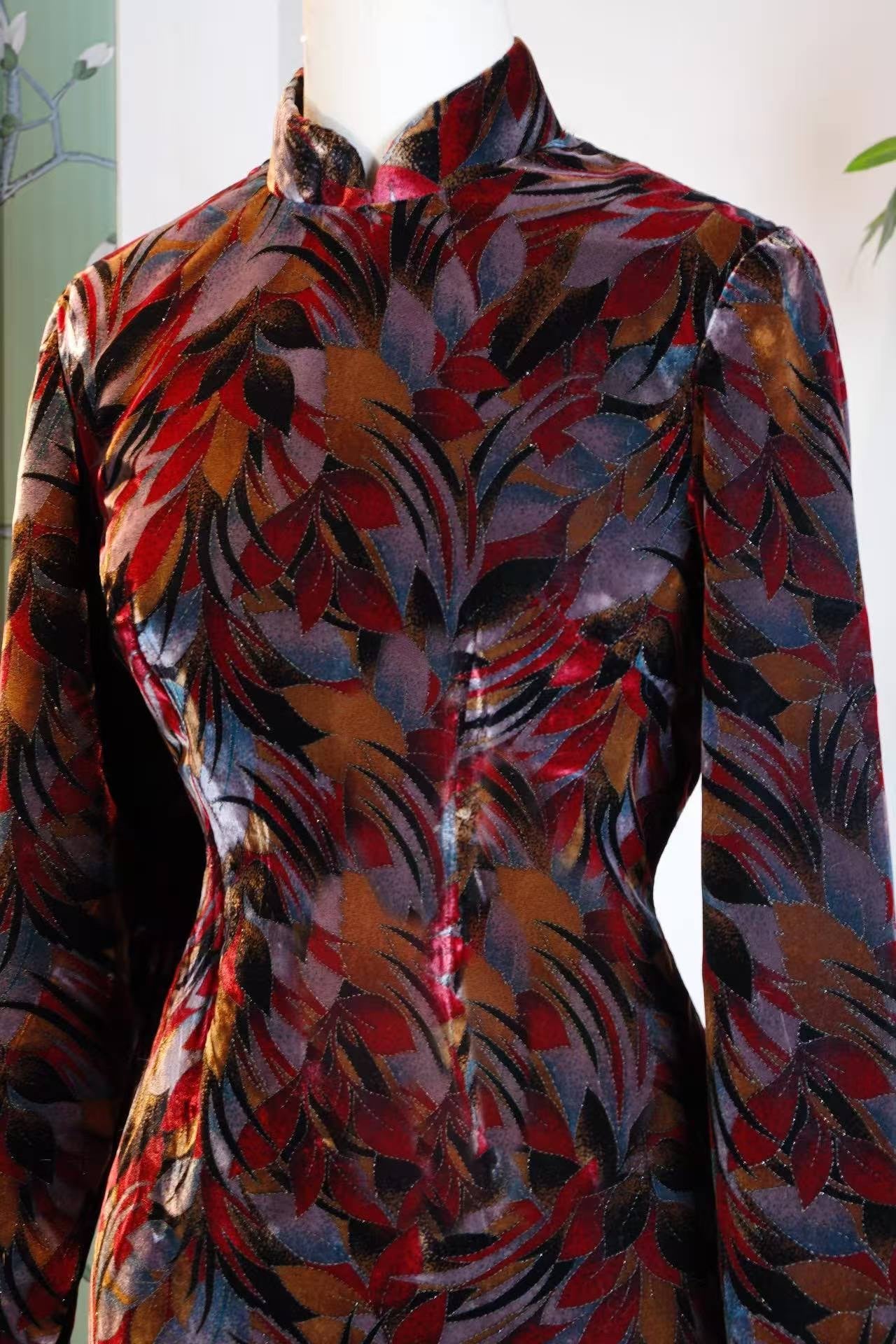
这件产自上世纪六十年代的香港古董旗袍,以丝绒为底,
旗袍上的图案以抽象的叶片纹样为主题,红、褐、紫、
《诗经·卫风》有云:“玼兮玼兮,其之翟也。”
在当今快时尚盛行的时代,
穿上它,仿佛能听见维多利亚港的涛声,看见霓虹灯下的车水马龙,
This 1960s antique Qipao from Hong Kong, featuring a velvet base adorned with hand-painted sequins, is a quintessential example of East-meets-West sartorial art. Its design preserves the classical elements of the standing collar, diagonal bodice, and cinched waist, while seamlessly integrating the abstract expressionist techniques of Western modern art—a perfect symphony of "Oriental Charm and Western Modernity."
The motifs center on abstract foliage, where shades of red, brown, purple, and black interlace like the vibrant fallen leaves of an autumn forest. The leaf forms stretch with dynamic tension and fluid lines, as if dancing upon the velvet. The embellishment of hand-painted sequins causes the patterns to shimmer under the light—like scattered stars or morning dew—adding an air of opulence and mystery. This design echoes the Chinese philosophical sentiment of "falling leaves returning to their roots," while aligning with the Abstract Expressionist aesthetic prevalent in 1960s Western art.
The Classic of Poetry states: "How rich, how splendid, is her robe of pheasant feathers!" Just as the ancients used fine clothing as a metaphor for virtue, we today use the Qipao as a vessel for nostalgia. The velvet texture is as warm as jade and its luster is restrained, reminiscent of the "Soft Smoke Silk" (Ruanyanluo) described in Dream of the Red Chamber—as light as mist and as soft as if without bone. Meanwhile, the hand-painted sequin craft recalls traditional techniques like "gold tracing" or "kingfisher feather inlay" documented in The Exploits of the Works of Nature (Tiangong Kaiwu); though the methods differ, they share the same soul of craftsmanship. As a frontier of cultural exchange, 1960s Hong Kong fashion retained Oriental elegance while absorbing global trends. This Qipao is a microcosm of that era—not merely a garment, but a witness to history.
In today’s era of fast fashion, an antique Qipao that embodies such artisan wisdom and the zeitgeist is exceedingly rare. It is both a treasure for collectors and a vital artifact for studying modern Chinese fashion history. As Eileen Chang wrote in Chronicle of Changing Clothes: "To those who cannot speak, clothes are a language, a miniature drama one carries around." This Qipao is precisely that—a "miniature drama" performed on the fashion stage of 1960s Hong Kong, portraying the prosperity and dreams of the time.
To wear it is to hear the waves of Victoria Harbour, to see the bustling traffic under neon lights, and to feel the unique charisma of a bygone Hong Kong. It is a piece of history that can be worn and a cultural memory that can be inherited.