六十年代几何油画印花古董旗袍:织就的抽象诗学
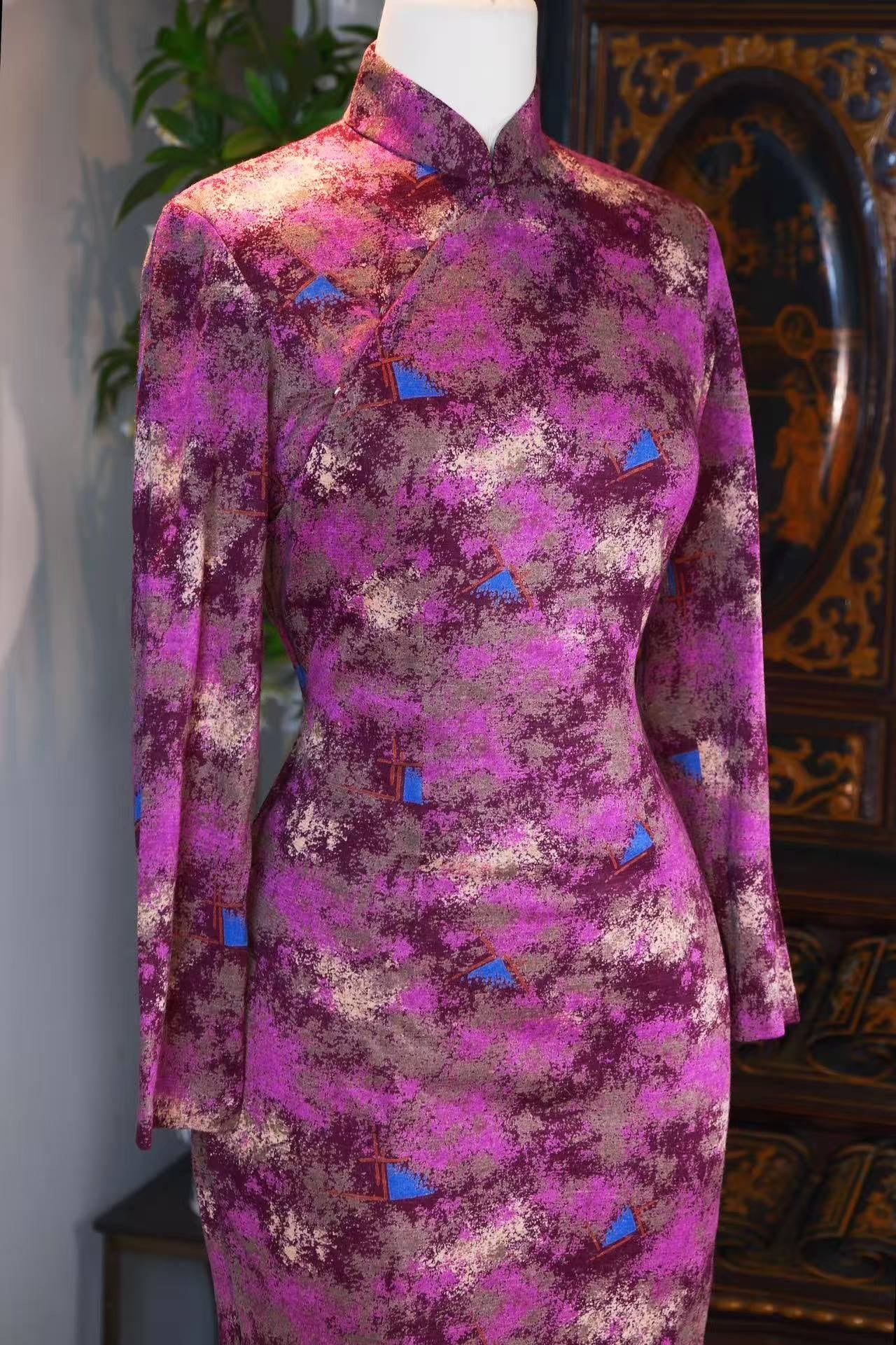
旗袍通体以紫红为底,泼洒银灰斑驳,恍若油画颜料在画布上自然流淌、交融,形成“似花非花”的朦胧意境。其间散落着蓝色三角与橙线勾勒的几何轮廓,如抽象画中的几何元素,打破传统旗袍的具象纹样,以现代主义的简洁与秩序,重构东方美学的视觉语言。立领斜襟处,传统盘扣与几何印花相映成趣,既承袭旗袍的经典形制,又暗涌着六十年代艺术革新的先锋思潮。
这种“油画肌理+几何符号”的印花风格,与冷抽象先驱蒙德里安的《红黄蓝的构成》有异曲同工之妙——以基础几何形与原色碰撞,追求纯粹的形式美感;亦可追溯至中国宋代山水的“留白”与“写意”,将油画的浓烈转化为东方的含蓄。六十年代,西方现代艺术思潮涌入东亚,旗袍作为传统载体,首次大胆吸纳抽象艺术语言,这件藏品正是“中体西用”的典范:它摒弃了传统旗袍的花鸟、吉祥纹样,以抽象几何替代具象叙事,堪称“行走的现代艺术宣言”。
这件旗袍,是旧时光的遗珍,更是艺术史的切片。它以抽象几何解构古典,以油画肌理重塑东方,每一寸纹样都在诉说:传统与现代,从来不是对立的两极,而是可以交织成最动人的诗篇。
1960s Abstract Oil-Painting Qipao with Geometric Prints: A Woven Poetics of Abstraction
The Canvas of Silk: A Blurring of Realism The garment is rendered in a deep magenta base, splattered with dappled silver-gray that evokes the fluid movement of oil pigments merging on a canvas—creating an ethereal "flower-yet-not-a-flower" ambiance. Amidst this painterly texture, scattered blue triangles and orange-lined geometric contours emerge. These elements, reminiscent of abstract expressionism, dismantle the traditional representational motifs of the qipao, reconstructing the visual language of Oriental aesthetics with modernist simplicity and order. At the high collar and slanted bodice, traditional frog buttons stand in playful contrast to the avant-garde prints, preserving the classic silhouette while channeling the revolutionary spirit of 1960s art.
A Dialogue of Modernist Pioneers This "oil texture + geometric symbols" style shares a spiritual affinity with Piet Mondrian’s Composition with Red, Blue, and Yellow—seeking pure formal beauty through the collision of primal shapes and colors. Simultaneously, it traces back to the "negative space" (Liubai) and "freehand" (Xieyi) essence of Song Dynasty landscapes, translating the intensity of oil painting into Oriental restraint. During the 1960s, as Western modern art surged into East Asia, the qipao became a vessel for this new language. This piece is a paragon of "Eastern essence with Western utility," abandoning traditional floral and auspicious patterns for abstract geometry. It is, in every sense, a "walking manifesto of modern art."
Conclusion: A Slice of Art History This qipao is more than a relic of the past; it is a profound slice of art history. It deconstructs the classical with abstract geometry and reshapes the Orient with oil-painted textures. Every inch of its pattern whispers a truth: tradition and modernity are not opposing poles, but threads that can be woven into the most moving of poems.