深圳溯源
六十年代意大利织金提花三件套:Woo女士的黄金时代华章 | 1960s Italian Gold-Weft Jacquard Three-Piece Set: Ms. Woo’s Anthem of the Gilded Era
六十年代意大利织金提花三件套:Woo女士的黄金时代华章 | 1960s Italian Gold-Weft Jacquard Three-Piece Set: Ms. Woo’s Anthem of the Gilded Era
无法加载取货服务可用情况
六十年代意大利织金提花三件套:Woo女士的黄金时代华章
当文艺复兴的织金工艺遇上东方女性的雍容气度,
图案:鎏金藤蔓的巴洛克狂想
香槟金提花面料上,巴洛克风格的藤蔓纹样以「织金」
故事:从米兰工坊到香港裁缝的跨洋传奇
Woo女士1965年于米兰「Tessitura Luigi Bevilacqua」定制此套面料,彼时意大利正处「
艺术风格:东西方奢华的黄金交叉
这套三件套是六十年代「全球化时尚」的巅峰之作:
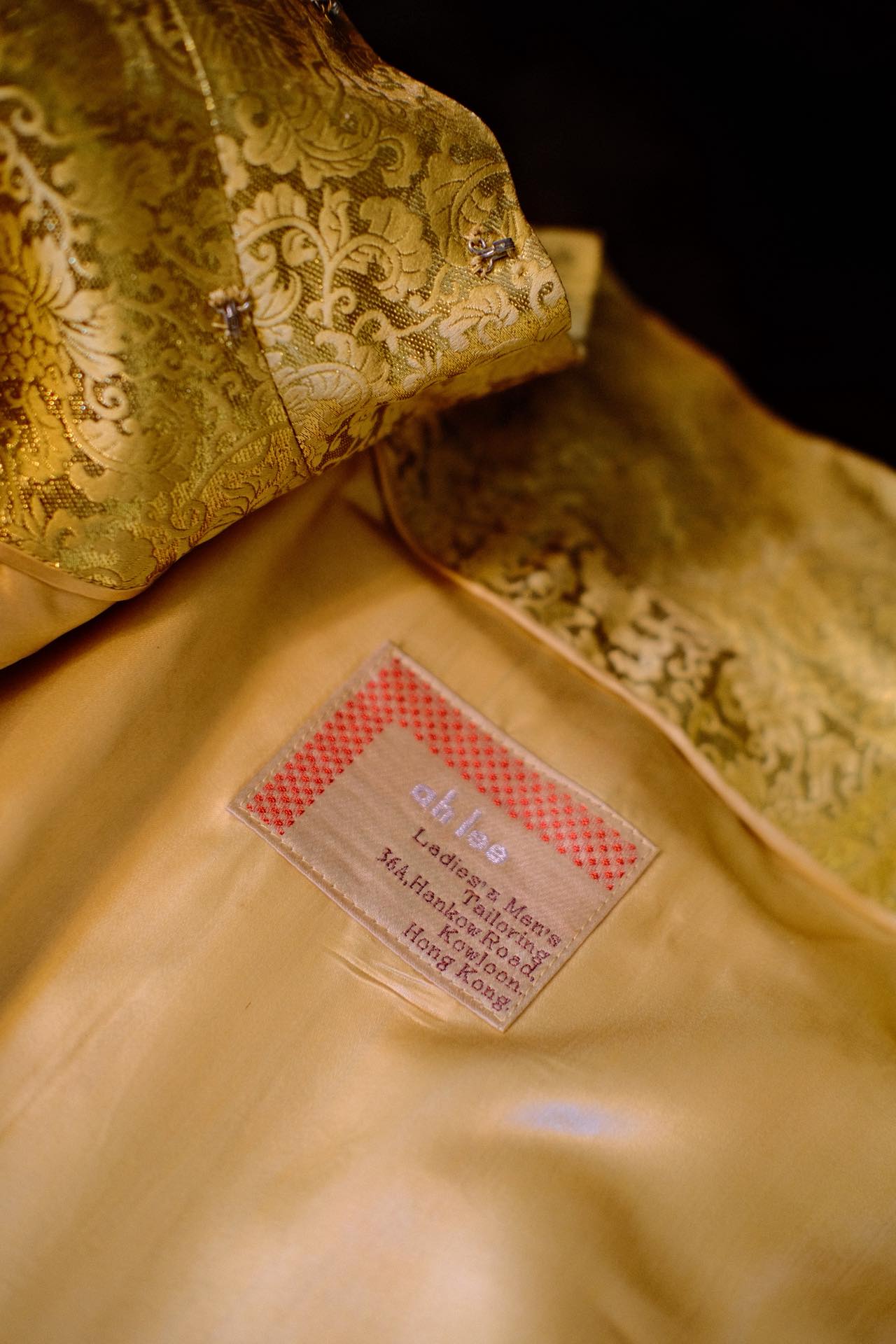
稀缺性:「ah lee」标签为汉口道老店原物,
穿它站在老洋房的落地窗前,
1960s Italian Gold-Weft Jacquard Three-Piece Set: Ms. Woo’s Anthem of the Gilded Era
When the majestic gold-weaving traditions of the Renaissance intercepted the serene dignity of Eastern styling, this 1960s Italian imported gold-weft jacquard ensemble—comprising a tailored sheath dress, a structured evening coat, and a coordinating cocktail clutch—emerged as the most luminescent milestone across Ms. Woo’s transoceanic fashion map.
I. Motif and Architecture: A Baroque Rhapsody of Gilded Tendrils
Woven across an opulent champagne-gold canvas, the garment features sprawling Baroque tendril motifs rendered in high relief through historical "Zhi-Jin" (gold-weft weaving) technology. Utilizing genuine metallic gold filaments to form the structural bones and premium mulberry silk to compose the body, the textile was engineered on specialized jacquard looms inheriting 16th-century mechanical blueprints. Boasting an exceptional density of 120 needles per square centimeter, the scrolling vines and botanical details rise from the base like low-relief sculptures.
The structural distribution of the patterns is meticulously calculated: the scrolling foliate vines (Juancao) accenting the evening coat’s neckline and cuffs, the interlocking split-lotus patterns (Chanzhi) framing the dress’s waistline, and the micro-scale miniature adaptations detailed across the clutch interlock seamlessly down to the exact millimeter at every seam. The unified effect evokes the gilded, masterfully carved vaulted ceilings of Florence’s Pitti Palace draped perfectly over the posture.
II. Provenance and Construction: From Milanese Ateliers to Hankow Road Artisans
Archival accounts indicate that in 1965, Ms. Woo personally commissioned this exquisite yardage from the historic house of Tessitura Luigi Bevilacqua in Milan. This sourcing expedition occurred during the absolute zenith of the Italian economic miracle—a golden age where European designers infused the gold-leaf aesthetics of Byzantine mosaics into the clean geometries of mid-century high fashion.
Ms. Woo transported this Italian canvas back to Hong Kong, handing it over to the master tailors of the "Ah Lee" atelier, then located at 36A Hankow Road. Celebrated for their precision-engineered bespoke tailoring and impeccable handling of structural materials, the artisans re-sculpted the textile using specialized custom manipulation techniques:
-
The Sheath Dress: Employs long, continuous "Princess Line" vertical paneling, elegantly curving over the contours of the body to fit the silhouette flawlessly with absolute fluid composure.
-
The Evening Coat: Engineered with a proud, architectural mandarin-style standing collar paired with an integrated bow belt, masterfully balancing Italian operatic opulence with absolute Eastern restraint.
III. Aesthetic Geometry: The Mid-Century Interplay of Polarities
This three-piece masterpiece stands as a flawless crystallization of 1960s globalized fashion design, capturing the exact moment where European textural complexity met the clean, geometric fluidity of elite Hong Kong tailoring. The untamed energy of the Baroque tendrils establishes a brilliant aesthetic dialogue against the clean, dignified architecture of the standing collar. When Ms. Woo donned this historic ensemble for the grand opening gala of her Canadian enterprise, contemporary press accounts appropriately celebrated her silhouette as a "living golden sculpture," proving that true style thrives at the intersection of diverse structural heritages.
IV. Cultural Archiving: A Tactile Monument to the Jet-Age Executive
This ensemble is far more than an attire; it is a profound manifestation of Ms. Woo’s philosophy of living and her historic legacy as a pioneering, globetrotting female entrepreneur. Every component remains a pristine archive: the original garment labels trace back directly to the historic Hankow Road workshop, and the interior silk lining of the evening clutch still preserves the subtle, woven anti-counterfeiting watermark of the mid-century Milanese workshop.
Stepping before a full-length studio mirror, the passage of time immediately retrogrades to the glamorous dawn of the jet-age. One can easily picture Ms. Woo returning from an international sourcing expedition, stepping elegantly from a transatlantic flight with the residual sunlight of the Apennine Peninsula still clearing from the hem of her gown. As the genuine gold threads catch the ambient light and shimmer with a liquid-gold luster under the studio lamps, the pioneering titan of commerce dissolves into an elegant woman of deep global refinement, leaving behind an unforgettable trace of an everlasting, transoceanic romance.
分享