深圳溯源
无法加载取货服务可用情况
衣服尺寸:
胸围/腰围/臀围:96/80/100 厘米
衣长:110 厘米
细节描述:
【纹样解码:墨底上的金秋盛宴】
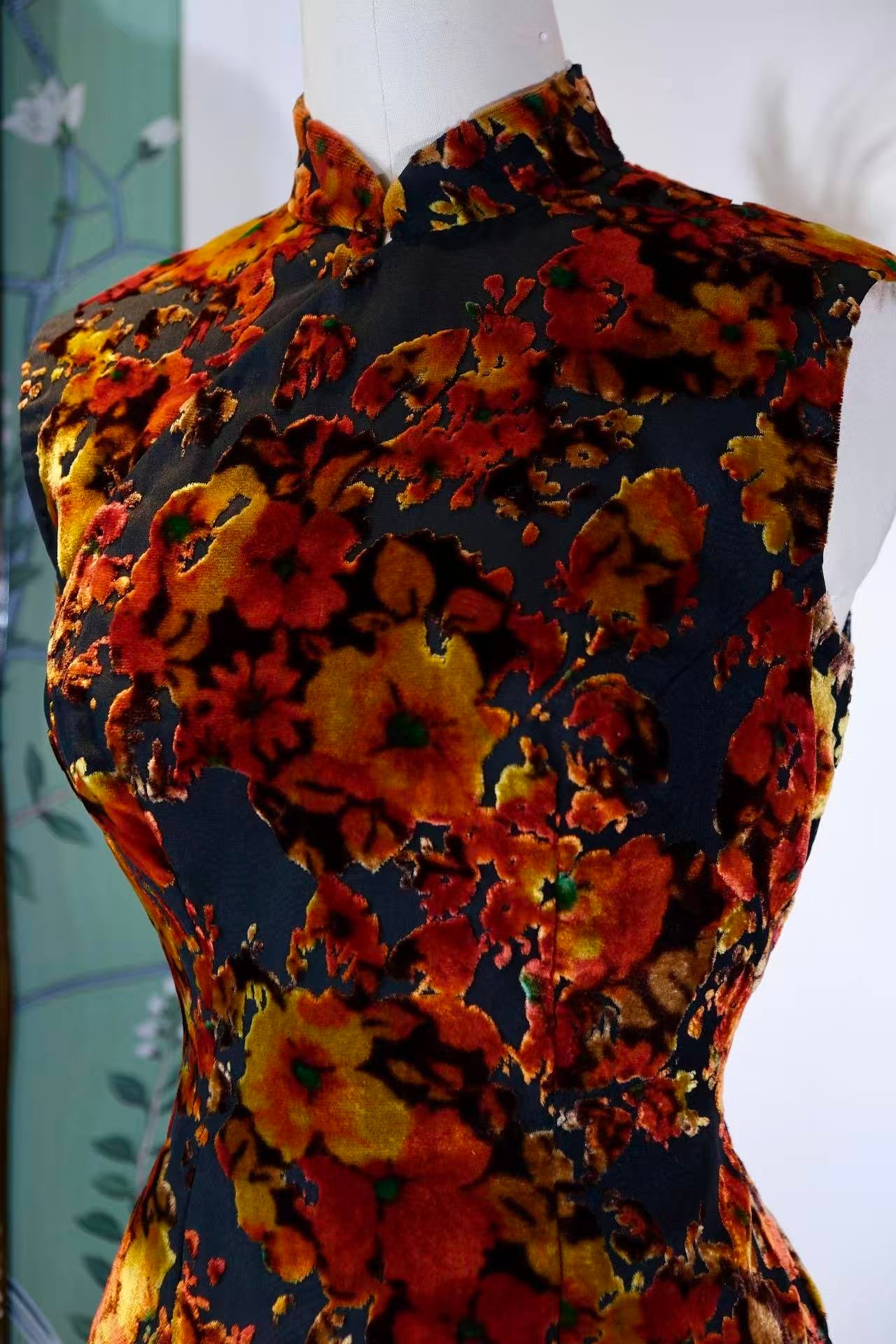
这件旗袍最令人叹为观止的,是其面料上那如油画般浓烈的“
1. 色彩哲学:以深邃如夜的藏青色为底,
2. 烧花工艺:这是一种名为“烧花”的特殊工艺。
3. 手绘晕染:细看那些花瓣的边缘,色彩并非机械的界限分明,
【岁月故事:台岛流金岁月的见证】
这件旗袍诞生于上世纪六十年代的台湾。那是一个特殊的年代,
- 工艺的传承与创新:当时的台湾纺织业正处于黄金发展期,
- 穿着者的身份:试想,在那个年代的台北迪化街或是香港的兰桂坊,
【引经据典:东方美学的诗意表达】
这件旗袍的意境,让我想到了清代张潮在《幽梦影》中的一句话:
“春听鸟声,夏听蝉声,秋听虫声,冬听雪声,白昼听棋声,
而这件旗袍,仿佛是将“秋听虫声,山中听松声”
- “花之魂”:它不同于清宫刺绣的繁复规矩,
- “衣之骨”:丝绒的厚重赋予了旗袍挺括的骨架,
【稀缺性与收藏价值】
在今天的古着市场中,能够保存如此完好、
- 面料易损:丝绒材质娇贵,极易勾丝、褪色。
- 工艺失传:这种结合了化学烧花与纯手工晕染的复合工艺,
结语:
它不是一件旧衣服,而是一件可穿戴的艺术品。当你穿上它,
A Burn-Out Velvet Dream: A 1960s Hand-Painted Ombre Antique Qipao
Measurements / Size Guide:
Bust / Waist / Hips: 96/80/100 cm
Total Length: 110 cm
Detailed Description:
The most breathtaking feature of this qipao is the intense, oil-painting-like "Golden-Red Floral Motif" sprawled across the fabric.
Color Philosophy: Set against a midnight-blue base as deep as the night, large-scale blossoms of cinnabar red and gilded yellow interweave. This "Gold and Red on Ink" palette possesses immense impact in traditional Chinese color theory—preserving royal opulence while exuding the specific modernism and fervor of the 1960s.
Burn-Out Craftsmanship (Devoré): This piece utilizes the specialized "burn-out" technique. Artisans use acid to dissolve specific fibers on the velvet surface, leaving behind a base pattern. This allows the floral sections to appear translucent or matte, creating a sharp textural contrast against the heavy surrounding pile. This hazy, flickering effect echoes the Treatise on Superfluous Things: "The colors of clouds and mists are indescribable; obtained through divine labor, preserved through the heart and hand."
Hand-Painted Ombre: Upon close inspection, the edges of the petals are not mechanically defined but feature delicate transitions and gradients. This is no ordinary print; it is supplemented by hand-painting. The varying density of color on each petal resembles the "Broken Ink" (Pomo) technique in ink-wash painting—layered and balanced, possessing a vitality and warmth that machines cannot replicate.
This qipao was born in 1960s Taiwan—a unique era of post-war economic recovery where Eastern and Western cultures collided and merged on the island.
Inheritance and Innovation: The Taiwanese textile industry was in its golden development phase. Artisans not only inherited the meticulous craftsmanship of Suzhou and Hangzhou silk but also absorbed Western fabric treatments like burn-out. This qipao is the ultimate footnote to the "Oriental Soul with a Western Frame."
The Wearer’s Identity: Imagine a socialite in 1960s Dihua Street, Taipei, or Lan Kwai Fong, Hong Kong. With her high mandarin collar and graceful silhouette, this garment was more than clothing—it was a class symbol, representing the ultimate pursuit of beauty and refined living. It witnessed a genuine elegance and grace that existed long before the age of digital filters.
The artistic conception of this qipao brings to mind a quote from Zhang Chao’s Quiet Dream Shadows:
"To hear birds in spring, cicadas in summer, insects in autumn, and snow in winter... only then is a life not lived in vain."
This qipao seems to weave the weight and fervor of "hearing insects in autumn and pines in the mountains" into its very fabric.
The Soul of Flowers: Unlike the rigid complexity of Qing court embroidery or the subtle gentleness of the Shanghai style, the flowers on this garment are wild and unrestrained—like burning red leaves and golden osmanthus in an autumn forest. It embodies the final burst of passion before "extreme brilliance returns to simplicity."
The Frame of the Garment: The weight of the velvet provides a structured frame, perfectly contouring the feminine S-curve. This is the highest tribute to "restrained sensuality" in Oriental aesthetics.
In today’s vintage market, a 1960s burn-out velvet qipao preserved in such pristine condition and vibrant color is a rarity of rarities.
Fragile Material: Velvet is delicate and highly prone to snagging or fading.
Lost Artistry: The composite process of chemical burn-out combined with pure hand-painted gradients is labor-intensive; very few artisans master this craft today.
Conclusion: This is not an old garment; it is a piece of wearable art. When you put it on, you are wearing more than velvet and color—you are wearing sixty years of time, the specific character and charm of that era. This is a qipao that tells a story, with every grain of texture narrating the elegance and brilliance of a vanished age.