深圳溯源
无法加载取货服务可用情况
衣服尺寸:
胸围/腰围/臀围:106/94/114 厘米
衣长:102 厘米
细节描述:
一、纹样考释:锦瑟华年,织就云霞
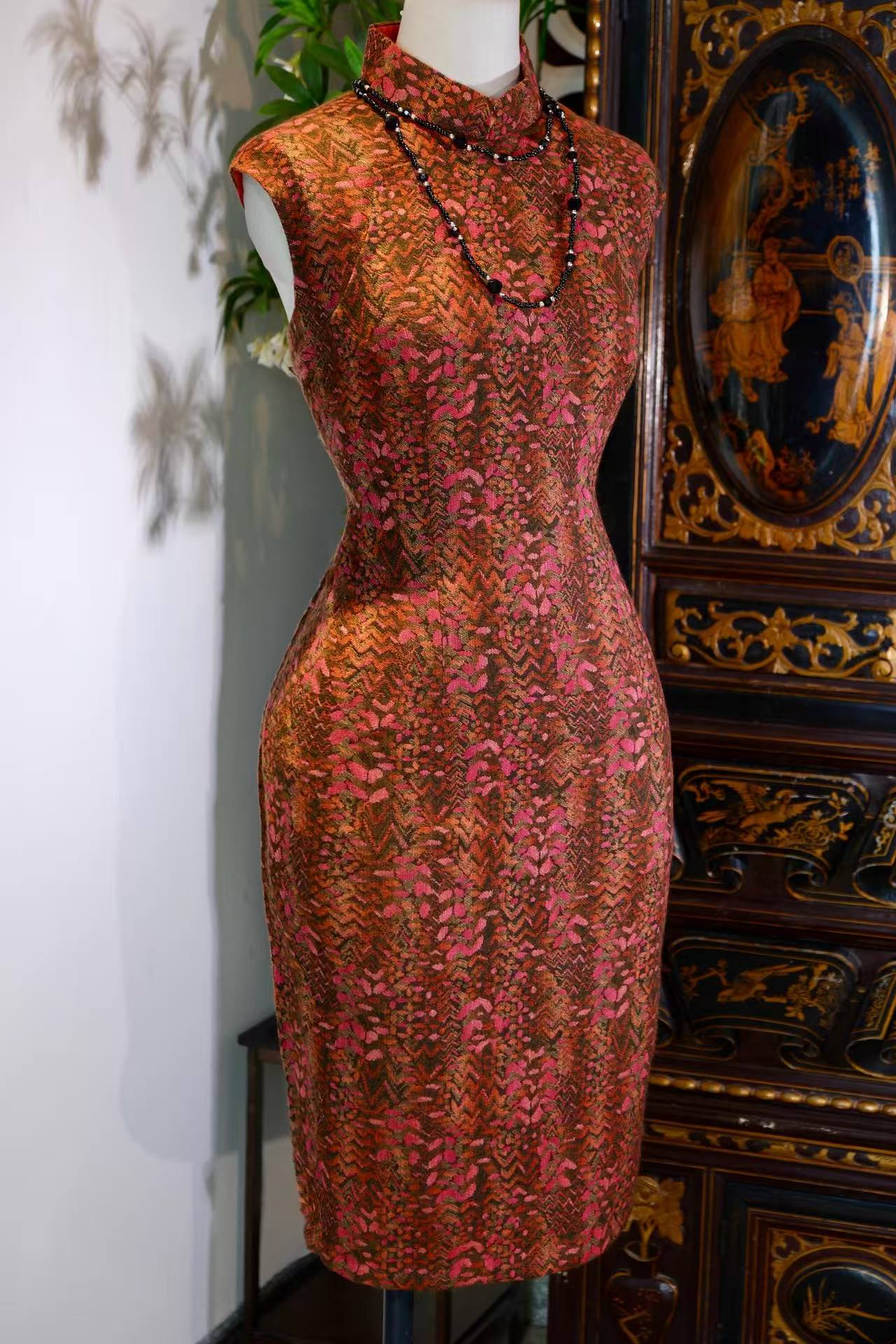
此件旗袍的面料纹样,堪称上世纪六十年代香港纺织工艺与东方美学的精妙结晶。其基底以暖调驼棕为骨,间织朱砂、绛红与烟粉的几何花卉纹,细观之,似有《营造法式》中“琐纹”的遗韵——锯齿状的折线纹如流水回旋,间杂散落的抽象花瓣,既非传统缠枝莲的繁复,亦非现代波普的直白,而是中西交融语境下的“新装饰主义”表达。这种纹样在六十年代的香港极为罕见,彼时本地纺织业正处“黄金时代”,工匠们以进口羊毛为材,将海派旗袍的典雅与南洋纹样的热烈熔于一炉,成就了这般“艳而不俗,密而不乱”的视觉效果。正如沈从文先生在《中国古代服饰研究》中所言:“服饰纹样之变,实乃时代精神之镜”,此衣纹样恰是香港从转口港向轻工业中心转型期,市井繁华与文化自信的生动注脚。
二、衣史钩沉:香江旧梦,针脚藏锋
这件旗袍的稀缺性,不仅在于其针织羊毛的材质——六十年代香港虽有“东方之珠”美誉,但高档针织面料仍多依赖进口,能以羊毛针织物裁制旗袍者,非富即贵;更在于其背后承载的“移民时尚”记忆。彼时上海裁缝南迁香港,将海派旗袍的“省道”工艺与西式立体剪裁引入本地,此衣虽为无袖高领款式,却在腰身处暗藏收省,贴合女性曲线却不显紧绷,正是“海派遗风”与“香江新韵”的碰撞。据《香港时装史话》记载,1960年代香港中环的“云裳”“鸿翔”等老字号,常以定制针织旗袍为贵妇首选,然因羊毛易损、工艺复杂,存世真品不足百件。此衣领口、下摆的包边仍平整如新,针脚细密处可见当年工匠“一线不苟”的执着,仿佛能听见维多利亚港的汽笛声中,那位身着此衣的女士,正步履从容地走过石板街,裙裾间摇曳着“东方巴黎”的旧梦。
三、艺术之魂:织锦为裳,风雅自成
从艺术风格而言,此旗袍堪称“低调的奢华”。其针织面料的肌理感,与传统丝绸旗袍的光滑形成鲜明对比——羊毛的天然弹性赋予衣物温润的垂坠感,暖色调纹样在光影下流转,如宋人小品画中的“没骨花卉”,朦胧中见层次。无袖设计突破了传统旗袍的保守,却又以高领维持东方含蓄,恰如张爱玲在《更衣记》中所写:“旗袍的演变,是女性对身体自主权的温柔宣示”。如今,这般兼具工艺价值、历史厚度与艺术美感的古董旗袍,早已超越衣物本身,成为可触摸的“流动历史”,其稀缺性正如故宫所藏清代缂丝龙袍——每一道针脚,都是不可复制的时代密码。
四、结语
此件六十年代香港针织羊毛旗袍,以纹样为笔,以针脚为墨,书写了一段关于香江风华、工艺传承与女性审美的旧事。它不仅是衣橱中的“孤品”,更是研究二十世纪东亚服饰史、香港社会史的“活化石”。当指尖抚过那细密的针织纹理,仿佛能触摸到半个世纪前,那位未曾谋面的女士,在某个春日午后,于旗袍领口别上一朵白玉兰,然后转身走入历史的背影——而那背影,正是我们这个时代最珍贵的“复古浪漫”。
Measurements / Size Guide:
Bust / Waist / Hips: 106/94/114 cm
Total Length: 102 cm
Detailed Description:
The fabric pattern of this cheongsam (qipao) is a masterful crystallization of 1960s Hong Kong textile craft and Eastern aesthetics. Its base is a warm camel-brown, interwoven with geometric floral motifs in cinnabar, crimson, and smoky pink. Upon close inspection, it carries the lingering charm of "Suo Patterns" (Suowen) from the Song Dynasty architectural manual Yingzao Fashi—sawtooth zigzag lines swirl like flowing water, interspersed with scattered abstract petals. It is neither the complexity of traditional intertwining lotuses nor the bluntness of modern Pop Art, but an expression of "Neo-Art Deco" within a cross-cultural context. Such patterns were extremely rare in 1960s Hong Kong, a time when the local textile industry was in its "Golden Age." Artisans used imported wool to melt the elegance of Shanghai-style qipaos and the vibrancy of Southeast Asian motifs into one, achieving a visual effect of "vividness without vulgarity, density without chaos." As Shen Congwen noted in Researches on Ancient Chinese Costumes: "Changes in costume patterns are mirrors of the spirit of the age." This garment is a vivid footnote to Hong Kong’s transformation from an entrepôt to a light-industrial center, reflecting civic prosperity and cultural confidence.
The scarcity of this qipao lies not only in its knitted wool material—while Hong Kong was the "Pearl of the Orient" in the 1960s, high-end knitwear still relied heavily on imports, and only the elite could afford qipaos tailored from such fabrics—but also in the "migrant fashion" memories it carries. At that time, Shanghainese tailors migrated south to Hong Kong, introducing "dart" techniques and Western 3D draping. Though a sleeveless, high-collar design, this piece hides subtle waist darts that contour the female curve without feeling restrictive—a perfect collision of "Shanghai Legacy" and "Hong Kong Rhythm." According to Stories of Hong Kong Fashion History, prestigious boutiques like "Yunshang" and "Hongxiang" in Central Hong Kong favored bespoke knitted qipaos for noblewomen. However, due to the fragility of wool and the complexity of the craft, fewer than a hundred authentic pieces survive today. The piping at the collar and hem remains as smooth as new, the fine stitching revealing the artisan's "meticulous devotion," as if one could hear the steam whistles of Victoria Harbour and see a lady in this dress walking gracefully across Stone Slabs Street, her hem swaying with the dreams of the "Paris of the East."
Artistically, this qipao embodies "understated luxury." The textural feel of the knit fabric contrasts sharply with the smoothness of traditional silk—the natural elasticity of wool grants the garment a warm, fluid drape. The warm-toned patterns shift under the light like "boneless flowers" (Mogu Huahui) in Song Dynasty paintings, revealing layers through a hazy glow. The sleeveless cut breaks from traditional conservatism, yet the high collar maintains Eastern reserve. As Eileen Chang wrote in Chronicle of Changing Clothes: "The evolution of the qipao is a gentle declaration of women's autonomy over their bodies." Today, such a vintage qipao, possessing technical value, historical depth, and artistic beauty, has transcended the garment itself to become "tangible flowing history." Its scarcity rivals the k'ossu (tapestry) dragon robes of the Qing Dynasty—every stitch is an irreproducible code of the era.
This 1960s Hong Kong knitted wool qipao uses pattern as its brush and stitching as its ink to narrate a tale of Hong Kong’s grace, artisanal heritage, and female aesthetics. It is not just a "unique piece" in a wardrobe, but a "living fossil" for the study of 20th-century East Asian costume and Hong Kong social history. As fingertips brush the fine knitted texture, one can almost feel that lady from half a century ago, pinning a white magnolia to her collar on a spring afternoon, before turning to walk into the shadow of history—a silhouette that remains the most precious "retro romance" of our time.