深圳溯源
无法加载取货服务可用情况
衣服尺寸:
胸围/腰围/臀围:100/86/106 厘米
衣长:112 厘米
细节描述:
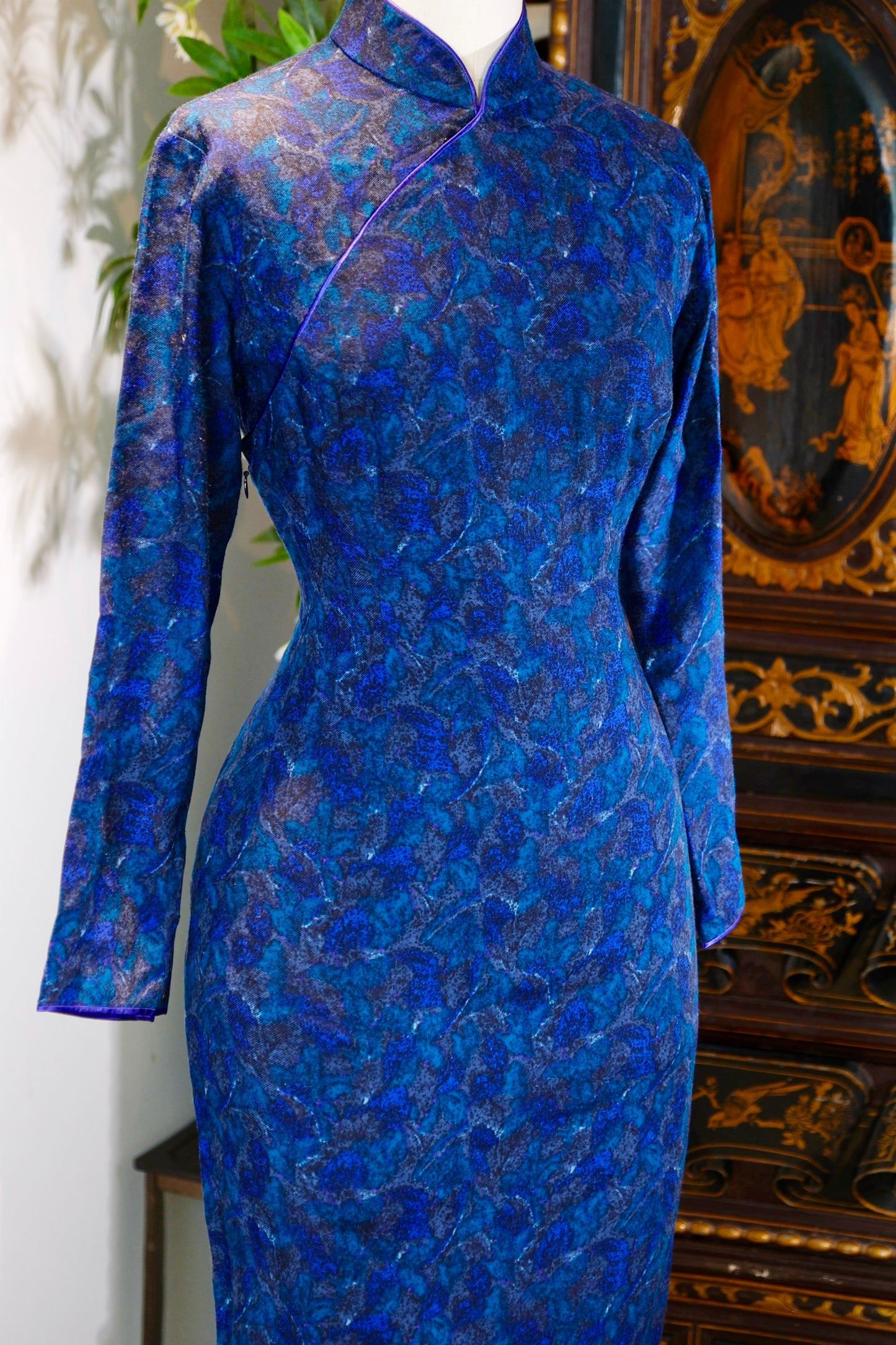
这件诞生于上世纪六十年代的香港产古董旗袍,其衣身所覆的抽象印花,恰似将一泓流动的蓝墨倾入时光长河,又似把江南烟雨里青黛与靛蓝的晕染凝于丝缕之间。深浅不一的蓝色调层层叠叠,墨蓝、宝蓝、湖蓝交织成朦胧的肌理,既无具象的花鸟虫鱼,亦无规整的几何纹样,却暗合了六十年代香港服饰设计中“中西合璧”的审美转向——彼时西方抽象表现主义艺术正席卷全球,而东方传统水墨的写意精神,亦在旗袍的方寸衣料上悄然绽放。
这种非具象的印花工艺,在六十年代的香港成衣业中实属凤毛麟角。彼时旗袍虽仍是女性衣橱的常客,但多数仍延续着传统的缠枝莲、牡丹、龙凤等吉祥纹样,而这件旗袍却大胆突破窠臼,以近乎“墨戏”的笔触,将东方美学中“似与不似之间”的意境,与现代艺术的抽象语言熔于一炉。衣料上的每一道纹路,都像是匠人以针为笔、以线为墨,在丝绸上挥毫而成的“无题诗”,既藏着《千里江山图》的青绿气韵,又带着波洛克“滴画”的自由张力,堪称六十年代香港服饰史上“传统与现代对话”的鲜活标本。
回望六十年代的香港,旗袍不仅是女性身份的象征,更是东西方文化碰撞的缩影。彼时香港作为远东时尚重镇,既承接了上海旗袍的精致剪裁,又吸纳了西方成衣的工业化思维,而这件旗袍的抽象印花,恰是这种“海派遗风与西洋新韵”交融的产物。它或许曾属于一位穿梭于中环写字楼与茶餐厅的职场女性,在霓虹初上的夜晚,裹着这件“流动的蓝墨”,踩着高跟鞋走过石板路,衣摆间漾开的不仅是布料的光泽,更是一个时代对“新女性”形象的想象——既保有东方的含蓄典雅,又敢于拥抱世界的先锋浪潮。
如今,这般保存完好、印花独特的六十年代香港产古董旗袍,早已成为服饰史研究者眼中的“活化石”。它的稀缺性不仅在于岁月沉淀下的品相难得,更在于它见证了香港成衣业从“手工定制”向“现代设计”转型的关键节点,是研究六十年代亚洲时尚史不可多得的实物资料。当指尖抚过衣料上那抹朦胧的蓝,仿佛能触摸到半个多世纪前,香江之畔那位穿旗袍的女子,正以衣为笺,书写着属于她的时代故事。
Measurements / Size Guide:
Bust / Waist / Hips: 100/86/106 cm
Total Length: 112 cm
Detailed Description:
The abstract print covering this 1960s Hong Kong antique qipao is akin to pouring a stream of liquid blue ink into the river of time, or condensing the dizzying washes of indigo and dark cyan from a Jiangnan misty rain into silken threads. Overlapping layers of varied blue tones—inky blue, royal blue, and lake blue—interweave into a hazy texture. It features neither concrete flowers and birds nor rigid geometric patterns, yet it perfectly aligns with the "East-meets-West" aesthetic shift in 1960s Hong Kong fashion. At that time, Western Abstract Expressionism was sweeping the globe, and the freehand spirit of traditional Oriental ink-wash was quietly blossoming across the inches of qipao fabric.
This type of non-figurative printing process was exceptionally rare in the 1960s Hong Kong ready-to-wear industry. While the qipao remained a staple of the female wardrobe, most still adhered to traditional auspicious motifs like intertwining lotuses, peonies, or dragons and phoenixes. This qipao, however, boldly breaks the mold. With brushstrokes akin to "ink play" (Muxi), it melts the Oriental aesthetic of "being between likeness and unlikeness" with the abstract language of modern art. Every line on the fabric feels like an "untitled poem" splashed onto silk by a craftsman using a needle as a pen and thread as ink. It carries both the azure-green aura of A Thousand Li of Rivers and Mountains and the free tension of a Pollock "drip painting," standing as a vivid specimen of the "dialogue between tradition and modernity" in Hong Kong's sartorial history.
Looking back at 1960s Hong Kong, the qipao was not only a symbol of female identity but a microcosm of the collision between Eastern and Western cultures. As a fashion hub of the Far East, Hong Kong inherited the exquisite tailoring of the Shanghai-style (Haipai) qipao while absorbing the industrial thinking of Western ready-to-wear. The abstract print of this qipao is precisely the product of this fusion between "Shanghai legacy and Western rhythm." It might have belonged to a professional woman navigating between Central office buildings and tea restaurants. In the evenings when the neon lights first flickered on, wrapped in this "flowing blue ink" and walking across cobblestone paths in high heels, her swaying hem rippled with more than just the luster of fabric—it carried an era's imagination of the "New Woman": someone who retained Oriental grace and reserve while daring to embrace the avant-garde waves of the world.
Today, such a well-preserved 1960s Hong Kong antique qipao with such a unique print has become a "living fossil" in the eyes of costume historians. Its scarcity lies not only in its rare condition tempered by time but in the fact that it witnessed a key turning point in the Hong Kong garment industry’s transition from "bespoke handicraft" to "modern design." It is an invaluable physical resource for studying 20th-century Asian fashion history. When one's fingertips brush over that hazy blue on the fabric, it feels as if one can touch the woman by the Fragrant Harbour half a century ago, using her garment as stationery to write her own story of the era.