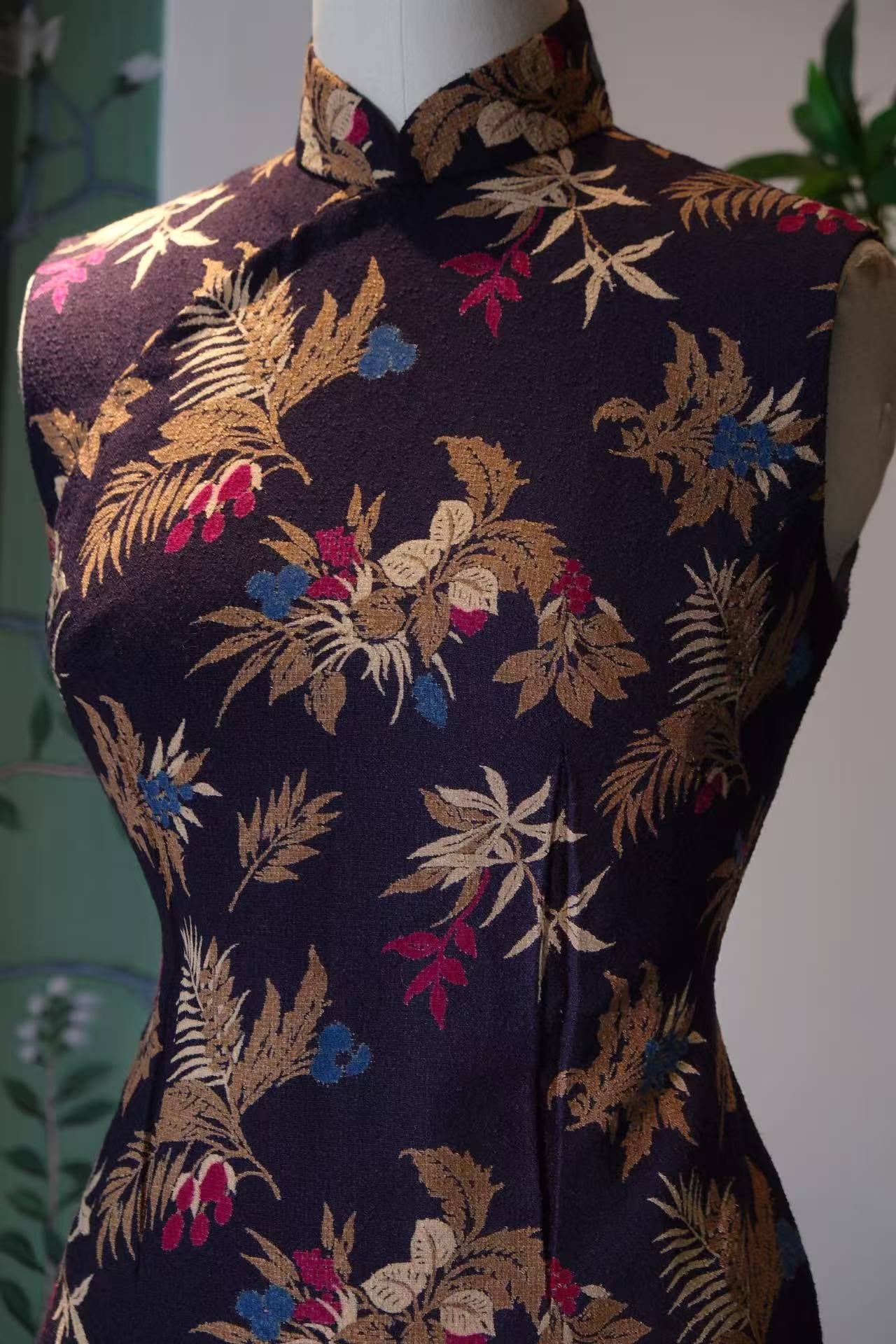
台湾“眼镜旗袍专家”羊羔毛旗袍:热带植物与东方雅韵的时空对话
这件诞生于上世纪六十年代的古董旗袍,是台湾“眼镜旗袍专家”品牌的倾心之作,以珍稀羊羔毛为底,将热带植物的奔放与东方传统服饰的雅致融于一裾,成为时光淬炼下的美学标本。
旗袍主体纹样以 棕榈叶 为核心意象——这种热带植物在60年代全球时尚中是“异域风情”的象征(可参考当时欧美流行的“热带主义”风潮,如夏威夷衬衫的视觉语言及《Vogue》1960年代封面的热带元素),叶片以金线勾勒脉络,似沐阳光的铜色调在深色旗袍底上如火焰蔓延,暗合60年代女性追求解放、拥抱自然的审美转向。
旗袍剪裁延续海派旗袍的修身语言(上海旗袍传入台湾后的演变):高立领衬出天鹅颈的优雅,侧开衩恰到好处地显露腿部曲线,无袖设计在当时是大胆的“现代性”尝试(传统旗袍多为长袖,60年代开始简化以适应更轻松的穿着场景)。
历经六十余年,这件旗袍仍保存完好,羊羔毛未虫蛀、褪色(毛织物易损坏,存世完整者稀少),纹样设计兼具热带风情与东方雅韵,在全球古董旗袍市场中属 小众稀缺品类(多数古董旗袍为传统花卉或几何纹,此类跨文化主题纹样较少)。它不仅是服饰单品,更是60年代台湾时尚史的“活化石”——记录着战后经济复苏期女性对“优雅与个性并存”的追求,也见证着传统旗袍在现代化进程中吸收国际元素的创新尝试。
今日展于眼前,仿佛能听见60年代咖啡馆的爵士乐,看见穿着它的女士在棕榈树影间缓步,裙摆轻扬处,是时光与美学的低语:它穿越世纪而来,只为向我们展示,何为“经典永不失声,优雅永不褪色”。
The "Spectacles Qipao Expert" Lambswool Qipao from Taiwan: A Time-Space Dialogue between Tropical Flora and Oriental Grace
This antique qipao (cheongsam), created in the 1960s, is an exquisite piece from the renowned Taiwanese brand, "Spectacles Qipao Expert". Set on a rare lambswool base, it masterfully merges the exuberance of tropical botanicals with the elegance of traditional Oriental attire, standing as an aesthetic specimen refined by time.
The core motif of the qipao is the Palm Leaf—a tropical plant symbolizing "exotic flair" in 1960s global fashion (referencing the "Tropicalism" trend prevalent in the West, seen in visual languages like Hawaiian shirts and elements on Vogue covers of that decade). The leaves are outlined with gold thread, giving them a sun-drenched, coppery tone that spreads across the dark fabric like flames. This subtly aligns with the sixties woman's aesthetic shift toward liberation and embracing nature.
The qipao's tailoring continues the figure-flattering language of the Shanghai style (as the qipao evolved after its introduction to Taiwan): the high mandarin collar accentuates the elegant "swan neck," the side slit perfectly reveals the leg's curve, and the sleeveless design was, at the time, a daring expression of "modernity" (traditional qipaos typically featured long sleeves; simplification began in the sixties to suit more relaxed social settings).
After more than six decades, this qipao remains remarkably well-preserved. The lambswool is free of moth damage or fading (wool textiles are highly susceptible to damage, making complete survivors rare). Its pattern design, which balances tropical zest with Oriental grace, positions it as a niche, scarce item in the global antique qipao market (where most examples feature traditional florals or geometric patterns, cross-cultural themes like this are uncommon). It is more than just a garment; it is a "living fossil" of Taiwan's 1960s fashion history, documenting the post-war economic recovery period and women's pursuit of "elegance coupled with individuality," and witnessing the traditional qipao's innovative attempt to absorb international elements during modernization.
Displayed before us today, one can almost hear the jazz music from a 60s café and visualize the lady wearing it strolling beneath the palm shadows. As the skirt gently lifts, it reveals the whispers of time and aesthetics: it travels across the century solely to show us what it means for a "classic never to fall silent, and elegance never to fade."