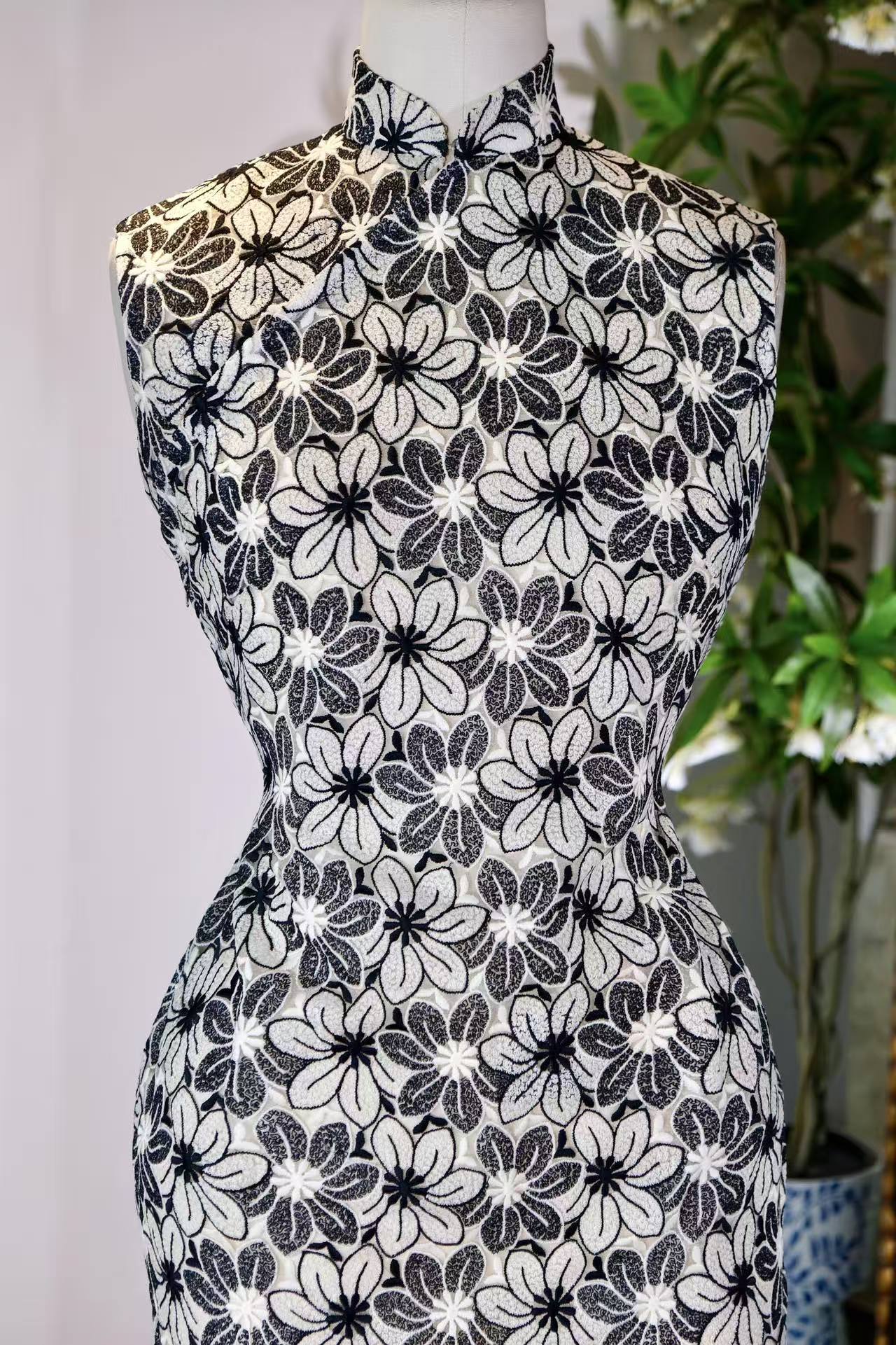
墨绣重楼·六十年代港制意式蕾丝旗袍
衣服尺寸:
胸围/腰围/臀围:90/88/96 厘米
衣长:96 厘米
细节描述:
纹样考据
通身铺陈的墨色雏菊纹,以意大利进口的精密机绣勾勒——花瓣边缘的“钉线绣”针法,使每片花瓣都如浮雕般立体,花心的米白丝线则暗合《长物志》“素以为绚”的美学。蕾丝底布的透孔肌理,恰似宋人“冰裂纹”瓷的疏朗,黑白撞色间,既有西方装饰艺术的几何秩序,又藏东方“计白当黑”的写意留白。
衣史钩沉
这件旗袍诞生于1960年代的香港,彼时东西方时尚在此碰撞:意大利的先进刺绣机器漂洋过海,遇上本地师傅对旗袍“归拔”工艺的坚守。蕾丝的面料,让传统平裁旗袍首次实现“立体贴合”——腰线的收省精确到分毫,既保留“S型”曲线的古典韵致,又暗合西方“New Look”的廓形美学。
六十年代的香港名媛,常着此类“洋料中裁”的旗袍赴宴:蕾丝的透气性适配亚热带气候,无袖设计露出皓腕,立领却仍守著东方的含蓄。正如张爱玲所言“旗袍是束身的,也是解放的”,这件衣袍恰是那个时代女性“新旧交织”的生存注脚——她们穿蕾丝的摩登,也穿旗袍的风骨。
稀缺性考释
意大利1960年代的蕾丝机绣工艺,因成本高、产量低,在旗袍制作中仅见于高端定制。现存世的港产古董旗袍,多为棉麻或真丝,蕾丝款不足百件,且多因保存不当出现脱线、泛黄。而这件衣袍的蕾丝仍保持“挺括有骨”的状态,针脚无一脱落,足见当年主人的珍视与保存者的用心。
它不仅是件衣服,更是一段“东方遇见西方”的时尚史诗——当墨色雏菊在蕾丝上绽放,我们看见的,是六十年代香港的风,是意大利的机器轰鸣,是旗袍在时光里的倔强生长。
Ink-Embroidered Towers: A 1960s Hong Kong-Made Italian Lace Cheongsam
Measurements / Size Guide:
Bust / Waist / Hips: 90/88/96 cm
Total Length: 96 cm
Detailed Description:
Pattern Research (纹样考据)
The entire garment is adorned with an ink-black daisy pattern, outlined with precision machine embroidery imported from Italy. The "couching stitch" at the petal edges gives each bloom a three-dimensional relief effect, while the creamy-white silk thread at the flower’s heart aligns with the aesthetic of "simplicity as the ultimate sophistication" from Treatise on Superfluous Things. The porous texture of the lace base resembles the airy "ice-crackle" glaze of Song dynasty porcelain. In the contrast between black and white, one finds both the geometric order of Western Art Deco and the freehand "using white to define black" (Ji Bai Dang Hei) essence of Eastern ink painting.
Historical Resonance (衣史钩沉)
This cheongsam was born in 1960s Hong Kong, a time when Eastern and Western fashions collided. Advanced Italian embroidery machines traveled across the seas to meet the local masters’ steadfast commitment to the "iron-shaping" (Gui Ba) craft. The lace fabric allowed the traditional flat-cut qipao to achieve a "3D fit" for the first time—the waist darts are precise to a fraction, preserving the classical charm of the "S-curve" while echoing the silhouette aesthetics of the Western "New Look."
Socialites in 1960s Hong Kong often wore these "Western-fabric, Eastern-tailored" qipaos to banquets. The breathability of the lace was perfect for the subtropical climate, and the sleeveless design revealed elegant wrists, yet the standing collar remained a guardian of Eastern reserve. As Eileen Chang noted, "The qipao is both restrictive and liberating." This garment serves as a footnote to the "interwoven old and new" existence of women in that era—they wore the modernity of lace and the integrity of the cheongsam.
Scarcity Analysis (稀缺性考释)
The Italian machine-embroidered lace technology of the 1960s was rare in qipao production, reserved only for high-end bespoke due to its high cost and low yield. Among the surviving Hong Kong antique qipaos, most are cotton, linen, or silk; lace versions number fewer than a hundred, and many have suffered from fraying or yellowing due to poor preservation. This piece, however, remains "crisp and structured," with every stitch intact—a testament to the original owner's cherishment and the preserver’s meticulous care.
It is more than just a garment; it is a fashion epic of "East meets West." As the ink-black daisies bloom across the lace, what we see is the wind of 1960s Hong Kong, the hum of Italian machinery, and the stubborn, elegant growth of the cheongsam through time.