深圳溯源
无法加载取货服务可用情况
衣服尺寸:
胸围/腰围/臀围:100/86/100 厘米
衣长:112 厘米
细节描述:
在时光的褶皱里,总有些物件如星辰般静默,却自有其不可磨灭的光芒。眼前这件由“花旗旗袍专家”出品的上世纪六十年代台湾产古董旗袍,便是这样一件承载着时代风华与匠人魂魄的织物诗篇。它以深沉如夜的金丝绒为画布,以璀璨如星的亮片闪粉为笔墨,手绘出一幅永不凋零的玫瑰图景,将一段关于美、关于技艺、关于身份认同的往事,悄然封存于经纬之间。
面料与图案:金丝绒上的暗夜花园
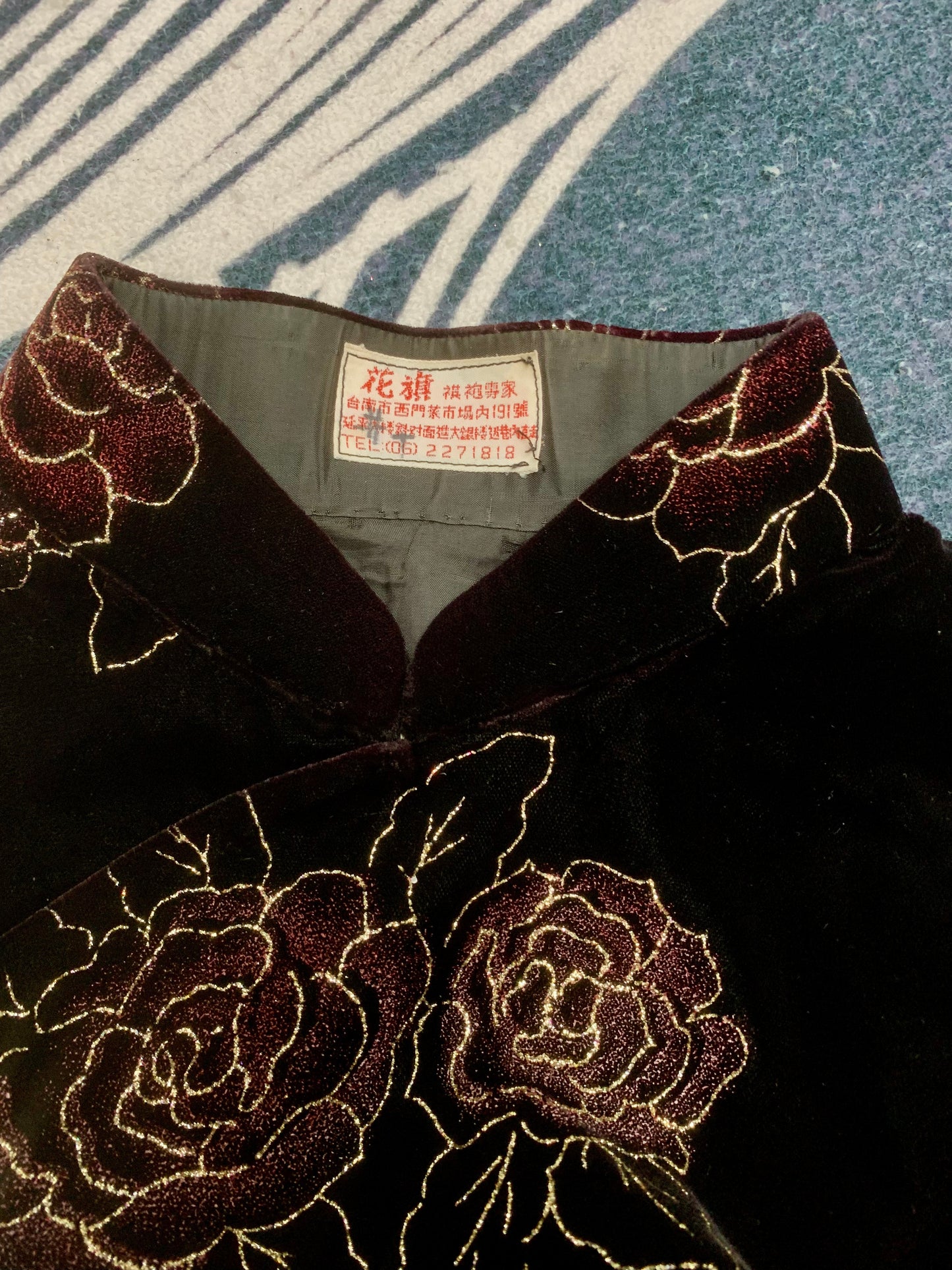
这件旗袍的基底,是质感厚重、光泽内敛的深色金丝绒。金丝绒,这种源自西方却在东方语境中被赋予新生命的织物,在六十年代的台湾,是摩登与贵气的象征。其表面细密的绒毛,在光线下呈现出如丝缎般流动的光泽,却又比丝缎多了一份温暖的肌理与深邃的质感。它如同一片静谧的夜幕,为即将绽放的图案提供了最完美的背景。
而在这片“夜幕”之上,匠人以惊人的耐心与技艺,用亮片与闪粉手绘出一朵朵盛放的玫瑰。这些玫瑰并非写实,而是带有那个时代特有的装饰艺术风格——花瓣层叠,线条流畅而略带夸张,边缘以细密的金色或银色闪粉勾勒,如同被月光镀上了一层薄霜。花心处则以更密集的亮片点缀,仿佛是凝结的露珠,又像是夜空中最亮的星辰。玫瑰的枝叶则以同样手法绘就,与花朵相互缠绕,形成一种既繁复又和谐的视觉韵律。这些手绘的玫瑰,在金丝绒的衬托下,时而隐于暗处,时而熠熠生辉,如同暗夜花园中悄然绽放的精灵,充满了神秘与诱惑。
匠人与时代:“花旗旗袍专家”的印记
旗袍领口内侧的标签,清晰地印着“花旗旗袍专家”及其台南地址与电话。这不仅仅是一个品牌标识,更是一个时代的缩影。“花旗”之名,或与美国有关,或取其“花样旗帜”之意,暗示着其设计的开放性与时代感。而“旗袍专家”四字,则彰显了其在当时台湾制衣业中的专业地位与自信。
上世纪六十年代的台湾,正处于社会转型与文化交融的时期。一方面,传统中式审美仍在延续;另一方面,西方的时尚潮流与生活方式也开始渗透。旗袍,作为中式女装的代表,在这一时期经历了从传统宽袍大袖到现代修身剪裁的演变。这件旗袍的剪裁,无疑是现代而合体的,它贴合身形,勾勒出女性的曲线美,体现了当时对女性身体解放与审美自信的追求。而“花旗旗袍专家”正是这一潮流的引领者或重要参与者,他们不仅制作旗袍,更是在塑造一种属于那个时代的、融合了东西方元素的“新女性”形象。
艺术风格与稀缺性:手绘的温度与时光的馈赠
这件旗袍的艺术价值,首先体现在其“手绘”工艺上。在工业化生产日益普及的今天,这种完全依赖匠人手工绘制的图案,显得尤为珍贵。每一笔、每一点,都凝聚着匠人的心血与专注,使得每一件作品都成为独一无二的孤品。亮片与闪粉的运用,不仅增加了视觉的华丽感,更在光影变幻中赋予旗袍以动态的生命力。当穿着者行走时,那些手绘的玫瑰仿佛在裙摆上轻轻摇曳,闪烁着迷人的光彩,这是机器印花无法企及的灵动与温度。
其次,其稀缺性不言而喻。六十年代的台湾,能拥有如此一件由名家出品、工艺精湛的金丝绒手绘旗袍的女性,必是家境优渥、品味不凡。它可能曾出现在某个重要的社交场合,见证过主人的风华绝代;也可能被小心翼翼地珍藏于樟木箱底,成为一段家族记忆的载体。岁月流转,能完好保存至今者,实属凤毛麟角。其面料的特殊性(金丝绒易损)、工艺的复杂性(手绘易褪色)以及年代的久远,都决定了它的稀缺性与收藏价值。
引经据典:从《诗经》到张爱玲的衣香鬓影
《诗经·秦风·终南》有云:“君子至止,锦衣狐裘。”虽言男子,然“锦衣”之华美,亦可用于形容此旗袍之贵气。金丝绒之“锦”,手绘玫瑰之“衣”,共同构成了这件“锦衣”的华章。
而提及旗袍,又怎能不联想到张爱玲?她在《更衣记》中写道:“旗袍的作用不外乎烘云托月,忠实地将人体轮廓曲曲勾出。”这件旗袍,正是“烘云托月”的典范。它不喧宾夺主,而是以其深沉的底色与璀璨的图案,巧妙地衬托出穿着者的风姿与气韵。张爱玲亦言:“衣服是一种语言,是表达人生的一种袖珍戏剧。”这件旗袍,便是那个时代女性无声的宣言,诉说着她们对美的追求、对身份的认同以及对生活的热爱。
结语
这件“花旗旗袍专家”出品的金丝绒手绘玫瑰古董旗袍,不仅是一件衣物,更是一件承载着历史、艺术与文化记忆的珍贵文物。它以独特的面料、精湛的工艺、优雅的设计,以及背后那段关于台湾六十年代时尚与社会的往事,向我们展示了一种即将消逝的、充满温度与故事的美。它如同一朵在时光长河中永不凋零的玫瑰,静静地绽放着属于那个时代的、独特的光华。
Measurements / Size Guide:
Bust / Waist / Hips: 100/86/100 cm
Total Length: 112 cm
Detailed Description:
In the folds of time, there are objects that remain silent like stars, yet possess an indelible brilliance of their own. This vintage 1960s Taiwanese cheongsam (qipao), crafted by the "Floral Banner Cheongsam Specialist" (Huaqi Qipao Zhuanjia), is a woven poem carrying the elegance of an era and the soul of its artisans. With deep, night-like silk velvet as its canvas and glittering sequins and shimmer as its ink, it presents a hand-painted scene of everlasting roses—silently sealing a story of beauty, skill, and identity within its warp and weft.
The foundation of this cheongsam is a heavy-textured, subtly lustrous dark silk velvet. A fabric originating in the West but given new life in an Eastern context, silk velvet was a symbol of modernity and nobility in 1960s Taiwan. Its fine, dense pile creates a flowing, satin-like sheen under light, yet possesses a warmer texture and deeper substance than silk. It serves as a tranquil "night sky," providing the perfect backdrop for the patterns about to bloom.
Upon this "night sky," artisans used astonishing patience and skill to hand-paint blossoming roses using sequins and glitter. These roses are not realistic but possess the unique Art Deco flair of the era—layered petals with fluid, slightly exaggerated lines, their edges traced in fine gold or silver glitter like a coat of frost under moonlight. The hearts of the flowers are embellished with denser sequins, resembling condensed dewdrops or the brightest stars in the night. The stems and leaves, rendered with the same technique, intertwine with the blossoms to form a visual rhythm that is both complex and harmonious. Against the velvet, these hand-painted roses alternate between hiding in the shadows and shining brilliantly, like spirits blooming in a midnight garden, full of mystery and allure.
The label inside the collar clearly bears the name "Floral Banner Cheongsam Specialist," along with its Tainan address and telephone number. This is more than a brand logo; it is a microcosm of an era. The name "Floral Banner" (Huaqi)—which could be a nod to the United States (the Chinese term for the American flag) or a reference to "flag-like floral patterns"—suggests an openness and modern sensibility in its design. Meanwhile, the title "Specialist" (Zhuanjia) highlights its professional status and confidence in the Taiwanese garment industry of the time.
Taiwan in the 1960s was in a period of social transformation and cultural fusion. While traditional Chinese aesthetics persisted, Western fashion trends and lifestyles began to permeate. The cheongsam, as the representative of Chinese feminine dress, evolved from traditional loose robes to modern, slim-fit silhouettes. The cut of this garment is undoubtedly modern and tailored, contouring to the body to highlight the beauty of the feminine curve—a reflection of the era's pursuit of bodily liberation and aesthetic confidence. The "Floral Banner" workshop was a leader or key participant in this trend, not just making clothes but shaping the image of the "New Woman" of that age, blending Eastern and Western elements.
The artistic value of this cheongsam is first seen in its "hand-painted" craftsmanship. In today’s world of ubiquitous industrial production, patterns that rely entirely on the manual hand of an artisan are exceptionally precious. Every stroke and dot condenses the artisan's blood and focus, making each piece a unique, one-of-a-kind treasure. The use of sequins and glitter does more than add visual splendor; it endows the cheongsam with dynamic vitality through the interplay of light and shadow. As the wearer moves, the hand-painted roses seem to sway gently on the skirt, shimmering with a captivating radiance—a soul and warmth that machine printing can never achieve.
Secondly, its scarcity is self-evident. A woman in 1960s Taiwan who owned such a masterfully crafted, hand-painted velvet cheongsam was surely of significant means and extraordinary taste. It may have graced important social gatherings, witnessing its mistress's prime; it may have been carefully preserved at the bottom of a camphor chest, becoming a vessel for family memories. As decades passed, those that remain in perfect condition are as rare as phoenix feathers. The nature of the fabric (velvet is fragile), the complexity of the craft (hand-painting can fade), and the passage of time all dictate its scarcity and collectible value.
The Book of Songs (Shijing) states: "When the gentleman arrives, he wears brocade and fox fur." Though written of men, the splendor of "brocade" can aptly describe the nobility of this cheongsam. The "brocade" of the silk velvet and the "garment" of the hand-painted roses together form the magnificent chapters of this "splendid dress."
And when mentioning cheongsams, how can one not think of Eileen Chang? In A Chronicle of Changing Clothes, she wrote: "The function of the qipao is nothing more than to 'set off the moon with clouds,' faithfully tracing the contours of the human body." This cheongsam is a paragon of "setting off the moon." It does not overshadow the wearer but uses its deep base and brilliant patterns to skillfully highlight her poise and aura. Chang also remarked: "Clothing is a language, a pocket drama used to express life." This cheongsam was the silent manifesto of women of that era, speaking of their pursuit of beauty, their identification with their status, and their love for life.
This vintage hand-painted rose velvet cheongsam by the "Floral Banner Cheongsam Specialist" is more than a garment; it is a precious cultural relic carrying history, art, and memory. Through its unique fabric, exquisite craft, elegant design, and the story of 1960s Taiwanese fashion it carries, it shows us a fading beauty full of warmth and narrative. It is like a rose that never withers in the river of time, quietly blooming with the unique radiance of its age.