深圳溯源
无法加载取货服务可用情况
衣服尺寸:
胸围/腰围/臀围:100/92/104 厘米
衣长:118 厘米
细节描述:
缠枝纹里的东方美学密码
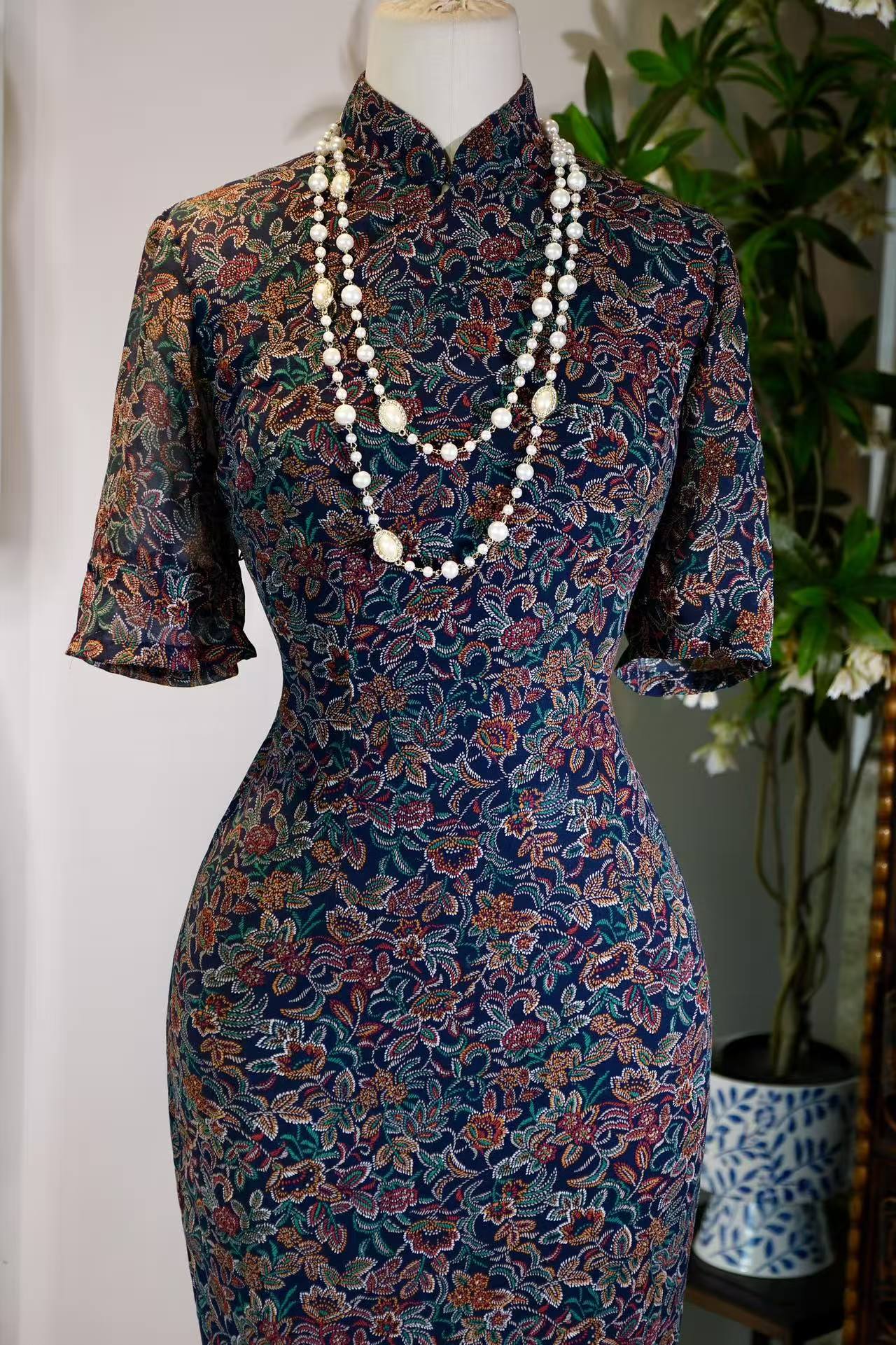
这件旗袍最引人入胜之处,在于其面料上繁复而精妙的图案。
缠枝莲纹的现代演绎
衣服上的图案并非普通的碎花,而是极具中国传统韵味的“缠枝纹”变体,类似于缠枝莲或宝相花的艺术化处理。
- 构图:图案以深蓝色为底,红、绿、金、白等色彩交织,枝叶蜿蜒连绵,花朵竞相绽放。这种“生生不息、万代绵长”的吉祥寓意,被巧妙地融入了六十年代更为摩登的剪裁之中。
- 色彩:深蓝底色沉稳压得住气场,而花叶的配色既有传统工笔画的细腻,又带有西洋油画的光影感,呈现出一种复古而华丽的视觉效果。
雪纺的轻盈质感
不同于传统旗袍厚重的织锦缎,这件旗袍选用了轻盈的雪纺面料。
- 视觉效果:在光线下,雪纺特有的微透感让繁复的花纹显得更加灵动,不显沉闷。
- 穿着体验:这种面料在六十年代被视为“摩登”的象征,它赋予了穿着者一种飘逸、柔美的气质,行走间如云烟流动,暗合了“云想衣裳花想容”的诗意。
这件古董衣不仅是一件衣服,更是一段历史的见证者。
海派遗风与台湾改良
1949年后,大量上海裁缝师傅随国民政府迁往台湾,将海派旗袍的精髓带到了宝岛。六十年代是台湾旗袍发展的黄金时期,这件旗袍正是那个时代的缩影。
- 剪裁:它保留了传统旗袍的立领、侧开衩,但在腰线的处理上更加贴合人体曲线,展现了当时受西方审美影响下,对女性S型曲线的推崇。
- 时代印记:那个年代的台湾,是东西方文化交汇的熔炉。这件旗袍既有着东方的含蓄内敛,又有着西方的热烈奔放,是“孤岛繁华”的最佳注脚。
稀缺性与收藏价值
- 工艺绝响:上世纪六十年代的台湾纺织印染技术正处于巅峰,这种高密度的多色印花雪纺面料,如今已极难复刻。
- 岁月孤品:雪纺面料娇贵,难以保存。历经半个多世纪的沧桑,这件旗袍依然能保持图案清晰、版型挺括,实属凤毛麟角。它不再仅仅是衣物,更是一件可以穿在身上的“软雕塑”艺术品。
结语
张爱玲曾说:“衣服是一种语言,随身带着一种袖珍戏剧。”
这件六十年代的台湾产雪纺印花旗袍,便是一场跨越时空的戏剧。它适合在某个午后的古董茶会,或是静谧的私人博物馆中展示。当珍珠项链与它相遇,那一刻,时光仿佛倒流,你看到的不仅是精美的纹样,更是那个风华绝代的旧时代。
Measurements / Size Guide:
Bust / Waist / Hips: 100/92/104 cm
Total Length: 118 cm
Detailed Description:
The most captivating feature of this cheongsam (qipao) is the intricate and exquisite pattern upon its fabric.
A Modern Interpretation of Intertwining Lotus Motifs The motifs are not mere floral prints but a sophisticated variation of the traditional Chinese "Intertwining Vine" (Chanzhi Wen), rendered with an artistic flair akin to the lotus or the "Precious Heraldic Flower" (Baoxianghua).
Composition: Set against a deep blue base, red, green, gold, and white hues interweave. The vines wind continuously, and the blossoms vie in radiance. This auspicious metaphor of "endless vitality and eternal lineage" is ingeniously integrated into the more modernist tailoring of the 1960s.
Color: The deep blue base provides a steady, commanding presence. The palette of the flowers and leaves possesses both the delicacy of traditional Chinese Gongbi painting and the light-and-shadow depth of Western oil painting, creating a vintage yet opulent visual effect.
The Ethereal Texture of Chiffon Diverging from the heavy brocades of traditional qipaos, this piece utilizes a lightweight chiffon fabric.
Visual Effect: Under light, the characteristic semi-transparency of chiffon makes the complex patterns appear fluid rather than heavy.
Wearing Experience: In the 1960s, this fabric was the epitome of "modernity." It grants the wearer an airy, graceful temperament—flowing like mist and smoke with every step, echoing the poetic sentiment of "Clouds remind one of her raiment, and flowers of her countenance."
This antique garment is not just a dress; it is a segment of history materialized.
Shanghai Legacy and Taiwanese Reformation After 1949, a large number of master tailors from Shanghai migrated to Taiwan, bringing the essence of "Haipai" (Shanghai-style) qipao to the island. The 1960s marked the golden age of qipao development in Taiwan, and this piece is a microcosm of that era.
Tailoring: It retains the traditional standing collar and side slits, but the waistline is sculpted to contour the body more closely, reflecting the era's Western-influenced admiration for the female "S-curve."
Mark of the Era: Taiwan at that time was a melting pot of Eastern and Western cultures. This qipao embodies both Eastern restraint and Western fervor—the perfect footnote to the "Prosperity on a Lonely Island."
Scarcity and Collection Value
The Swan Song of Craftsmanship: The textile printing and dyeing technology in 1960s Taiwan was at its peak. This high-density, multi-colored printed chiffon is nearly impossible to replicate today.
A Rare Specimen of Time: Chiffon is a delicate fabric and notoriously difficult to preserve. After over half a century, the fact that this qipao maintains such crisp patterns and a sharp silhouette is extraordinary. It is no longer merely a garment, but a work of "Soft Sculpture" art.
Eileen Chang once wrote: "Clothing is a language; it carries with it a pocket drama."
This 1960s Taiwanese-made printed chiffon qipao is indeed a drama that transcends time. It is perfectly suited for an afternoon antique tea party or a quiet display in a private museum. When paired with a pearl necklace, time seems to flow backward. What you see is not just an exquisite pattern, but the grace and elegance of a peerless bygone era.