深圳溯源
无法加载取货服务可用情况
衣服尺寸:
胸围/腰围/臀围:108/92/114 厘米
衣长:120 厘米
细节描述:
这件诞生于上世纪六十年代台湾工坊的旗袍,不仅是一件衣物,更是一段凝固的时光,一阕无声的诗。它以其独特的机器刺绣蕾丝工艺,在旗袍发展史上留下了浓墨重彩的一笔,既是传统工艺的延续,亦是工业时代审美转型的珍贵见证。
图案解析:宝相花的现代变奏
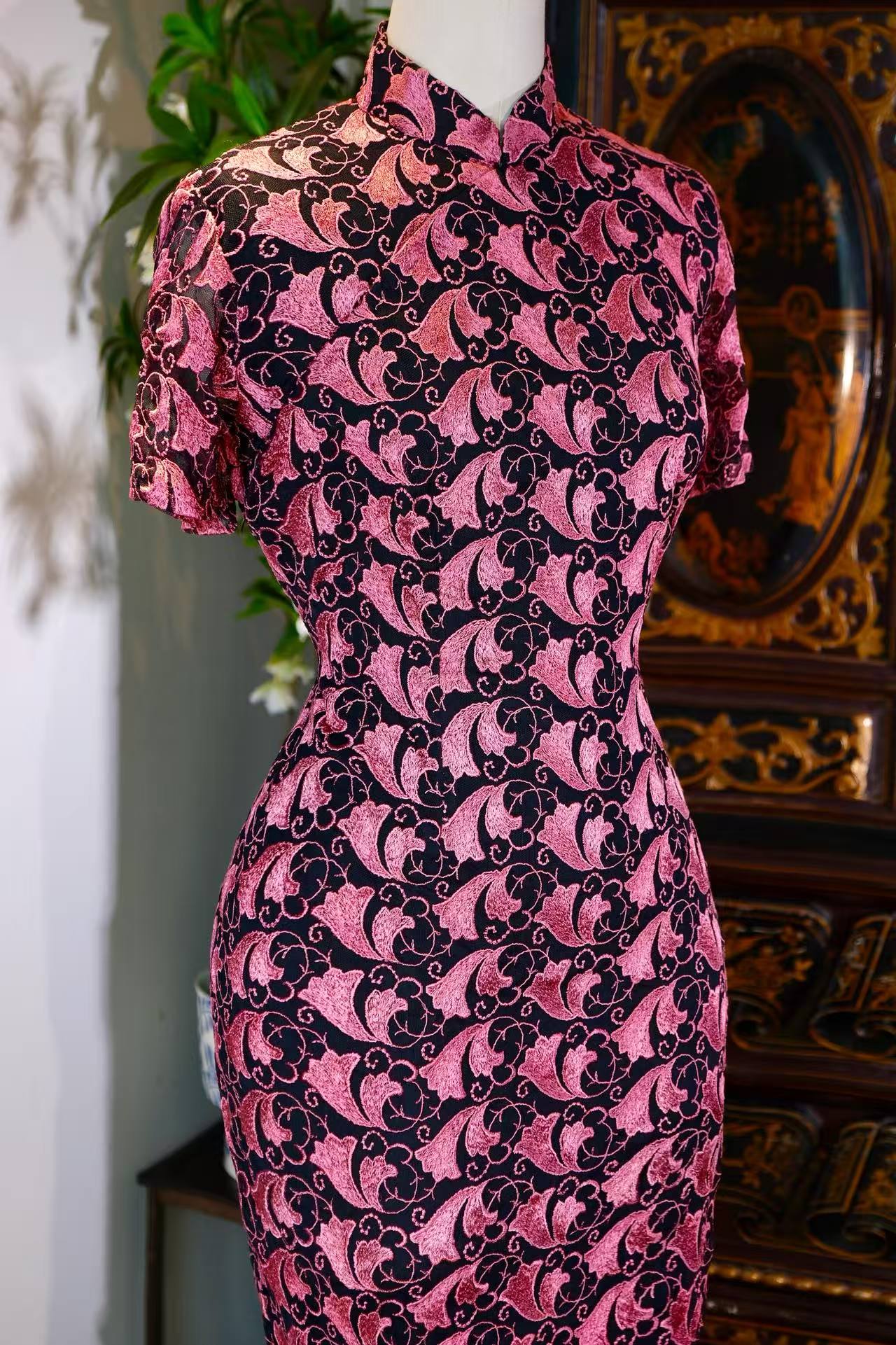
此旗袍最摄人心魄之处,在于其通体覆盖的繁复图案。这并非寻常的花草,而是经过高度抽象化与几何化的“宝相花”纹样。
宝相花,源于佛教艺术,兴盛于唐代,寓意着圣洁、圆满与吉祥。其形态通常以莲花、牡丹、菊花等自然花卉为蓝本,经过艺术加工,形成层层叠叠、结构对称的理想化花型。在这件旗袍上,设计师以现代主义的视角重构了这一古典母题。
- 形态:花瓣呈现出卷曲、伸展的动态,边缘以细密的锁链绣勾勒,内部则以短针绣填充,形成浮雕般的立体质感。花型之间以流畅的藤蔓相连,构成循环往复、生生不息的视觉韵律。
- 色彩:深邃的黑色蕾丝底布上,以玫红与粉紫双色丝线绣出宝相花,如同夜幕下悄然绽放的繁花,既有古典的沉静,又不失现代的明艳。光线流转间,丝线的光泽与蕾丝的通透交织,营造出一种朦胧而奢华的视觉效果。
时代印记:六十年代台湾的工业与手工艺协奏
六十年代的台湾,正处于从农业社会向工业社会转型的关键时期。纺织业作为当时的支柱产业之一,迎来了技术革新与市场扩张的黄金时代。这件旗袍的诞生,正是这一时代背景的缩影。
- 机器刺绣的兴起:传统的旗袍刺绣多为手工,耗时费力。而这件旗袍采用的是当时先进的机器刺绣技术,它极大地提高了生产效率,使得精美的纹样能够以相对亲民的成本普及。然而,这并非粗制滥造的流水线产品。从图案的精准对位、针脚的均匀细密来看,操作机器的工匠必定技艺高超,将机械的精准与手工艺的温度完美结合。
- 蕾丝面料的运用:蕾丝作为西方舶来品,在六十年代与东方旗袍的结合,是中西文化交融的典型体现。它打破了传统丝绸、锦缎的垄断,为旗袍注入了轻盈、浪漫的异域风情,迎合了当时都市女性追求时尚、展现自我的心理需求。
艺术风格与稀缺性:一曲绝唱
这件旗袍的艺术风格,可概括为“新古典主义的装饰风”。它在保留旗袍经典廓形——立领、斜襟、收腰、开衩——的同时,以极具装饰性的现代宝相花纹样作为视觉核心,实现了传统与现代的对话。
其稀缺性体现在以下几个方面:
- 工艺的不可复制性:六十年代台湾的机器刺绣工艺虽已成熟,但能达到如此精细度与艺术性的作品,在当时亦属凤毛麟角。如今,掌握此类技术的工坊大多已不复存在,使得这件旗袍成为特定时代工艺的孤本。
- 面料的特殊性:这种将机器刺绣与蕾丝底布结合的面料,对材质和工艺要求极高,存世量极少。历经半个多世纪的岁月,仍能保持如此完好的色泽与形态,实属难得。
- 历史的见证价值:它不仅是服装,更是六十年代台湾社会变迁、文化交融、女性意识觉醒的物质载体。它诉说着那个时代女性如何在传统与现代之间寻找平衡,如何用服饰表达自我。
正如《考工记》所言:“天有时,地有气,材有美,工有巧,合此四者,然后可以为良。”这件旗袍,得天时(六十年代工业发展)、得地气(台湾文化交融)、得材美(蕾丝与丝线)、得工巧(机器与人工的完美结合),堪称一件“良”器,一件值得珍藏与传颂的东方美学瑰宝。它静立于时光深处,等待着有缘人,去聆听它无声的诉说,去感受那份穿越时空的优雅与风华。
Measurements / Size Guide:
Bust / Waist / Hips: 108/92/114 cm
Total Length: 120 cm
Detailed Description:
This cheongsam (qipao), born in a Taiwanese workshop during the 1960s, is more than a garment—it is a segment of frozen time, a silent poem. With its unique machine-embroidered lace craftsmanship, it has left a profound mark on the history of qipao development, serving as both a continuation of tradition and a precious witness to the aesthetic transformation of the industrial age.
The most soul-stirring feature of this cheongsam is the intricate pattern covering its entire body. These are no ordinary flora, but highly abstracted and geometric "Baoxiang" (Treasure Phase) motifs.
Originating from Buddhist art and flourishing during the Tang Dynasty, the Baoxiang flower symbolizes purity, perfection, and auspiciousness. Usually based on natural flowers like the lotus, peony, and chrysanthemum, it is artistically processed into layered, symmetrical, and idealized blooms. On this cheongsam, the designer reconstructs this classical motif through a modernist lens.
Form: The petals present a dynamic movement of curling and stretching. The edges are outlined with dense chain stitches, while the interiors are filled with short-needle embroidery, creating a relief-like three-dimensional texture. The flowers are connected by fluid vines, forming a visual rhythm of eternal vitality.
Color: On the deep black lace base, Baoxiang flowers are embroidered in twin shades of rose red and powder purple. Like blossoms quietly opening under the night sky, they possess both classical tranquility and modern brilliance. As light shifts, the luster of the silk thread interweaves with the transparency of the lace, creating a hazy yet luxurious visual effect.
Taiwan in the 1960s was in a critical period of transition from an agrarian to an industrial society. The textile industry, as a pillar of the economy, entered a golden age of technological innovation. This cheongsam is a microcosm of that era.
The Rise of Machine Embroidery: Traditional qipao embroidery was mostly manual, consuming immense time and effort. This piece employs the advanced machine embroidery technology of the time, which greatly increased production efficiency, allowing exquisite patterns to reach the public at a relatively accessible cost. However, this is no crude mass-produced product. Judging by the precise alignment and uniform stitching, the craftsmen operating the machines were undoubtedly masters, perfectly blending mechanical precision with the warmth of craftsmanship.
The Use of Lace Fabric: As a Western import, the combination of lace with the Oriental qipao in the 1960s was a quintessential manifestation of East-West cultural fusion. It broke the monopoly of traditional silk and brocade, injecting a light, romantic, and exotic flair into the qipao, catering to the urban women's desire to pursue fashion and express their individuality.
The artistic style of this cheongsam can be summarized as "Neoclassical Decorative Style." While retaining the classic silhouette—standing collar, diagonal bodice, cinched waist, and side slits—it uses the highly decorative modern Baoxiang pattern as its visual core, achieving a dialogue between tradition and modernity.
Its scarcity is reflected in several aspects:
Unrepeatable Craftsmanship: Although machine embroidery was mature in 1960s Taiwan, works reaching this level of fineness and artistry were rare even then. Today, most workshops possessing such technology no longer exist, making this piece a unique specimen of its time.
Specialty of Fabric: Combining machine embroidery with a lace base requires extremely high material and technical standards; surviving examples are few. It is remarkable that after half a century, it maintains such pristine color and form.
Historical Witness Value: It is not just clothing, but a material carrier of social change, cultural fusion, and the awakening of female consciousness in 1960s Taiwan. It tells the story of how women found balance between tradition and modernity, using attire to define themselves.
As The Artificers' Record (Kao Gong Ji) states: "When the season is right, the earth has spirit, the material is beautiful, and the work is skillful—combine these four, and one creates a superior vessel." This cheongsam possesses the right timing (industrial development), the right spirit (cultural fusion), beautiful material (lace and silk), and skillful work (the perfect union of machine and man). It is a treasure of Oriental aesthetics worthy of collection and praise, standing silently in the depths of time, waiting for those who can hear its unspoken story.