深圳溯源
无法加载取货服务可用情况
衣服尺寸:
胸围/腰围/臀围:90/78/98 厘米
衣长:106 厘米
细节描述:
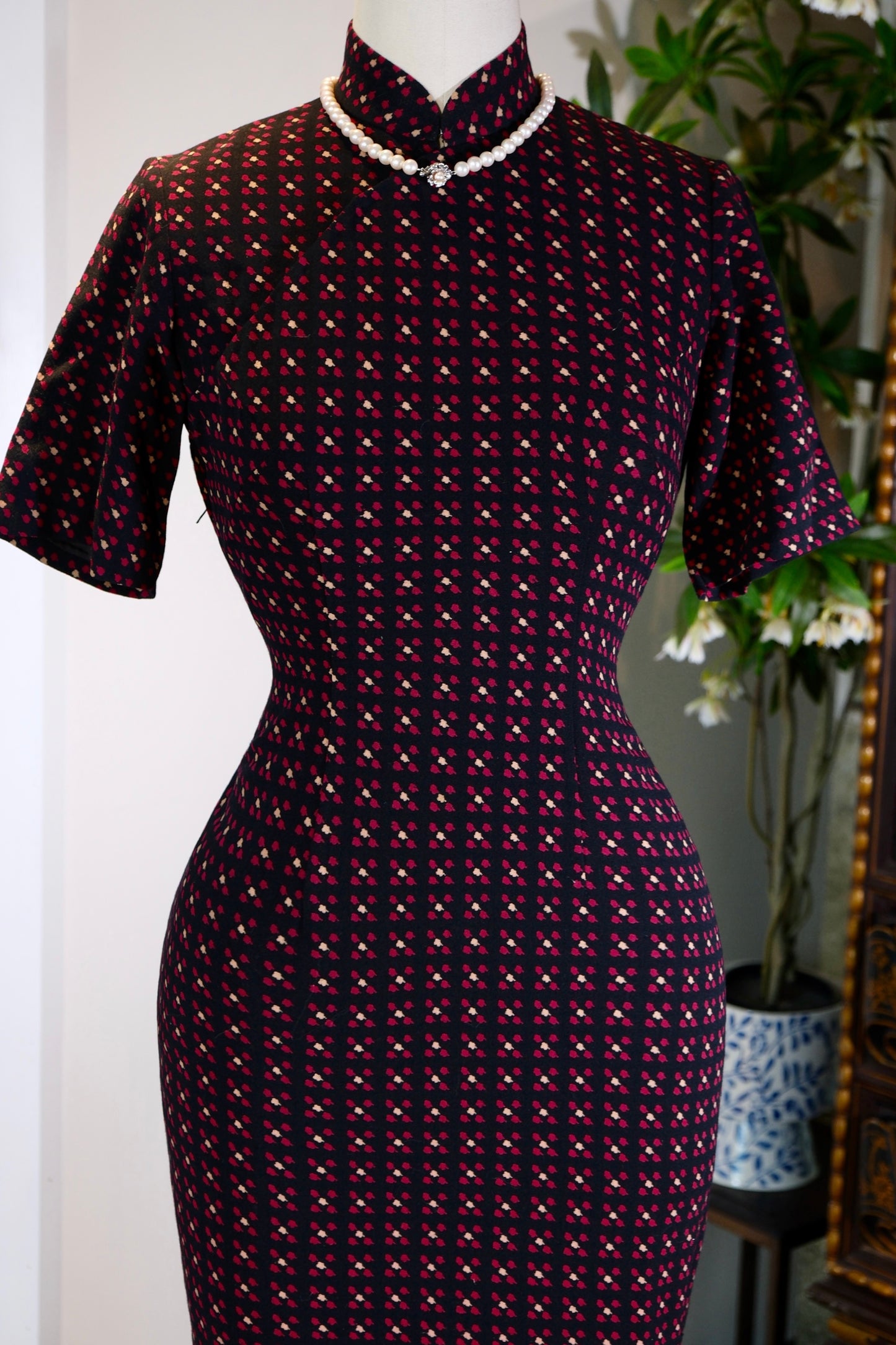
这件诞生于上世纪六十年代宝岛台湾的古董旗袍,是一首凝固的诗,一幅流动的画。它以经典的旗袍廓形为纸,以精妙的几何格纹为墨,书写着那个特殊年代的审美风骨与东方神韵。其整体风格端庄中不失灵动,含蓄里暗藏风华,是研究战后中国服饰演变与两岸文化交融的珍贵实物档案。
一、图案解构:几何秩序中的东方意趣
此旗袍最引人注目的,莫过于其面料上通体铺陈的几何格纹图案。它并非简单的方格罗列,而是一种极具巧思的“视觉游戏”。
- 基本构成:图案以深邃的藏蓝色为基底,象征着沉稳与静谧。其上,由无数细小的、如同米粒或花瓣般的几何单元(似由玫红与米白两色构成)规律排列,构成了一个个菱形的“虚格”。
- 视觉韵律:这些菱形单元在水平与垂直方向上交错延伸,形成了一种既严谨又富有变化的网格结构。远观如繁星点点,静谧夜空;近看似繁花锦簇,井然有序。这种设计打破了传统花卉、龙凤图案的具象表达,转而追求一种抽象的、具有现代主义色彩的秩序美与节奏感,体现了六十年代设计思潮对东方服饰的深刻影响。
- 文化寓意:这种“格纹”在中华文化中亦有深意。《礼记》有云:“君子慎其独也。”格纹的规整与秩序,恰如君子之品行,方正而不失圆融。同时,菱格纹样在中国传统纹饰中寓意“福寿绵长”,于无声处寄托了美好的祝愿。
二、衣以载道:一段跨越海峡的流金岁月
这件旗袍的故事,始于上世纪六十年代的台湾。彼时,大量大陆移民携家带口迁居宝岛,也将海派旗袍的精致工艺与审美情趣带到了台湾。这件旗袍,正是那个时代背景下,海派遗风与台湾本土工艺结合的产物。
它或许曾属于一位出身书香门第的女士,在台北的某个午后,穿着它赴一场友人的茶会;或许曾陪伴一位年轻的学者,在大学的图书馆里度过无数个静谧的夜晚。旗袍上的每一道剪裁,每一针缝线,都浸润着那个年代特有的温婉与坚韧。它不仅是一件衣服,更是一个时代的缩影,一个家族的记忆,一段跨越海峡的文化乡愁。
三、艺术风格与稀缺性:不可复制的时代孤品
从艺术风格上看,这件旗袍完美融合了传统与现代。其立领、斜襟、收腰、开衩,无一不是经典旗袍元素的精准呈现,勾勒出东方女性含蓄而曼妙的曲线。而其面料图案的选择,则大胆地拥抱了现代几何美学,使其在众多传统花卉旗袍中脱颖而出,展现出一种知性、内敛而又不失时尚感的独特气质。
其稀缺性体现在以下几个方面:
- 年代久远:六十年代的古董旗袍存世量本就不多,保存如此完好者更是凤毛麟角。
- 工艺精湛:从图片中可见,其剪裁合体,线条流畅,体现了当时台湾旗袍制作的高超技艺。
- 图案独特:这种几何格纹图案在同期旗袍中较为罕见,具有极高的辨识度与艺术价值。
- 历史价值:作为两岸文化交流的实物见证,其承载的历史信息无可替代。
正如张爱玲所言:“生命是一袭华美的袍,爬满了蚤子。”而这件旗袍,却是一袭华美的袍,承载着流金岁月的光华与尘埃。它不仅仅是一件可供穿着的衣物,更是一件值得收藏、研究与传承的艺术品。拥有它,便是拥有了一段鲜活的历史,一份独特的东方美学体验。
Measurements / Size Guide:
Bust / Waist / Hips: 90/78/98 cm
Total Length: 106 cm
Detailed Description:
This antique cheongsam (qipao), born on the island of Taiwan in the 1960s, is a solidified poem and a flowing painting. It uses the classic qipao silhouette as its paper and exquisite geometric checks as its ink, writing the aesthetic integrity and Eastern charm of that unique era. Its overall style is dignified yet agile, reserved yet hiding a quiet brilliance—a precious physical archive for studying the evolution of Chinese dress after the war and the cultural integration across the Strait.
The most striking feature of this cheongsam is the geometric checked pattern laid across the entire fabric. It is not a simple arrangement of squares, but a highly ingenious "visual game."
Basic Composition: The pattern features a profound navy blue base, symbolizing steadiness and tranquility. Upon it, countless tiny geometric units—resembling grains of rice or flower petals in shades of rose red and creamy white—are regularly arranged to form diamond-shaped "virtual grids."
Visual Rhythm: These diamond units extend crosswise in horizontal and vertical directions, creating a grid structure that is both rigorous and varied. From afar, it looks like shimmering stars in a quiet night sky; up close, it resembles clusters of flowers in perfect order. This design breaks away from the representational expression of traditional floral or dragon-and-phoenix patterns, instead pursuing an abstract, modernist sense of order and rhythm, reflecting the profound influence of 1960s design trends on Eastern attire.
Cultural Metaphor: This "checked pattern" holds deep meaning in Chinese culture. The Book of Rites states: "The gentleman is cautious when alone." The regularity and order of the checks are like the character of a gentleman—upright yet harmonious. Furthermore, the diamond motif in traditional Chinese decoration implies "longevity and boundless fortune," silently bestowing beautiful wishes.
The story of this cheongsam began in 1960s Taiwan. During this period, a large number of migrants from the mainland moved to the island, bringing with them the exquisite craftsmanship and aesthetic tastes of the Shanghainese qipao. This garment is the product of that historical background—a combination of the lingering Shanghainese style and local Taiwanese craftsmanship.
It might have belonged to a lady from a scholarly family, wearing it to a tea party in Taipei on a quiet afternoon; perhaps it accompanied a young scholar through countless peaceful nights in a university library. Every cut and every stitch on this cheongsam is imbued with the gentleness and resilience unique to that era. It is not just a piece of clothing, but a microcosm of an era, a memory of a family, and a cultural nostalgia spanning the Strait.
Artistically, this cheongsam perfectly fuses tradition and modernity. Its standing collar, diagonal bodice, cinched waist, and side slits are all precise presentations of classic qipao elements, tracing the subtle and graceful curves of the Eastern woman. The choice of fabric pattern, however, boldly embraces modern geometric aesthetics, making it stand out among the multitude of traditional floral qipaos and showcasing a unique temperament that is intellectual, restrained, and fashion-forward.
Its scarcity is manifested in several aspects:
Temporal Rarity: Surviving vintage cheongsams from the 1960s are few, and those preserved so perfectly are exceptionally rare.
Exquisite Craftsmanship: The tailoring is well-fitted and the lines are fluid, reflecting the superb qipao-making skills in Taiwan at that time.
Unique Pattern: This geometric checked pattern is relatively rare in cheongsams of the same period, possessing high recognizability and artistic value.
Historical Value: As a physical witness to the cultural exchange across the Strait, the historical information it carries is irreplaceable.
As Eileen Chang famously said: "Life is a gorgeous robe, crawling with fleas." Yet this cheongsam is a gorgeous robe carrying the glory and dust of the gilded years. It is more than just a wearable garment; it is a work of art worthy of collection, research, and inheritance. To own it is to possess a piece of vivid history and a unique experience of Eastern aesthetics.