深圳溯源
无法加载取货服务可用情况
衣服尺寸:
胸围/腰围/臀围:96/94/106 厘米
衣长:107 厘米
细节描述:
一、面料之美:触手可及的立体诗篇
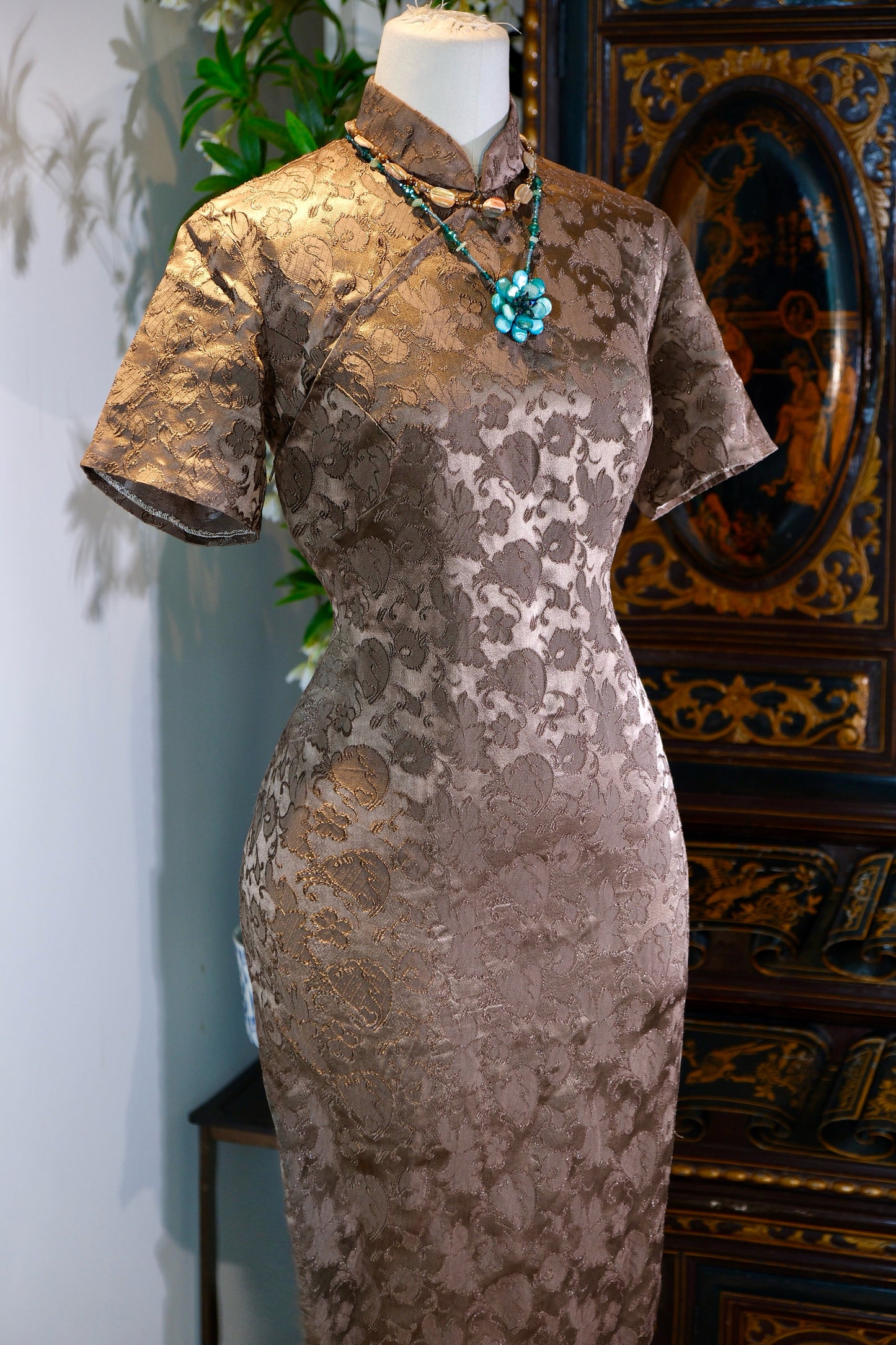
这件旗袍最令人叹为观止之处,在于其采用了极为考究的“浮雕提花”工艺。不同于寻常平面印花或普通织锦,这种面料在纺织过程中通过经纬线的复杂交织与高低错落,使花卉纹样在布面上呈现出一种如石刻般深邃、如雕塑般立体的浮雕质感。
在光影的流转下,衣身上的缠枝花卉仿佛要从底布上“生长”出来,花瓣层叠,枝叶卷舒,具有强烈的视觉冲击力与触觉厚度。这种工艺在六十年代属于纺织技术的巅峰,它不仅要求极高的织造精度,更赋予了面料一种“厚重而不滞,华丽而不俗”的独特气韵。
二、纹样解析:繁花深处的巴洛克回响
细观其纹样,主体为缠枝牡丹与卷草纹的变体。
- 构图上:它打破了传统旗袍繁复堆砌的布局,转而采用更具现代感的疏密对比。花朵硕大饱满,象征富贵圆满;卷草蜿蜒流畅,寓意生生不息。
- 风格上:这种浮雕提花的立体感,意外地与西方的“巴洛克”艺术风格形成了跨时空的对话——既有东方的含蓄典雅,又具备西方的立体张力。这种“中西合璧”的审美趣味,正是六十年代台湾作为文化交汇点的最佳注脚。
三、古董衣的故事:大稻埕的旧梦重温
这件旗袍诞生于上世纪六十年代的台湾,那是一个新旧交替、风华绝代的年代。彼时的台北大稻埕,布庄林立,丝竹声声。
我们可以想象,这件旗袍或许曾属于一位出身优渥的世家少奶奶。在那个没有空调的年代,她穿着这件透而不露、挺括有型的浮雕提花旗袍,在圆山大饭店的宴席间周旋。衣身上隆起的浮雕花纹,随着她的举手投足,在昏黄的灯光下泛着哑光的金棕色泽,既显出身份的尊贵,又流露出一种“由于懂得,所以慈悲”的岁月沉淀感。
四、稀缺性与艺术价值
在服装史的维度上,六十年代台湾产的浮雕提花旗袍具有极高的收藏价值:
- 工艺的断代:随着工业化印染的普及,这种耗时耗力、需要手工辅助的传统浮雕提花织造技艺已近失传。现代机器织造的提花往往浮于表面,难复刻这种深沉的肌理感。
- 形制的孤本:其剪裁保留了海派旗袍的经典韵味——高领挺括,腰身收紧,下摆微开。这种剪裁完美契合东方女性身形,而配合浮雕面料的硬度,更能修饰体态,让人“站如松,坐如钟”。
这不仅是一件衣服,更是一段凝固的时光,是一幅穿在身上的立体浮雕画。它静静地诉说着那个黄金年代的优雅与讲究。
Measurements / Size Guide:
Bust / Waist / Hips: 96/94/106 cm
Total Length: 107 cm
Detailed Description:
The most breathtaking feature of this cheongsam (qipao) is the highly sophisticated "Relief-Jacquard" (high-warp jacquard) craftsmanship. Unlike common flat prints or ordinary brocades, this fabric uses a complex interlacing of warp and weft threads to create varying heights on the surface. This causes the floral motifs to emerge with a profound, sculptural texture—reminiscent of stone carvings.
Under shifting light and shadow, the intertwining blossoms seem to "grow" from the base fabric. The layered petals and curling leaves possess a powerful visual impact and tactile density. In the 1960s, this technique represented the pinnacle of textile technology; it demanded extreme weaving precision and granted the fabric a unique temperament: "heavy but not stagnant, magnificent but never vulgar."
A close inspection of the patterns reveals a variation of intertwining peonies and scrolling grass motifs.
Composition: It breaks away from the cluttered layouts of traditional garments, opting for a more modern contrast of density and space. The full-bloomed peonies symbolize prosperity, while the fluid scrolling vines represent endless life.
Style: The three-dimensionality of the relief-jacquard creates an unexpected cross-temporal dialogue with Western Baroque art. It possesses both Eastern restraint and Western structural tension. This "Sino-Western fusion" is the perfect footnote to 1960s Taiwan as a cultural crossroads.
This qipao was born in 1960s Taiwan, an era of transition and unparalleled elegance. In the Dadaocheng district of Taipei back then, fabric shops lined the streets and the sounds of traditional music filled the air.
One can imagine that this garment once belonged to a young mistress of a prestigious family. In an era without widespread air conditioning, she would wear this crisp, well-structured relief-jacquard qipao to navigate banquets at the Grand Hotel. As she moved, the raised floral patterns shimmered with a matte golden-brown luster under dim lights, signaling both her noble status and a sense of "compassion through understanding" matured by time.
From the perspective of costume history, a 1960s Taiwanese relief-jacquard qipao holds immense collection value:
Technological Discontinuity: With the rise of industrial dyeing and printing, this time-consuming traditional weaving technique—which required manual assistance—is nearly extinct. Modern machine-woven jacquards often remain superficial, unable to replicate this deep, visceral texture.
The Silhouette as a Unique Specimen: The cut preserves the classic charm of the "Haipai" style—a crisp high collar, a tapered waist, and a slight flare at the hem. This silhouette perfectly fits the Eastern female form, and combined with the firmness of the relief fabric, it sculpts the posture, allowing one to "stand like a pine and sit like a bell."
This is more than a garment; it is a segment of frozen time and a wearable three-dimensional relief painting. It silently recounts the elegance and sophistication of a Golden Age.