深圳溯源
无法加载取货服务可用情况
衣服尺寸:
胸围/腰围/臀围:86/72/94 厘米
衣长:114 厘米
细节描述:
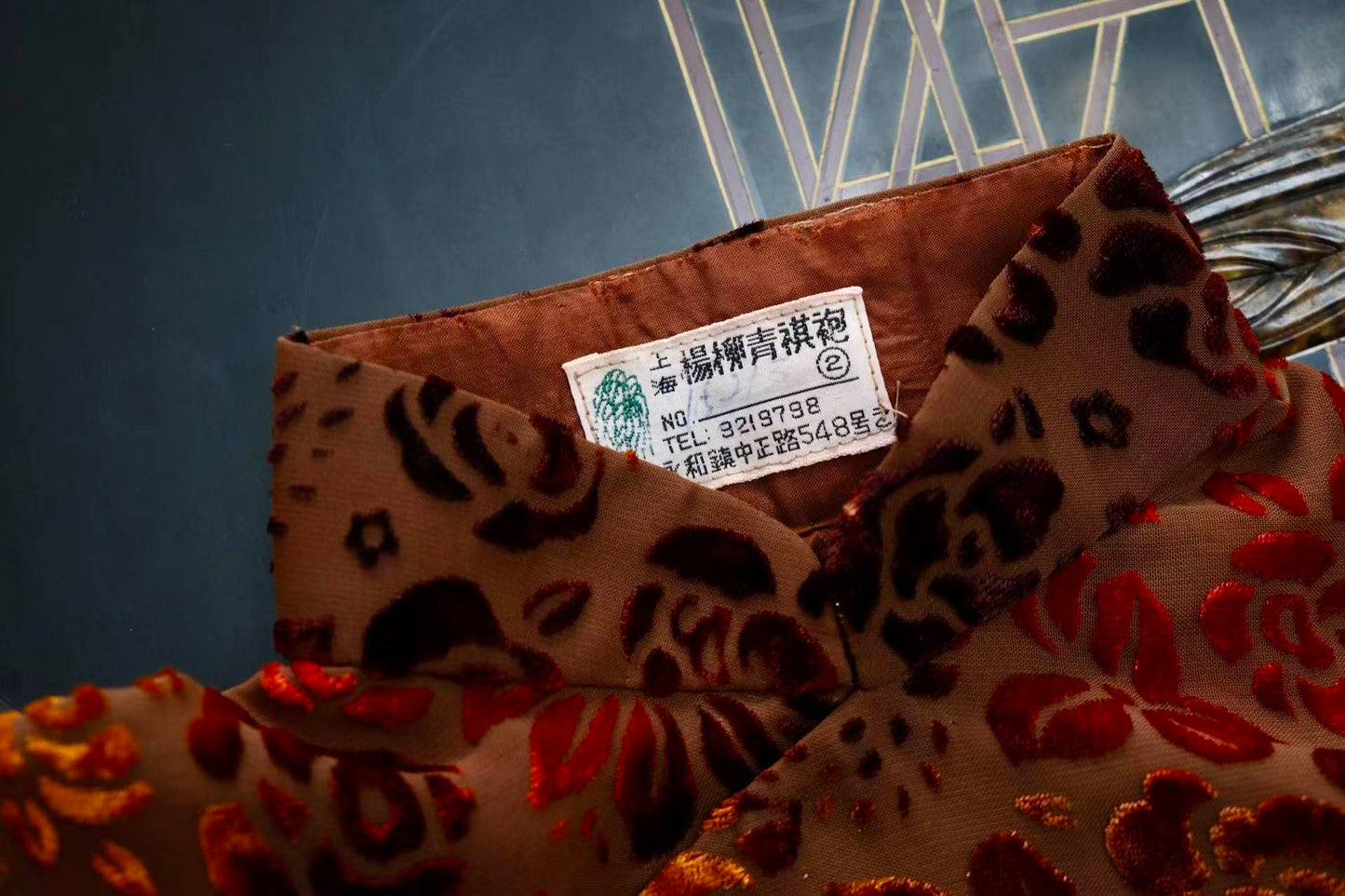
它静立在那里,像一帧被岁月精心装裱的旧梦。这不是一件普通的衣裳,而是一段凝固的时光,一首关于优雅与匠心的无声诗篇。它诞生于上世纪六十年代,由“上海杨柳青旗袍”出品,却在台湾获得了生命,最终成为一件穿越海峡、历经风霜的古董珍品。
一、图案之诗:秋林深处的绚烂与沉静
这件旗袍最摄人心魄的,莫过于它身上那片繁复而和谐的图案。它并非简单的印花,而是采用了“烧花丝绒”这一精湛工艺。
- 工艺之妙:烧花工艺,古已有之,谓之“烂花”。通过酸性浆料腐蚀掉丝绒表面的部分绒毛,留下半透明的底料与立体的绒花。于是,织物上便呈现出一种虚实相生、光影交错的效果。深棕色的底料如同秋日午后的土地,沉静而温厚;而烧花后留下的,是如同天鹅绒般柔软立体的花卉图案。
- 色彩之韵:图案的色彩是这件旗袍的灵魂。它采用了手绘晕染的技法,使得每一朵花都独一无二。你看那花瓣,从深邃的酒红、勃艮第红,过渡到温暖的赭石、橘红,再到明亮的金黄与古铜色,仿佛将整个秋天的色彩都浓缩于此。这并非工业印染的呆板,而是画师笔尖流淌出的情感,如同宋代花鸟画中的没骨法,不勾轮廓,以色彩直接塑造形象,充满了生命力与流动感。
- 纹样之意:花卉纹样以玫瑰与抽象的菊科花卉为主,它们并非写实,而是经过了艺术的提炼与变形。花朵或含苞待放,或恣意盛开,枝叶缠绕,疏密有致。这让人联想到明清时期盛行的“缠枝花卉纹”,寓意着生生不息、万代绵长。然而,这里的构图更为自由奔放,带有现代艺术的装饰感,是传统纹样在新时代下的华丽转身。
二、衣上故事:海峡两端的匠心与乡愁
这件旗袍的故事,远比它的外表更加动人。
- 海派风骨:领标上的“上海杨柳青旗袍”字样,是它高贵的出身证明。它摒弃了清代旗装的宽大平直,强调女性的曲线美,立领、收腰、开衩,每一处细节都彰显着都市女性的独立与自信。杨柳青,这个名字本身就带着一股江南的温婉与诗意,是那个时代众多优秀旗袍工坊的代表。
- 海峡情缘:然而,这件旗袍却产自台湾。这背后,是上世纪中叶那段特殊的历史。许多上海的裁缝师傅与商人迁至台湾,将海派旗袍的精湛技艺带到了宝岛。他们使用台湾本地生产的优质丝绒,结合上海的传统工艺,创造出了一种独特的“海派遗风”。这件旗袍,正是这段历史的见证者。它身上流淌着上海的时尚血液,又呼吸着台湾的湿润空气,是文化交融的产物,也承载着一代人的乡愁与记忆。
- 匠人之心:在那个没有电脑制版、没有自动化裁剪的年代,每一件旗袍都是匠人之心血的结晶。从选料、设计、手绘、烧花,到裁剪、缝制,数十道工序,环环相扣,缺一不可。尤其是那手绘晕染的图案,需要画师极高的艺术修养与耐心。我们可以想象,在昏黄的灯光下,一位老师傅正屏息凝神,用毛笔蘸着特制的染料,在丝绒上细细描绘,将秋日的绚烂一笔一笔地“种”在布料上。这不仅仅是在做一件衣服,更是在创作一件艺术品。
三、艺术之魂:稀缺性的绝唱
在当今这个快时尚泛滥的时代,这样一件古董旗袍的稀缺性,不言而喻。
- 工艺的绝唱:烧花丝绒工艺复杂,成本高昂,且对环境和工人健康有一定影响,如今已鲜少有人问津。手绘晕染更是需要极高的艺术天赋,难以规模化生产。这件旗袍,是那个讲究“慢工出细活”时代的绝唱。
- 时代的印记:它不仅是服装,更是历史的切片。它见证了海派文化的辉煌,见证了海峡两岸的文化交流,也见证了女性审美意识的觉醒。穿上它,你便与那个优雅、从容、充满故事的时代产生了连接。
- 独一无二的存在:由于手绘的特性,世界上没有两件完全相同的“杨柳青”烧花旗袍。你手中的这一件,是宇宙间唯一的孤品。它的每一处色彩的浓淡,每一朵花的姿态,都带着它独特的生命印记。
这件六十年代的上海杨柳青旗袍,是一件值得被珍藏、被传颂的艺术品。它不仅仅是一件衣服,更是一段历史,一种文化,一份匠心。它等待着那位懂得欣赏它、与它灵魂共鸣的主人,续写它未完的故事。
Measurements / Size Guide:
Bust / Waist / Hips: 86/72/94 cm
Total Length: 114 cm
Detailed Description:
It stands there silently, like a vintage dream framed meticulously by time. This is no ordinary garment, but a segment of solidified time—a silent poem about elegance and ingenuity. Born in the 1960s and produced by the prestigious "Shanghai Yangliuqing Cheongsam," it gained its life in Taiwan, eventually becoming a cross-strait antique treasure that has weathered the storms of history.
The most breathtaking aspect of this cheongsam (qipao) is the complex yet harmonious pattern it bears. This is no simple print, but the result of the exquisite "Devoré Velvet" (burn-out) technique.
The Magic of Craft: The Devoré process, known historically as Lanhua (etched flowers), involves using acidic paste to dissolve portions of the velvet pile, leaving behind a semi-transparent base and three-dimensional velvet blossoms. This creates a visual interplay between the ethereal and the solid, light and shadow. The deep brown base resembles the autumn earth in the afternoon—serene and warm—while the remaining velvet patterns are as soft and sculptural as swan feathers.
The Rhyme of Color: The palette is the soul of this piece. Utilizing hand-painted gradients, every blossom is rendered unique. Observe the petals: they transition from deep wine and burgundy to warm ochre and russet, then to bright gold and antique bronze. It is as if the entire spectrum of autumn is condensed here. This is not the rigidity of industrial dyeing, but emotion flowing from an artist's brush—much like the "Boneless Method" (Mogu) in Song Dynasty bird-and-flower painting, where forms are shaped directly by color without outlines, full of vitality and movement.
The Meaning of Motifs: The floral motifs, centered on roses and abstracted chrysanthemums, are artistically refined rather than purely realistic. Flowers in bud or full bloom intertwine in a rhythmic density, reminiscent of the "Intertwining Vines" (Chanzhi) popular in the Ming and Qing dynasties, symbolizing eternal life. Yet, the composition here is more liberated, carrying a sense of modern Art Deco decoration—a magnificent transformation of traditional motifs for a new era.
The story behind this cheongsam is even more moving than its appearance.
Shanghainese Integrity: The label "Shanghai Yangliuqing Cheongsam" is its certificate of noble birth. It rejects the broad, flat silhouettes of Qing Dynasty robes in favor of the "Shanghainese Style" (Haipai) which emphasizes the female curve. Every detail—the standing collar, cinched waist, and side slits—manifests the independence and confidence of the urban woman. "Yangliuqing," a name evoking the poetic grace of the Jiangnan region, represents the pinnacle of elite qipao workshops of that era.
A Cross-Strait Bond: Despite its brand origin, this piece was crafted in Taiwan. This reflects the unique history of the mid-20th century, when many Shanghainese master tailors and merchants migrated to Taiwan, bringing their exquisite skills to the island. They combined high-quality local Taiwanese velvet with traditional Shanghainese techniques to create a unique "Shanghainese Legacy." This cheongsam is a witness to that cultural fusion, carrying the fashion bloodline of Shanghai while breathing the moist air of Taiwan—a vessel for the nostalgia and memories of a generation.
The Artisan's Heart: In an era without computer-aided design or automated cutting, every qipao was a crystallization of the artisan's soul. From material selection and design to hand-painting, etching, cutting, and sewing, dozens of intertwined steps were required. One can imagine a master tailor under a dim light, holding a brush dipped in special dyes, carefully "planting" the splendor of autumn onto the fabric stroke by stroke. This was not just making clothes; it was creating art.
In today’s world of rampant fast fashion, the scarcity of such an antique cheongsam is self-evident.
A Technical Swan Song: Devoré velvet is complex and costly to produce; today, such labor-intensive methods are rarely practiced. The hand-painted gradient technique requires immense artistic talent and cannot be mass-produced. This cheongsam is a swan song of an era that valued "slow, deliberate labor."
An Imprint of the Era: It is more than a garment; it is a historical slice. It witnessed the glory of Shanghainese culture, the cultural exchange across the Taiwan Strait, and the awakening of female aesthetic consciousness. To wear it is to connect with an era that was elegant, composed, and full of stories.
A Unique Existence: Due to the nature of hand-painting, no two "Yangliuqing" Devoré qipaos in the world are exactly alike. This piece is a unique specimen in the universe. Every shade of its color and every posture of its flowers carries a unique signature of life.
This 1960s Shanghai Yangliuqing cheongsam is a work of art worthy of being treasured and praised. It waits for an owner who understands its soul, ready to continue its unfinished story.