深圳溯源
无法加载取货服务可用情况
衣服尺寸:
胸围/腰围/臀围:84/68/94 厘米
衣长:96 厘米
细节描述:
图案解码:织机上的文人画境
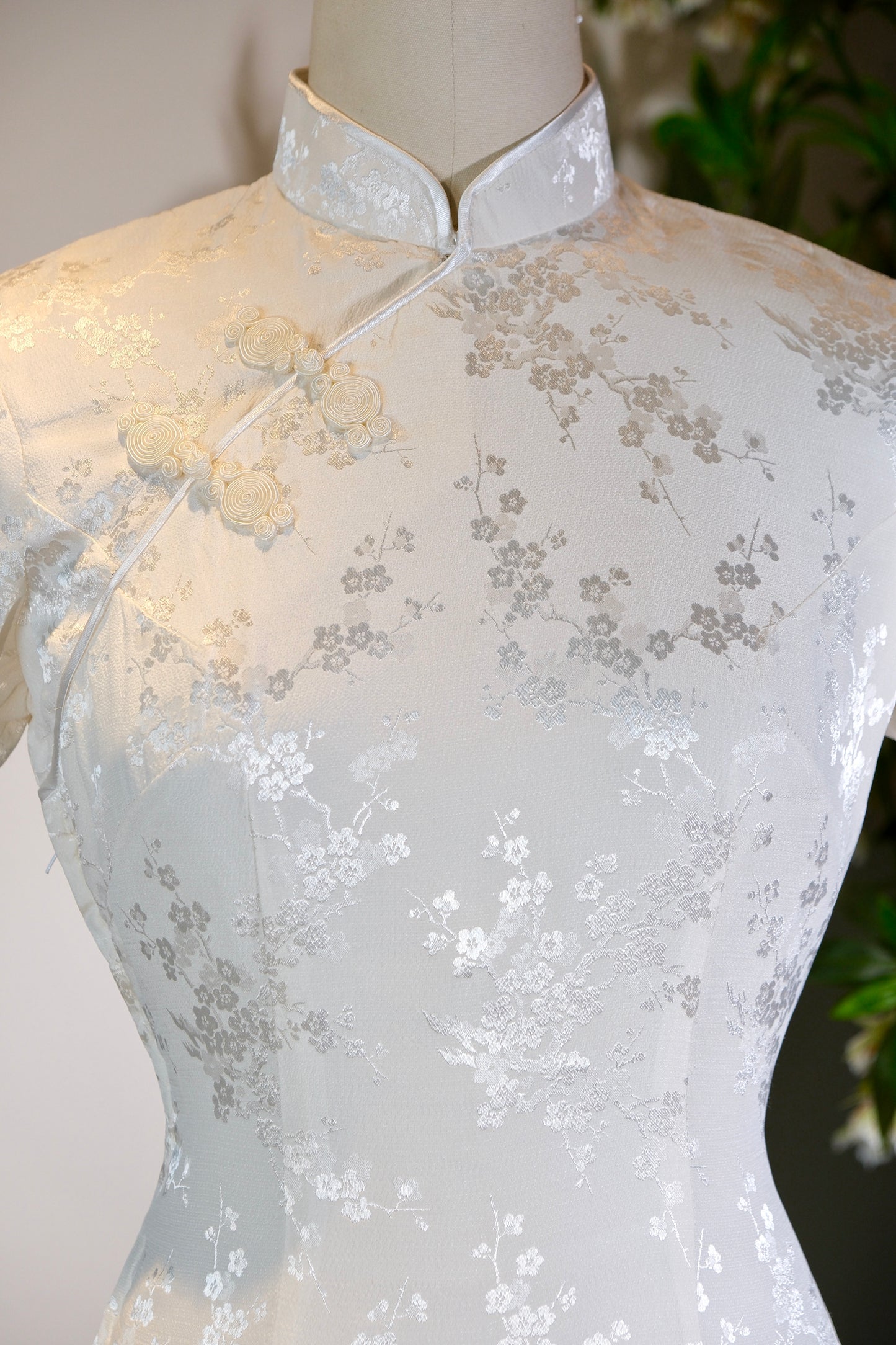
这件素白梅花提花绸旗袍的纹样,是东方美学的微缩史诗。衣身遍布的梅花枝干以“S”形曲线蜿蜒,暗合传统绘画“折枝法”的构图智慧——疏密相间的梅朵或含苞如珠,或绽放五出,枝叶则以细密的“冰裂纹”为底,象征寒冬中不屈的生命力。
提花工艺的精妙在于光影游戏:平纹地组织上,纬线浮长形成梅花浮雕效果,行走时衣料微动,仿佛枝头落雪随风轻颤。这种“暗花”设计摒弃了刺绣的浓艳,以织造本身的肌理传递文人画“计白当黑”的留白意境,与宋代林逋“疏影横斜水清浅”的咏梅诗境遥相呼应。
时光褶皱里的迁徙史诗
1949年后,台湾成为海派旗袍技艺的“文化飞地”。这件六十年代的作品,正是上海师傅携织机渡海后的匠心结晶。彼时台湾丝绸业依托美援引进日本提花机,织就了这件“外销级”精品——其面料密度达每英寸120根经线,远超同期大陆产品的80根标准。
衣身侧缝的隐形开衩(约15厘米),既保留了传统旗袍的含蓄,又暗合六十年代台湾女性参与社会活动的实用需求。领口与袖口的0.3厘米极细绲边,采用“单色绲双道”工艺,这种“细香绲”技法需师傅以指尖捻线,一针一线皆是“慢工出细活”的见证。
稀缺性考据:不可复制的时代标本
- 面料绝唱:七十年代后化学纤维普及,此类提花绸因工艺复杂逐渐停产。现存同类型面料多用于戏曲服装,日常服饰中完整保存者不足百件。
- 工艺断代:衣襟处的盘扣采用“蝴蝶扣”造型,扣坨以同色丝线缠绕成螺旋纹,这种“一字扣变体”在台湾六十年代后期被更简洁的“琵琶扣”取代,成为特定时期的工艺坐标。
- 文化孤本:衣身无印花,纯以提花显纹,体现台湾“文化复兴运动”时期对“正统中华美学”的极致追求,与同期香港旗袍的西洋化改良形成鲜明对比。
艺术风格:新古典主义的东方表达
这件旗袍的廓形暗藏玄机:素白底色与银灰梅纹的搭配,打破传统旗袍“红配绿”的喜庆范式,以“素以为绚”的哲学,将道家“见素抱朴”的思想转化为可穿戴的艺术。
当指尖抚过衣料上凹凸的梅枝,仿佛触碰到时光的褶皱——这不仅是一件衣服,更是一段被织进经纬里的家国记忆。
Measurements / Size Guide:
Bust / Waist / Hips: 84/68/94 cm
Total Length: 96 cm
Detailed Description:
The motif of this pristine white plum-blossom jacquard silk qipao is a miniature epic of Oriental aesthetics. The plum branches winding across the body in "S" curves align with the compositional wisdom of the "broken branch" (zhezhi) technique in traditional painting. Clusters of plum blossoms, interspersed with varying densities, appear either as pearl-like buds or in full five-petaled bloom. The branches rest upon a subtle "ice-crackle" base pattern, symbolizing unyielding vitality amidst midwinter.
The ingenuity of the jacquard craft lies in its play of light and shadow: on the plain-weave ground, the floating weft threads create a relief effect for the blossoms. As the wearer moves, the fabric ripples, making the plum flowers look like falling snow trembling in the wind. This "hidden floral" (anhua) design eschews the vividness of embroidery, instead using the texture of the weave to convey the "white space" (liubai) philosophy of literati art. It echoes the poetic imagery of the Song Dynasty poet Lin Bu: "Sparse shadows incline across the clear, shallow water."
After 1949, Taiwan became a "cultural enclave" for the craftsmanship of Shanghai-style (Haipai) qipaos. This 1960s piece is a masterpiece born from the ingenuity of Shanghai masters who crossed the sea with their looms. At that time, Taiwan's silk industry utilized American aid to import Japanese jacquard machines, weaving this "export-grade" gem—its fabric density reached 120 warp threads per inch, far exceeding the 80-thread standard of mainland products from the same period.
The 15cm invisible side slits preserve the traditional modesty of the qipao while meeting the practical needs of 1960s Taiwanese women participating in social activities. The ultra-fine 0.3cm piping (gunbian) at the collar and cuffs utilizes the "double-row monochromatic piping" technique. This "fine fragrance piping" (xixianggun) required masters to twist the threads with their fingertips, a testament to the "slow work yields fine results" philosophy.
The Swan Song of Fabric: After the 1970s, synthetic fibers became ubiquitous, and this type of complex jacquard silk gradually ceased production. Most surviving fabrics of this kind are now relegated to traditional opera costumes; fewer than 100 intact pieces remain in daily vintage attire.
Chronological Craftsmanship: The frog closures (pankou) at the bodice feature a "butterfly" shape, with the knots spiraled from matching silk thread. This variation of the "straight-bar buckle" was replaced by the simpler "pipa buckle" in late-1960s Taiwan, serving as a specific chronological marker of craft.
A Cultural Sole Copy: Lacking any printed patterns and relying entirely on the jacquard weave for visual depth, this piece reflects the ultimate pursuit of "Orthodox Chinese Aesthetics" during Taiwan's "Cultural Renaissance" movement, standing in stark contrast to the Westernized modifications of contemporary Hong Kong qipaos.
The silhouette of this qipao harbors a hidden secret: the pairing of a pristine white base with silver-gray plum motifs breaks the traditional festive paradigm of "red and green." Using the philosophy of "plainness as the ultimate brilliance," it transforms the Taoist concept of "embracing simplicity" into wearable art.
As your fingertips brush against the raised plum branches on the fabric, it feels as though you are touching the folds of time—this is not merely a garment, but a memory of home and nation woven into the warp and weft.