深圳溯源
无法加载取货服务可用情况
衣服尺寸:
胸围/腰围/臀围:90/78/100 厘米
衣长:110 厘米
细节描述:
一、 纹样解读:千树万树的“紫叶”婆娑
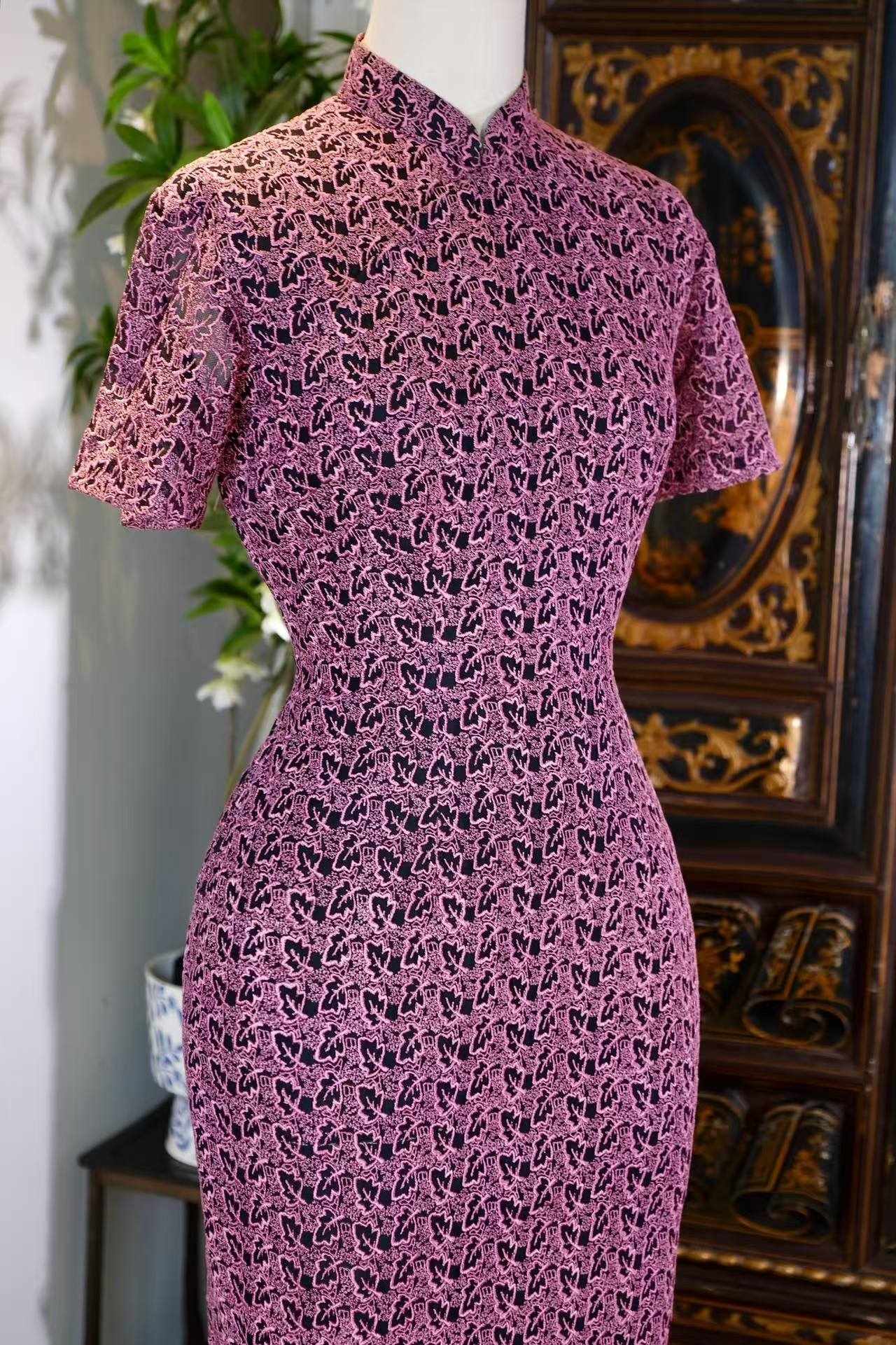
这件旗袍最引人入胜的,是其通体铺陈的镂空叶纹。
- 形态之美:图案并非写实的单一叶片,而是经过艺术提炼的缠枝卷叶纹。黑色的丝线勾勒出叶脉的骨架,线条圆润流畅,如同书法中的行草,连绵不断。
- 色彩之韵:粉紫色的刺绣,在这里起到了画龙点睛的作用。它不是大面积的平铺直叙,而是作为叶片的底色,透过黑色的蕾丝网格隐隐透出。
- 视觉通感:这让人联想到暮春时节的紫藤叶,或是夕阳下被染成紫红色的枫叶。黑色是影,粉紫是光,光影交错间,仿佛一阵风吹过,满树叶片在轻轻摇曳。
- 去俗存雅:古人云“红花还需绿叶扶”,但这件旗袍反其道而行之,将“叶”作为主角。这种设计摒弃了花朵的甜腻,多了一份植物生长的韧性与清冷的高级感。
二、 时代故事:东方好莱坞的“镂空”哲学
这件六十年代香港产的古董旗袍,是那个摩登年代的缩影。
- 工艺的绝响:那个年代的机绣工艺(Machine Embroidery)正处于巅峰。不同于今日的激光切割,当年的机器刺绣利用针脚的疏密来表现叶片的层次。这种重工蕾丝,需要极高的张力控制,才能保证水洗后不变形、不走样。如今,这种老式机器与工艺已近乎失传。
- 穿着者的想象:在1960年代的香港,能穿上这样一件粉紫蕾丝旗袍的女子,定是受过良好教育、兼具传统底蕴与现代眼光的“新女性”。
- 她或许会在夏日的傍晚,穿着它去参加一场花园派对。粉紫色在夜色中显得既高贵又神秘,而满身的叶纹,则让她在觥筹交错间,保留了一份“结庐在人境,而无车马喧”的静谧与从容。
三、 艺术风格与稀缺性
- 装饰艺术风格(Art Deco)的东方回响:这种重复、连续的叶纹排列,带有明显的装饰艺术风格特征——强调几何感与秩序感。但中国工匠巧妙地将其柔化,变成了东方的缠枝纹,这是中西美学完美融合的孤品。
- 稀缺性:
- 存世量极少:六十年代的蕾丝旗袍本就易损,保存至今且颜色依旧鲜亮(粉紫极易褪色)的更是凤毛麟角。
- 审美孤品:现代旗袍多推崇大红大绿的喜庆,或素色极简的清冷,而这种“黑边粉紫叶纹”的配色,既有复古的华丽,又有现代的摩登,是不可复制的时代孤本。
【结语】
这不仅是一件衣裳,更是一片凝固的紫叶林。它静静地诉说着半个世纪前,香江边那个关于优雅、关于时光的故事。
Measurements / Size Guide:
Bust / Waist / Hips: 90/78/100 cm
Total Length: 110 cm
Detailed Description:
I. Pattern Interpretation: The Whirling "Purple Leaves" of a Thousand Trees The most captivating feature of this qipao is the hollowed-out leaf pattern spread across the entire garment.
Beauty of Form: The motifs are not realistic single leaves but artistically refined scrolling leaf patterns. Black silk threads outline the skeleton of the leaf veins with rounded, fluid lines—resembling the "Running-Cursive" style of calligraphy—extending without interruption.
Rhyme of Color: The pink-purple embroidery serves as the "crowning touch" here. Instead of a large-scale, straightforward narrative, it acts as the base color of the leaves, faintly peeking through the black lace mesh.
Visual Synesthesia: This evokes images of wisteria leaves in late spring or maple leaves dyed purplish-red by the sunset. Black is the shadow, and pink-purple is the light. In the interplay of light and shadow, it feels as though a gust of wind has passed, causing a tree full of leaves to sway gently.
Eschewing Vulgarity for Elegance: As the ancients said, "Red flowers need green leaves for support," but this qipao does the opposite, making the "leaf" the protagonist. This design abandons the cloying sweetness of blossoms, adding a sense of botanical resilience and a cool, high-end sophistication.
II. Stories of the Era: The "Hollowed" Philosophy of the Oriental Hollywood This antique qipao produced in 1960s Hong Kong is a microcosm of that modern era.
The Final Echo of Craftsmanship: Machine embroidery technology was at its peak during that decade. Unlike today's laser cutting, the machine embroidery of that time utilized the density of stitches to express the layers of the leaves. This heavy-duty lace required extremely high tension control to ensure it would not deform or lose its shape after washing. Today, such old-fashioned machinery and techniques have nearly vanished.
Imaging the Wearer: In 1960s Hong Kong, a woman capable of wearing such a pink-purple lace qipao would surely be a "New Woman"—well-educated, possessing both traditional heritage and a modern outlook.
She might wear it to a summer garden party in the evening. The pink-purple color appears noble and mysterious in the night, while the leaf patterns covering her body allow her to maintain a sense of tranquility and composure amidst the social clatter—echoing the sentiment, "I built my hut in a zone of human habitation, yet near me there is no noise from carts or horses."
III. Artistic Style and Scarcity
The Oriental Echo of Art Deco: This repetitive, continuous arrangement of leaf patterns bears obvious characteristics of the Art Deco style—emphasizing geometric and orderly sensations. However, Chinese craftsmen skillfully softened it into Oriental "scrolling branch" patterns, making this a unique piece where Eastern and Western aesthetics merge perfectly.
Scarcity:
Extremely Rare Survival: Lace qipaos from the 1960s are inherently fragile; those that have survived to this day with colors remaining bright (as pink-purple fades easily) are rare as phoenix feathers.
Aesthetic Uniqueness: Modern qipaos often favor festive reds and greens or minimalist plain colors. This "black-bordered pink-purple leaf" palette possesses both vintage opulence and modern chic, making it an irreproducible masterpiece of its era.
[Conclusion] This is not just a garment; it is a frozen forest of purple leaves. It quietly tells a story of elegance and time from half a century ago by the banks of the Fragrant River.