深圳溯源
无法加载取货服务可用情况
衣服尺寸:
胸围/腰围/臀围:90/74/98 厘米
衣长:106 厘米
细节描述:
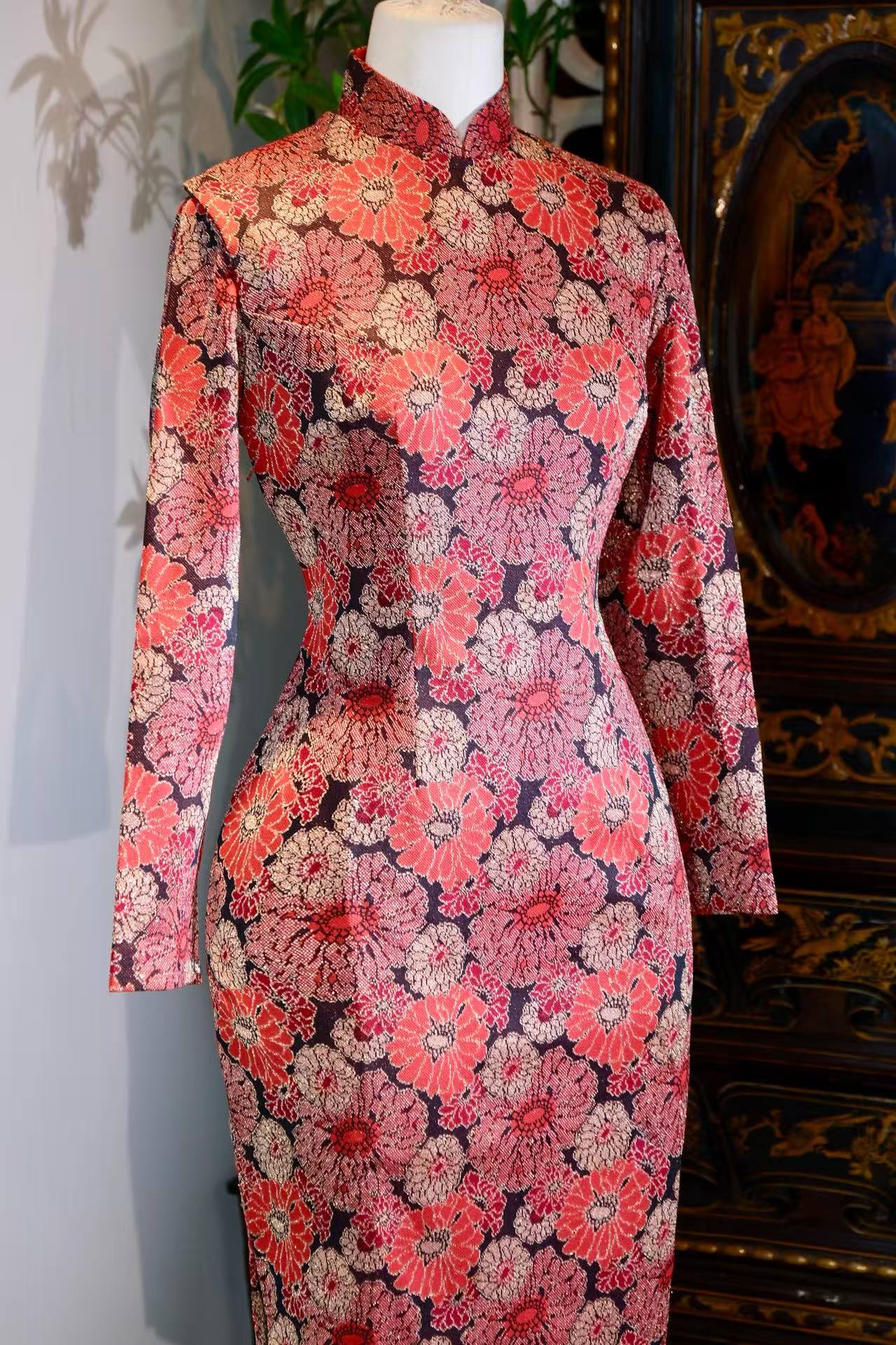
当指尖划过这袭六十年代香港产织银旗袍,仿佛触碰到了一段封存的香江旧梦。不同于寻常旗袍的含蓄内敛,这件古董衣以一种近乎决绝的姿态,在暗夜的底色上,织就了一场关于“虞美人”的盛大花事。
一、图案:银线勾勒的“霸王别姬”
这袭旗袍最摄人心魄之处,在于其满铺的虞美人纹样。
在植物学与文学的意象中,虞美人花姿轻盈,花瓣薄如蝉翼,色彩热烈而凄美,常让人联想到“虞兮虞兮奈若何”的千古绝唱。但这袭旗袍上的虞美人,并非传统国画中那般写意留白,而是采用了极具六十年代现代感的几何化构图。
- 色彩的张力:面料底色深沉,似墨蓝又似深紫,营造出一种静谧而深邃的氛围。而花冠则运用了珊瑚红、赭石与淡金的渐变,如同在暗夜中燃烧的火焰。
- 织银工艺的巧思:最为精妙的是“织银”工艺的介入。设计师用银线交织在花卉中,使得花朵在光影流转间闪烁着冷冽的金属光泽。这种“金银交织”的手法,既保留了传统织锦的华贵,又赋予了花朵一种现代雕塑般的立体感。花瓣层层叠叠,似在风中颤动,正如张爱玲笔下所形容的——“生命是一袭华美的袍”,而这袭旗袍,便是将生命最热烈的瞬间凝固成了永恒。
二、故事:香江摩登的黄金时代
上世纪六十年代,是香港经济腾飞、中西文化剧烈碰撞的“黄金时代”。彼时的香港女性,既受传统礼教的熏陶,又开始接受西方自由思想的洗礼。
这袭旗袍正是那个时代的缩影。它诞生于香港中环或上环某家老字号裁缝铺的案头,那时的“红帮裁缝”技艺已臻化境。
- 剪裁的变革:从图片中可以看出,这件旗袍采用了经典的高领、长袖、收腰设计。立领挺括,修饰出女性优雅的颈部线条;腰身剪裁极度合体,勾勒出六十年代女性追求独立、自信的身体曲线。
- 面料的奢华:在那个物资相对匮乏的年代,使用如此大面积的织银提花面料,足以证明其主人的非凡身份。它或许曾属于一位名门闺秀,在半岛酒店的下午茶会上,或是在某场盛大的慈善晚宴中,以此衣惊艳四座。
三、艺术风格:中西合璧的“装饰艺术”
作为服装史的研究者,我认为这袭旗袍的艺术价值在于其独特的“装饰艺术”风格。
它打破了传统旗袍纹样“图必有意,意必吉祥”的程式化束缚(如牡丹富贵、龙凤呈祥),转而选择更具艺术表现力的虞美人。这种花卉纹样在西方现代主义绘画中颇为常见,出现在东方的旗袍上,本身就是一种大胆的跨文化尝试。
- 稀缺性:六十年代的香港织造业虽然发达,但如此高难度的织银提花面料,多为出口或定制品,存世量极少。历经半个多世纪的岁月洗礼,银线依旧光亮,色泽依旧鲜活,这本身就是一个奇迹。
- 审美意境:它不仅仅是一件衣服,更是一件可穿戴的艺术品。它融合了东方的气韵与西方的构成(几何花卉、金属质感),完美诠释了“海派文化”或“港式美学”中那种既怀旧又摩登的独特张力。
结语:
这袭织银虞美人旗袍,是一首写在丝绸上的诗。它诉说着六十年代香江的繁华与喧嚣,也低吟着关于美、关于时间、关于女性力量的永恒话题。拥有它,便是拥有了一段触手可及的历史,一份永不褪色的优雅。
Measurements / Size Guide:
Bust / Waist / Hips: 90/74/98 cm
Total Length: 106 cm
Detailed Description:
As fingertips glide over this 1960s Hong Kong-made silver-woven cheongsam (qipao), it feels as though one is touching a sealed dream of the old Fragrant River. Unlike the usual reserve of traditional qipaos, this vintage masterpiece adopts an almost defiant stance, weaving a grand floral narrative of the "Corn Poppy" (Yu Meiren) against a backdrop of midnight.
The most soul-stirring feature of this qipao is the all-over poppy motif.
In botanical and literary imagery, the corn poppy is light and ethereal, its petals thin as a cicada's wing, with colors both passionate and melancholic—often evoking the tragic "Farewell My Concubine" legend of Consort Yu. However, the poppies on this garment eschew the "freehand" style of traditional Chinese painting in favor of a highly geometricized composition characteristic of the 1960s.
Tension of Color: The base color is deep and profound—a hue between ink-blue and dark purple—creating a quiet, mysterious atmosphere. In contrast, the corollas utilize a gradient of coral red, ochre, and pale gold, resembling flames burning in the dark night.
Ingenuity of Silver Weaving: The most exquisite detail is the intervention of the "Silver-Woven" (Zhiyin) craft. The designer interlaced silver threads within the floral patterns, causing the blossoms to shimmer with a cold, metallic luster as light shifts. This "gold-silver interlacing" preserves the opulence of traditional brocade while granting the flowers a modern sculptural solidity. The layers of petals seem to tremble in the breeze, much like Eileen Chang’s description—"Life is a gorgeous robe"—and this qipao has frozen the most intense moment of life into eternity.
The 1960s was the "Golden Age" of Hong Kong’s economic takeoff and the fierce collision of Eastern and Western cultures. Hong Kong women of that era were both nurtured by traditional etiquette and baptized by Western ideals of freedom.
This qipao is a microcosm of that era. It was born on the cutting table of an old-school tailor shop in Central or Sheung Wan, at a time when the skills of the "Red-Gang Tailors" (the legendary Shanghainese masters) had reached their zenith.
Evolution of Tailoring: This piece features the classic high collar, long sleeves, and cinched waist. The upright collar refines the elegant neckline, while the fit is extremely precise, outlining the independent and confident curves pursued by 1960s women.
Luxury of Fabric: In an era of relative material scarcity, the use of such large-scale silver-woven jacquard proves the extraordinary status of its owner. It might have belonged to a lady of a prominent family, stunning the room during an afternoon tea at the Peninsula Hotel or a grand charity gala.
As a researcher of costume history, I believe the artistic value of this qipao lies in its unique "Art Deco" style.
It breaks free from the formulaic constraints of traditional motifs—where every image must have a literal auspicious meaning (like peonies for wealth)—and instead chooses the more artistically expressive poppy. This floral motif, common in Western modernist painting, appears here on an Eastern qipao as a bold cross-cultural experiment.
Scarcity: While Hong Kong’s weaving industry was developed in the 60s, such complex silver-woven jacquard was mostly reserved for export or bespoke orders, with very few surviving pieces. It is a miracle that after half a century, the silver threads remain bright and the colors vivid.
Aesthetic Mood: This is not just a garment; it is a piece of wearable art. It blends Eastern "Qi" (spirit) with Western composition (geometric florals, metallic textures), perfectly interpreting the unique tension of "Hong Kong Aesthetics"—simultaneously nostalgic and modern.
This silver-woven poppy qipao is a poem written on silk. It speaks of the prosperity and clamor of 1960s Hong Kong, while whispering eternal themes of beauty, time, and female power. To possess it is to hold a piece of tangible history and a portion of unfading elegance.