深圳溯源
无法加载取货服务可用情况
衣服尺寸:
胸围/腰围/臀围:106/88/114 厘米
衣长: 112 厘米
细节描述:
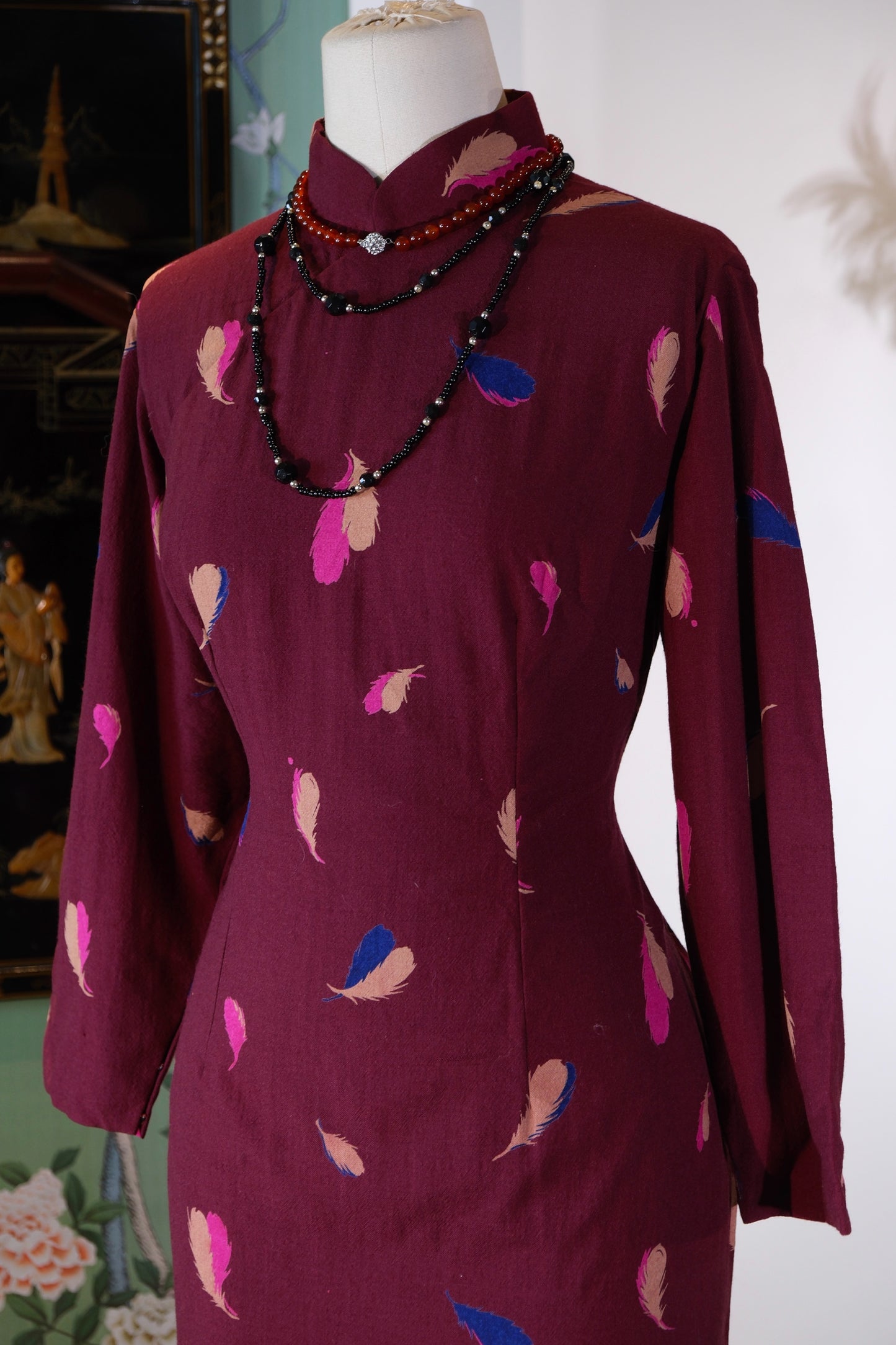
当指尖抚过这件酒红底色的羊毛旗袍,仿佛触到了1960年代台北迪化街的晨雾——那时布庄的玻璃柜里,总躺着几匹进口羊毛料,在冬日阳光下泛着细密的光泽。这件旗袍便诞生于这样的时空:台湾裁缝以沪上流传的“海派剪裁”为骨,融入岛内特有的温润气质,将羊毛的挺括与旗袍的柔美熔于一炉,成就了一件跨越季节的“行走的艺术品”。
一、羽影流光:图案里的诗意密码
旗袍上的羽毛纹样,绝非寻常装饰。酒红底布如暮色四合的天幕,散落其间的羽毛以粉、蓝、米三色晕染,似孔雀尾羽的碎影,又若仙鹤振翅时飘落的绒羽。
这种“散点式”图案布局,暗合宋代院体画的“折枝”美学——不绘全鸟,只取羽影,以“少少许胜多多许”。更妙的是羽毛的色彩搭配:粉色的娇嫩与蓝色的沉静形成“撞色”,却在酒红底色的调和下达成奇妙的和谐,恰如《园冶》所言“虽由人作,宛自天开”。
二、时光褶皱:一件古董衣的流徙与坚守
上世纪六十年代的台湾,正处于传统与现代的交汇点。这件旗袍的主人,或许是一位随家族迁台的知识女性——她穿着它出席学术会议,羊毛的保暖性让她在冷气充足的礼堂里从容自若;也或许是一位商贾之妻,在冬日茶会上,袖口微露的羽毛纹样,成为无声的品味宣言。
旗袍的立领高度、收腰比例,皆遵循“黄金分割”:领高约4.5厘米,恰好托住下颌线条;腰省位置精准落在人体自然腰线,既显曲线又不束缚呼吸。这种“合身而不紧身”的剪裁,正是海派旗袍“以人为本”的精髓。而羊毛面料的选用,更见巧思——彼时台湾虽以丝绸旗袍闻名,但进口羊毛料的引入,让旗袍突破了季节限制,成为“四季可穿”的实用品,也折射出当时台湾纺织业的国际化视野。
三、穿在身上的文化史
这件旗袍,是1960年代台湾社会的“微缩景观”:它既有海派旗袍的优雅基因,又带着台湾特有的温润气质;既保留了传统服饰的含蓄之美,又暗含现代女性的独立意识。当羽毛纹样在酒红底色上轻轻摇曳,仿佛能听见那个年代的旗袍女子,踩着高跟鞋走过台北街头的笃定足音。
正如张爱玲所言:“衣服是一种语言,随身带着的袖珍戏剧。”这件六十年代台湾羊毛旗袍,便是那出永不落幕的“时光戏剧”中最动人的一幕——它以羽为墨,以布为纸,书写着属于一个时代的优雅与坚韧。
Measurements / Size Guide:
Bust / Waist / Hips: 106/88/114 cm
Total Length: 112 cm
Detailed Description:
When fingertips brush over this burgundy wool Qipao, it feels like touching the morning mist of Dihua Street in 1960s Taipei—back then, the glass cabinets of fabric stores always held a few bolts of imported wool, shimmering with a fine luster under the winter sun. This Qipao was born from such a time and space: Taiwanese tailors used the "Haipai (Shanghai-style) tailoring" passed down from Shanghai as the skeleton, infused it with the island's unique gentle temperament, and melted the crispness of wool with the softness of the Qipao, creating a cross-seasonal piece of "walking art."
The feather motifs on this Qipao are far from ordinary decoration. The burgundy base fabric is like a sky at twilight, where scattered feathers are rendered in shades of pink, blue, and cream—resembling fragmented shadows of a peacock’s tail or the drifting down of a crane in flight.
This "scattered point" layout aligns with the "broken branch" (Zhezhi) aesthetic of Song Dynasty court paintings—depicting not the whole bird, but only the shadow of its feathers, achieving "more with less." Even more exquisite is the color palette: the tenderness of pink and the tranquility of blue form a "color contrast," yet reach a marvelous harmony under the mediation of the burgundy base, just as described in The Craft of Gardens (Yuan Ye): "Though made by human hand, it appears as if created by heaven."
In the 1960s, Taiwan sat at the crossroads of tradition and modernity. The owner of this Qipao might have been an intellectual woman who moved to Taiwan with her family—wearing it to academic conferences, where the warmth of the wool allowed her to remain composed in air-conditioned halls. Or perhaps she was the wife of a merchant; at a winter tea party, the feather patterns peeking from her cuffs served as a silent declaration of taste.
The height of the standing collar and the proportions of the cinched waist both follow the "Golden Ratio": the collar stands at approximately 4.5 cm, perfectly cradling the jawline, while the waist darts are positioned precisely at the natural waistline, highlighting curves without restricting breath. This "fitting but not tight" tailoring is the essence of the Haipai Qipao’s "human-centric" philosophy. The choice of wool fabric reveals further ingenuity—while Taiwan was famous for silk Qipaos at the time, the introduction of imported wool allowed the garment to break seasonal limits, becoming a "year-round" staple and reflecting the international vision of Taiwan's textile industry back then.
This Qipao is a "miniature landscape" of 1960s Taiwanese society: it possesses the elegant genes of the Shanghai style, yet carries the unique warmth of Taiwan; it preserves the reserved beauty of traditional attire, yet implies the independent consciousness of modern women. As the feather patterns sway gently against the burgundy base, one can almost hear the steady footsteps of the Qipao-clad women of that era, walking through the streets of Taipei in their high heels.
As Eileen Chang said: "Clothing is a language, a pocket drama carried with oneself." This 1960s Taiwanese wool Qipao is the most moving scene in that never-ending "drama of time"—using feathers as ink and cloth as paper to write the elegance and resilience belonging to an era.