深圳溯源
无法加载取货服务可用情况
衣服尺寸:
胸围/腰围/臀围:88/72/92 厘米
衣长:108 厘米
细节描述:
在时光的褶皱里,总有些物件能凝固一个时代的风华。这件上世纪六十年代香港产的真丝提花古董旗袍,便如一封未拆封的旧信,字里行间皆是东方美学的密码与殖民港口城市的摩登记忆。它不仅是衣橱里的遗珍,更是一段流动的文化史,以丝线为笔,以剪裁为墨,书写着属于那个年代的“黄金腰臀比”与女性觉醒的序章。
一、纹样解码:万字不到头的几何诗篇
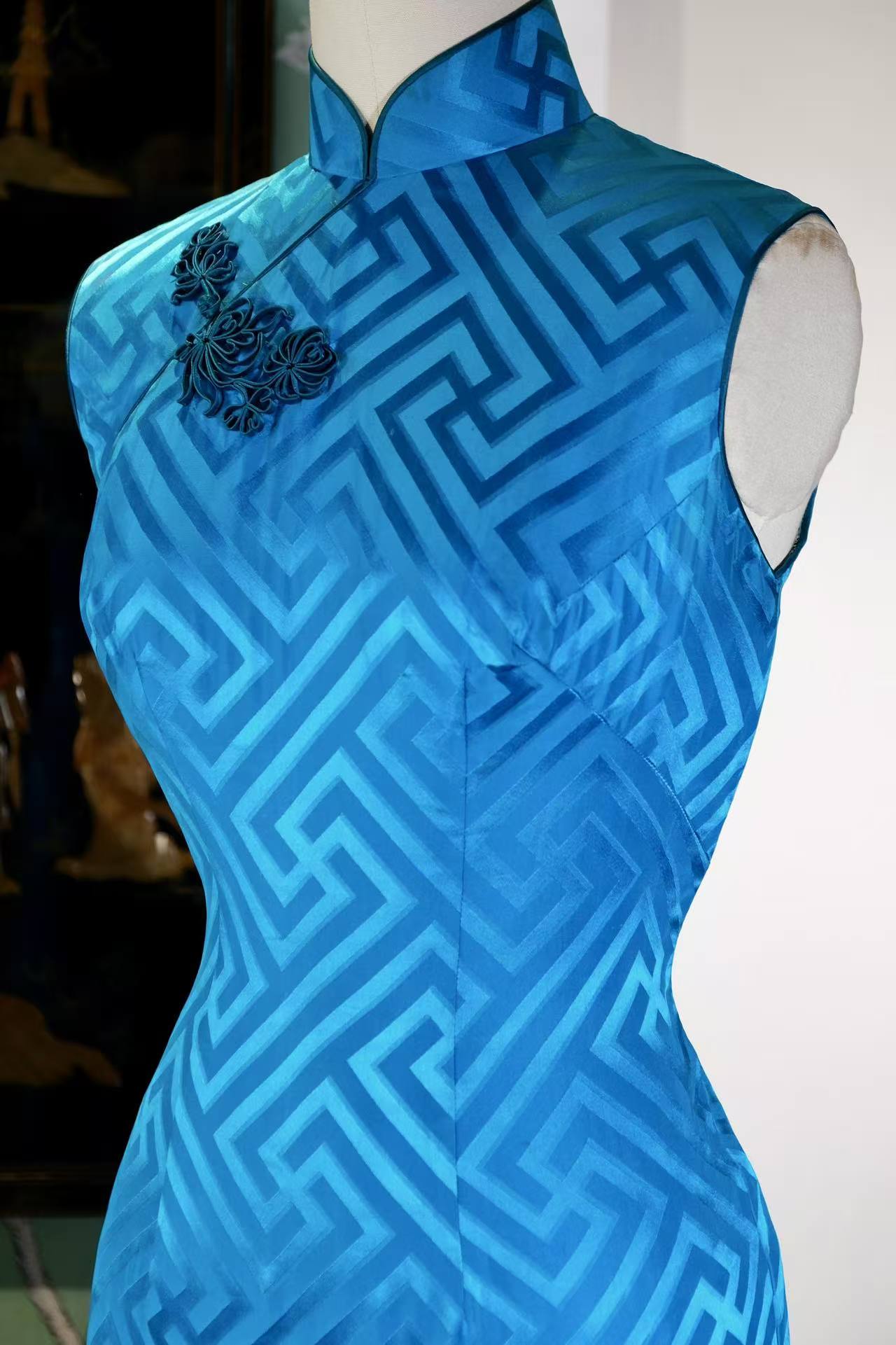
旗袍上的图案,是整件作品的灵魂。深蓝色与亮蓝色交织的“万字不到头”纹样(即卍字纹的连续变体),并非简单的几何重复,而是东方哲学与西方现代主义碰撞的产物。卍字纹源自佛教,象征吉祥万德,而将其解构为连续的折线迷宫,则暗合了六十年代全球盛行的欧普艺术(Op Art)风潮——通过视觉错觉制造动感与深度。这种“传统纹样的现代转译”,恰如张爱玲在《更衣记》中所言:“中国的时装,向来是‘古为今用’的。”工匠以提花织机将丝线经纬交错,让静态的布料在光影下产生水波般的流动感,仿佛将维多利亚港的粼粼波光织入了衣料。更妙的是,这种几何纹样与旗袍的修身曲线形成张力:硬朗的线条勾勒出女性柔美的身体轮廓,刚柔并济,恰是六十年代香港女性“外柔内刚”的精神隐喻——她们既要遵循传统礼仪,又在职场与社交场中展现独立姿态。
二、形制密码:港工旗袍的“黄金时代”基因
这件旗袍的剪裁,是香港成衣工业鼎盛时期的典型范本。六十年代的香港,作为东西方文化交汇的“东方之珠”,其旗袍工艺融合了上海老裁缝的精细与西方立体剪裁的利落。收腰、紧窄、无袖、高领,下摆长度及膝——这些特征精准对应了当时“海派旗袍”向“港式旗袍”的转型:上海旗袍的宽松写意被香港旗袍的修身性感取代,以适应都市女性快节奏的生活与对“摩登”的追求。
三、稀缺性:当古董衣遇见电影史的吉光片羽
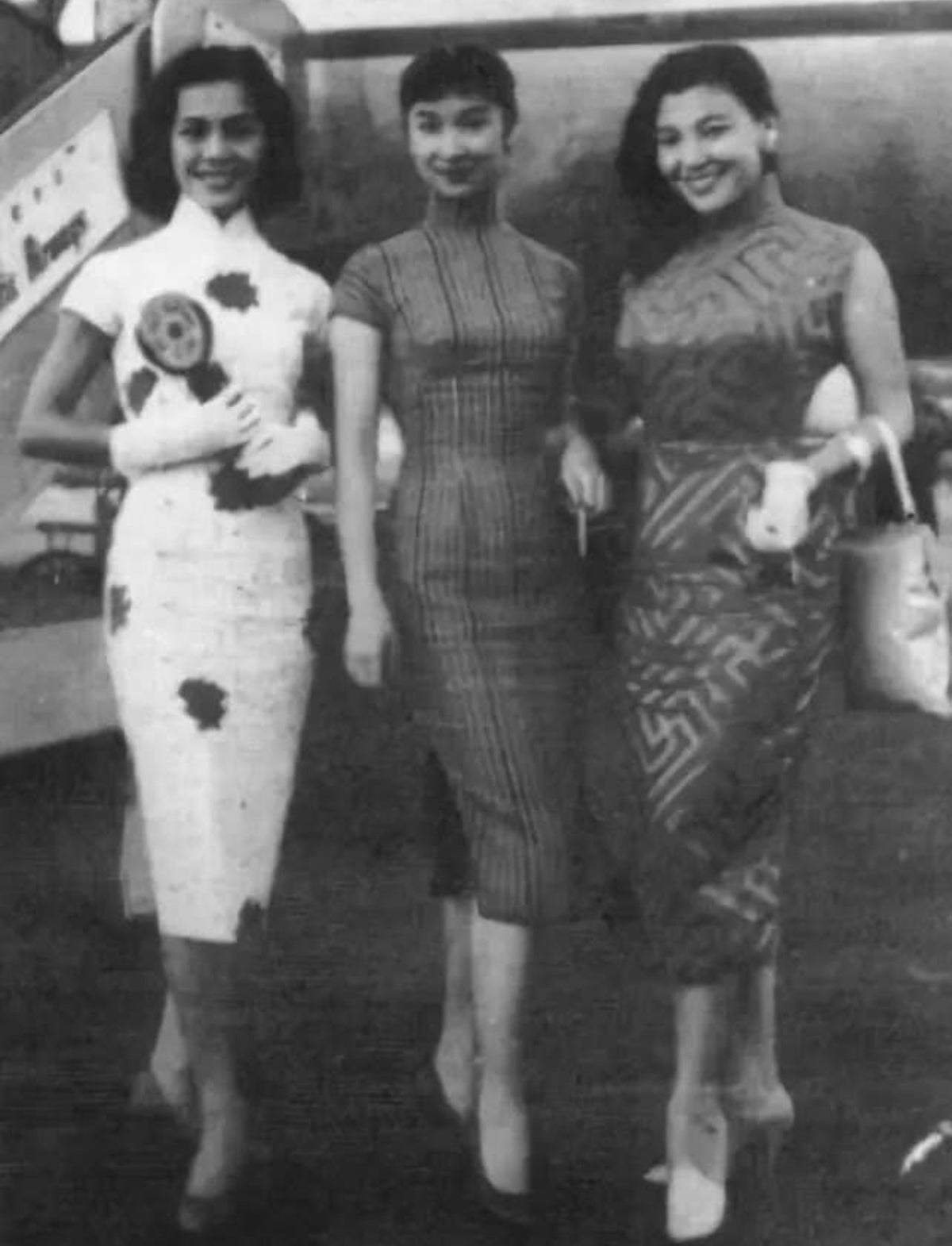
这件旗袍的珍贵,更在于它与香港电影黄金时代的隐秘联结。最后一张老照片中,身着同款旗袍的女星正是有“中国最性感女星”之称的张仲文。这位以《三朵花》《夜尽天明》等作品闻名的影星,其银幕形象以“热辣奔放”著称,而这件蓝调几何旗袍,恰是她“性感而独立”气质的最佳注脚。照片中,她姿态自信从容,将旗袍的修身曲线与几何纹样的现代感完美融合,成为六十年代香港都市女性“摩登而不失东方韵味”的经典符号。
从服装史的维度看,这件旗袍的稀缺性体现在三重维度:
- 工艺稀缺:六十年代香港真丝提花面料多依赖进口,而“万字不到头”的提花纹样需定制织机,产量极低;
- 时代稀缺:随着七十年代成衣工业化,手工定制的港工旗袍逐渐式微,留存至今的完整品极为罕见;
- 文化稀缺:与张仲文这样的影史符号直接关联的古董衣,不仅是服饰,更是研究香港电影史与女性形象变迁的“活化石”。
正如艺术史家巫鸿所言:“物质文化是历史的肉身。”这件旗袍的每一道褶皱、每一缕丝线,都在诉说着一个关于东方美学、都市摩登与女性力量的故事。它不属于过去,而是穿越时空,邀请当代人重新想象:当几何纹样遇上曲线剪裁,当传统工艺碰撞现代精神,一件衣服,何以成为时代的注脚?
Measurements / Size Guide:
Bust / Waist / Hips: 88/72/92 cm
Total Length: 128 cm
Detailed Description:
Within the folds of time, certain objects manage to solidify the grace of an entire era. This 1960s silk jacquard antique qipao, crafted in Hong Kong, is like an unopened vintage letter; between its lines lie the codes of Oriental aesthetics and the modern memories of a colonial port city. It is not merely a treasure in a wardrobe but a fluid piece of cultural history—using silk as its pen and tailoring as its ink to write the prologue of the "golden waist-to-hip ratio" and female awakening of that decade.
The pattern on this qipao is the soul of the work. The interweaving of deep and bright blue in the "Endless Wan" motif (a continuous variation of the Wan / Swastika symbol) is not a simple geometric repetition, but a product of the collision between Eastern philosophy and Western Modernism. Originating from Buddhism, the Wan symbol signifies auspiciousness and infinite virtue. Deconstructing it into a continuous linear maze aligns perfectly with the global Op Art trend of the 1960s, which used visual illusions to create movement and depth. This "modern translation of traditional motifs" echoes Eileen Chang’s observation in A Record of Changing Clothes: "Chinese fashion has always used the ancient to serve the present." Using a jacquard loom to interlace warp and weft, the craftsman allows the static fabric to produce a water-like ripple effect under light, as if weaving the shimmering reflections of Victoria Harbour directly into the cloth. More brilliantly, this geometric pattern creates a tension with the qipao's form-fitting curves: the rigid lines outline the soft contours of the female body—a blend of strength and grace that serves as a spiritual metaphor for the 1960s Hong Kong woman: traditional in etiquette, yet independent in the workplace and social spheres.
The cut of this qipao is a quintessential example of Hong Kong’s garment industry during its peak. In the 1960s, as the "Pearl of the Orient" where East met West, Hong Kong’s qipao craftsmanship fused the meticulousness of old Shanghai tailors with the clean lines of Western 3D draping. A cinched waist, tight fit, sleeveless cut, high collar, and knee-length hem—these features precisely mark the transition from the "Shanghai Style" to the "Hong Kong Style." The loose, expressive nature of the Shanghai qipao was replaced by the fitted, sensual silhouette of Hong Kong, adapting to the fast-paced life and pursuit of "modernity" among urban women.
The preciousness of this qipao lies in its hidden connection to the Golden Age of Hong Kong cinema. In the final vintage photograph, the actress wearing an identical qipao is none other than Diana Chang Chung-wen, once hailed as "China’s Most Sexy Actress." Known for films like Three Dolls and The Night is Over, her screen persona was famously passionate and bold. This blue geometric qipao is the perfect footnote to her "sexy yet independent" temperament. In the photo, her confident and composed posture perfectly integrates the qipao's curves with the modernism of the geometric pattern, becoming a classic symbol of the 1960s Hong Kong urban woman: "modern without losing Oriental charm."
From the perspective of costume history, the scarcity of this qipao manifests in three dimensions:
Technical Scarcity: 1960s Hong Kong silk jacquard fabrics often relied on imports, and the "Endless Wan" jacquard pattern required customized looms, resulting in extremely low production.
Era Scarcity: With the industrialization of ready-to-wear in the 1970s, hand-tailored Hong Kong qipaos gradually declined; complete surviving specimens are exceptionally rare.
Cultural Scarcity: An antique garment directly associated with a cinematic icon like Diana Chang is not just clothing—it is a "living fossil" for studying Hong Kong film history and the evolution of the female image.
As art historian Wu Hung stated: "Material culture is the flesh of history." Every fold and every thread of this qipao tells a story of Oriental aesthetics, urban modernity, and female power. It does not belong to the past; it travels through time, inviting us to reimagine: when geometric patterns meet curved tailoring, and traditional craft hits modern spirit, how does a single garment become the footnote of an era?