深圳溯源
无法加载取货服务可用情况
衣服尺寸:
胸围/腰围/臀围:92/72/92 厘米
衣长:110 厘米
细节描述:
当目光触及这件深蓝色旗袍的瞬间,仿佛穿越时光的帷幕,回到了那个东西方文化激烈碰撞又奇妙融合的六十年代香港。彼时的香江,既是东方之珠,也是西方现代主义与东方传统美学交汇的舞台。这件旗袍,便是那个黄金年代最优雅的物质见证,它以一种近乎奢侈的姿态,将东方的含蓄与西方的华丽,缝入了每一寸经纬之中。
图案:一场视觉的巴洛克变奏
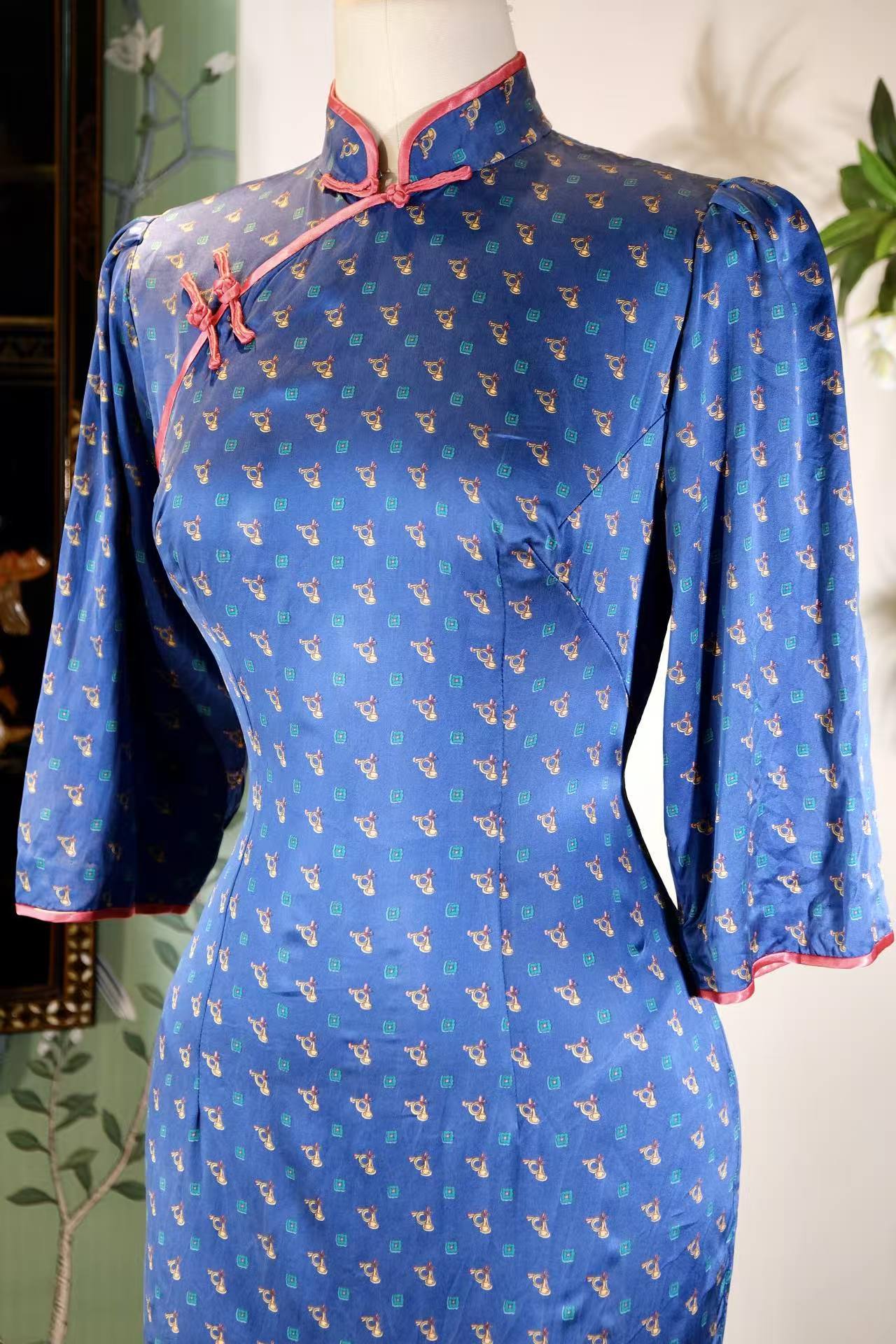
这件旗袍最引人入胜之处,莫过于其面料上繁复而精巧的印花图案。这并非传统的中式花鸟或山水,而是一种经过东方审美过滤后的“巴洛克”风格变奏。
- 主图案:仔细观察,图案的主体是一种抽象化的、类似小号或某种西洋管弦乐器的图形,以金色和浅粉色勾勒,形态优雅而富有动感。这些乐器图案并非静止,而是以一种旋转、流动的姿态排列,仿佛在寂静的蓝色画布上奏响一曲无声的乐章。这种对动态和曲线的强调,正是巴洛克艺术追求戏剧性与生命力的体现。
- 辅助图案:在乐器图案之间,点缀着一些小巧的、类似菱形或花窗的绿色几何图形。它们如同乐章中的休止符,为流动的主图案提供了节奏感和秩序感,也巧妙地将西方的乐器元素与东方的窗棂意象结合,形成一种独特的视觉韵律。
- 色彩与布局:宝蓝色的底色沉静而高贵,如同深夜的海洋,衬托出金色与粉色图案的华丽与精致。图案以规律的斜向排列,覆盖整个衣身,形成一种强烈的视觉冲击力,却又不失和谐。这种满铺的、富有节奏感的图案设计,在当时的旗袍中实属罕见,它打破了传统旗袍图案的留白与写意,转而追求一种更为饱满、更具装饰性的视觉效果,这正是六十年代受西方现代设计影响的产物。
故事:香江旧梦,一针一线
这件旗袍的故事,始于上世纪六十年代的香港。那时的香港,经济开始腾飞,社会风气也日益开放。电影明星、名媛淑女们在银幕内外争奇斗艳,旗袍作为女性的日常着装,也迎来了最后的辉煌。
我们可以想象,这件旗袍的主人,或许是一位受过良好教育、热爱艺术的名门闺秀,或是一位登台献唱的当红女明星。她穿着这件旗袍,穿梭于中环的灯红酒绿与太平山的清幽雅致之间。旗袍上那些跳跃的乐器图案,或许正是她生活的写照——在东西方文化的交响乐中,演绎着自己的人生。
它的剪裁,是典型的六十年代港式旗袍风格:高领、右衽、盘扣,保留了旗袍的传统神韵;而修身的腰身、略带蓬起的泡泡袖(或称“灯笼袖”),则融入了当时西方流行的迪奥“新风貌”(New Look)的元素,强调女性的曲线美。袖口与领口处的粉色滚边,如同画龙点睛,为沉稳的蓝色增添了一抹娇俏与柔美,也体现了当时香港裁缝对细节的极致追求。
艺术风格与稀缺性:引经据典
这件旗袍的艺术风格,可以称之为“东方巴洛克”或“港式装饰艺术”。它并非对欧洲巴洛克风格的简单模仿,而是将巴洛克的华丽、动感与东方审美中的精致、含蓄进行了巧妙的融合。
- 《长物志》有云:“随方制象,各有所宜。”这件旗袍正是“随方制象”的典范。它顺应了六十年代香港这个特殊时空的“方”,创造出了一种既非纯粹中式,也非纯粹西式的独特“象”。
- 从艺术史的角度看,它与同时期西方的波普艺术(Pop Art)有着某种精神上的共鸣——都追求图案的重复、色彩的鲜明与大众文化的趣味性。但它的表达却更为内敛与优雅,是东方语境下的现代性探索。
- 稀缺性:如此图案设计大胆、工艺精湛的六十年代港产旗袍,存世量已极为稀少。那个年代的旗袍多采用丝绸、锦缎等传统面料,图案也以传统纹样为主。而这件旗袍的面料,从其光泽与质感判断,很可能是当时从欧洲或日本进口的新型化纤或混纺面料,这种面料在当时属于奢侈品,且不易保存。能够历经半个多世纪的风霜,依然保持如此完好的色泽与形态,实属凤毛麟角。
它不仅仅是一件衣服,更是一段凝固的历史,一曲蓝韵流金的旧梦。它诉说着一个时代的繁华与浪漫,也见证了一种文化的交融与创新。对于收藏家而言,它是一件不可多得的艺术品;对于历史爱好者而言,它是一扇窥见六十年代香港社会风貌的窗口。
Measurements / Size Guide:
Bust / Waist / Hips: 92/72/92 cm
Total Length: 110 cm
Detailed Description:
The moment one’s gaze falls upon this deep blue qipao, it feels as though the curtain of time is being drawn back, returning us to 1960s Hong Kong—a period of fierce collision and wondrous fusion between Eastern and Western cultures. At that time, the "Pearl of the Orient" served as a stage where Western Modernism met traditional Oriental aesthetics. This qipao stands as the most elegant physical witness to that golden era, weaving Eastern restraint and Western opulence into every inch of its warp and weft with a nearly decadent posture.
The most captivating feature of this qipao is the intricate and sophisticated print upon its fabric. This is no traditional Chinese bird-and-flower or landscape motif; rather, it is a "Baroque" variation filtered through an Oriental aesthetic lens.
Main Motif: Upon closer inspection, the primary elements are abstract, trumpet-like shapes or Western orchestral brass instruments, outlined in gold and pale pink. These forms are elegant and dynamic—not static, but arranged in a swirling, fluid motion, as if playing a silent movement across a serene blue canvas. This emphasis on movement and curves is a quintessential manifestation of the Baroque pursuit of drama and vitality.
Supporting Motifs: Nestled between the instruments are small, green geometric shapes resembling diamonds or traditional lattice windows. They act like "rests" in a musical score, providing rhythm and a sense of order to the fluid main pattern. They cleverly marry Western musical elements with Oriental window-frame imagery, creating a unique visual cadence.
Color and Layout: The royal blue base is quiet and noble, much like the deep sea at night, accentuating the splendor of the gold and pink motifs. The pattern repeats in a rhythmic diagonal arrangement across the entire body, creating a powerful yet harmonious visual impact. Such an all-over, rhythmic design was rare for qipaos of that period; it broke away from traditional "white space" (Liubai) and expressive brushwork in favor of a fuller, more decorative visual effect—a true product of the Western modern design influence of the 1960s.
The story of this qipao began in 1960s Hong Kong. During this time, the economy began to soar, and social atmosphere grew increasingly open. Film stars and socialites competed in elegance both on and off the screen, and the qipao, as daily wear for women, reached its final peak of brilliance.
We can imagine the owner of this garment: perhaps a well-educated lady from a prestigious family with a love for the arts, or a popular starlet gracing the stage. She would have worn this qipao while navigating the neon lights of Central and the tranquil elegance of Victoria Peak. The jumping musical patterns on the fabric might well have been a reflection of her own life—performing her own story amidst the symphony of East and West.
The tailoring is a quintessential example of 1960s Hong Kong style: the high collar, right-side overlap (P襟), and frog buttons (Pankou) preserve traditional charm, while the cinched waist and slightly puffed "lantern sleeves" incorporate elements of the then-popular Dior "New Look," emphasizing the feminine silhouette. The pink piping at the cuffs and collar acts as the finishing touch, adding a hint of playfulness and softness to the steady blue, reflecting the extreme attention to detail of Hong Kong tailors.
The artistic style of this qipao can be termed "Oriental Baroque" or "Hong Kong Art Deco." It is not a simple imitation of European Baroque, but a masterful fusion of Baroque opulence and movement with the delicacy and restraint of Oriental aesthetics.
Contextual Creation: As Zhang Wu Zhi (Treatise on Superfluous Things) states: "Forms are created according to the location; each has its proper place." This qipao is a paragon of this philosophy. It adapted to the specific "location" of 1960s Hong Kong, creating a unique "form" that was neither purely Chinese nor purely Western.
Art History Parallel: From an art history perspective, it shares a spiritual resonance with Western Pop Art of the same period—both pursue repetitive patterns, vibrant colors, and an interest in popular culture. Yet, its expression remains more poised and elegant—a modern exploration within an Oriental context.
Scarcity: Surviving 1960s Hong Kong-made qipaos with such bold designs and exquisite craftsmanship are exceptionally rare. Most qipaos of that era used traditional silk or brocade with traditional patterns. The fabric of this piece, judging by its luster and texture, was likely an imported high-end synthetic or blend from Europe or Japan—luxury materials at the time that were difficult to preserve. To have endured over half a century while maintaining such perfect color and shape is truly like finding a "phoenix among feathers."
This is more than just a garment; it is a solidified segment of history, a gilded dream of blue rhythm. It narrates the prosperity and romance of an era and witnesses the fusion and innovation of a culture.