深圳溯源
无法加载取货服务可用情况
这是一件非常珍贵且极具时代意义的古董旗袍,
1. 衣物描述与工艺解析
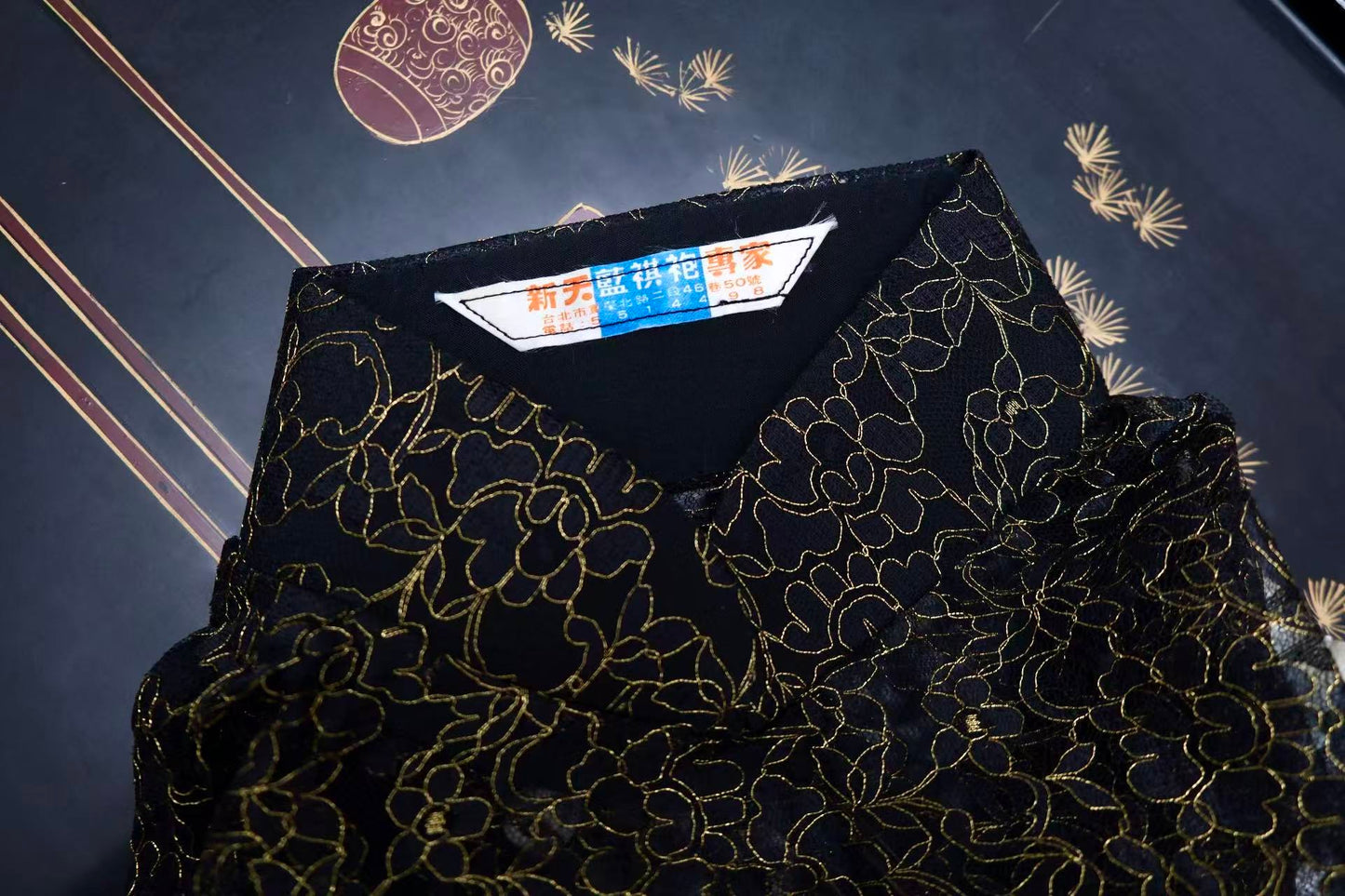
这件旗袍的面料极为考究,
- 面料特质:Lamé是一种将金属线(如金、银线)
- 图案纹样:仔细观察衣物上的图案,
- 剪裁风格:这件旗袍出自台湾“新天蓝旗袍专家”之手。
2. 古董衣的故事:新天蓝与六十年代的风华
这件旗袍不仅是一件衣服,更是一个时代的切片。
- 新天蓝旗袍专家:标签上清晰地印着“新天蓝旗袍专家”
- 中西合璧的产物:六十年代的台湾,受到欧美文化的影响,
3. 艺术风格与稀缺性
这件旗袍的艺术价值在于其“混血”的美感。
- 视觉冲击力:深邃的底色如同夜幕,金色的金属蕾丝如同繁星点点,
- 稀缺性:意大利手工Lamé蕾丝面料在当时造价极其高昂,
4. 引经据典
正如张爱玲在《更衣记》中所言:“对于不会说话的人,
这件旗袍,便是六十年代那场“袖珍戏剧”的最佳主角。
它不仅是“新天蓝”师傅手中的一针一线,更是那段流金岁月里,
A Legacy of Elegance: A 1960s Italian Handmade Lamé Lace Qipao — A Masterpiece of East-West Fusion
This is an exceptionally precious antique qipao of profound historical significance. It perfectly integrates top-tier Western textile craftsmanship with traditional Oriental tailoring aesthetics, serving as a magnificent witness to the mid-20th-century fashion trend of "Sino-Western fusion" and cosmopolitan elegance.
1. Garment Description & Craftsmanship Analysis
The fabric of this qipao is exquisitely sophisticated, utilizing handmade Lamé infused with metallic lace imported from Italy.
Fabric Characteristics: Lamé is a specialized technique where metallic threads (such as gold or silver) are woven into the fabric. Originating in Europe, it flourished in the high-fashion circles of the mid-20th century. Under light, this fabric reflects a shimmering, kaleidoscopic visual effect, exuding a sense of ultimate luxury.
Patterns & Motifs: A close observation reveals a complex and elegant "Intertwining Floral Motif." This is not a simple flat print but is sculpted through three-dimensional lace artistry. Golden metallic threads trace continuous outlines of blossoms and vines against a deep dark base, resembling plum or cherry blossoms. These motifs symbolize "prosperity" and "endless vitality," preserving the透视 (translucency) and dimensionality of Western lace while aligning with traditional Chinese auspicious symbolism.
Tailoring Style: This qipao was crafted by the renowned "New Sky Blue Qipao Experts" (Xin Tian Lan) in Taiwan. Based on the collar and silhouette shown in the images, it retains the traditional high mandarin collar and sleeveless design. However, the cut is more form-fitting to the human silhouette, emphasizing the curve of the waist and hips—reflecting the aesthetic trend of the "New Woman" in the 1960s: dignified and elegant, yet modern and sensual.
2. The Story of the Antique: "New Sky Blue" and 1960s Glamour
This qipao is more than a garment; it is a slice of an era.
New Sky Blue Qipao Experts: The label clearly bears the name "New Sky Blue Qipao Expert" along with a Taipei address. During the 1960s and 70s, the qipao industry in Taiwan was at its zenith, with famous establishments like "New Sky Blue" and "The Glasses" emerging as fashion trendsetters. These shops were not just workshops but icons of style, specializing in combining imported fabrics with exquisite Suzhou or Shanghai-style handmade frogs (Pankou) and piping for socialites and the elite.
A Product of Cultural Fusion: Influenced by Euro-American culture in the 1960s, Taiwan's fashion world sought more magnificent and sparkling visual effects. It was against this backdrop that Italian metallic lace was introduced. Master tailors took this highly modern "Western cloth" and fashioned it into the most traditional Oriental silhouette. This was more than a change of material; it was an expression of cultural confidence—using a Chinese "form" to house a Western "soul," creating a unique "Shanghai-style" or "Taiwan-style" New Chinese aesthetic.
3. Artistic Style & Scarcity
The artistic value of this qipao lies in its "hybrid" beauty.
Visual Impact: The deep base color acts like a night curtain, while the golden metallic lace sparkles like scattered stars or a flowing galaxy. The intense contrast in light and texture ensures that every movement of the wearer brings a dynamic, shimmering grace to any ballroom or social gathering.
Scarcity: Italian handmade Lamé lace was extremely expensive at the time, with high production difficulty and limited output. A well-preserved 1960s qipao of this caliber is a true rarity—a "phoenix feather or unicorn horn." It represents the pinnacle of bespoke handmade tailoring from that era.
4. Literary Allusions
As Eileen Chang famously wrote in Chronicle of Changing Clothes: "To those who cannot speak, clothes are a language; what one carries with them is a pocket drama."
This qipao is the ultimate protagonist of that 1960s "pocket drama." It tells the story of how Oriental women, amidst the impact of Western industrial civilization, maintained their cultural identity while creating a brand-new fashion language.
It is not just the result of a "New Sky Blue" master’s needle and thread; it is that breathtaking flash of brilliance when a woman turned amidst the glitz and glamour of those golden years, forever stunning the passage of time.