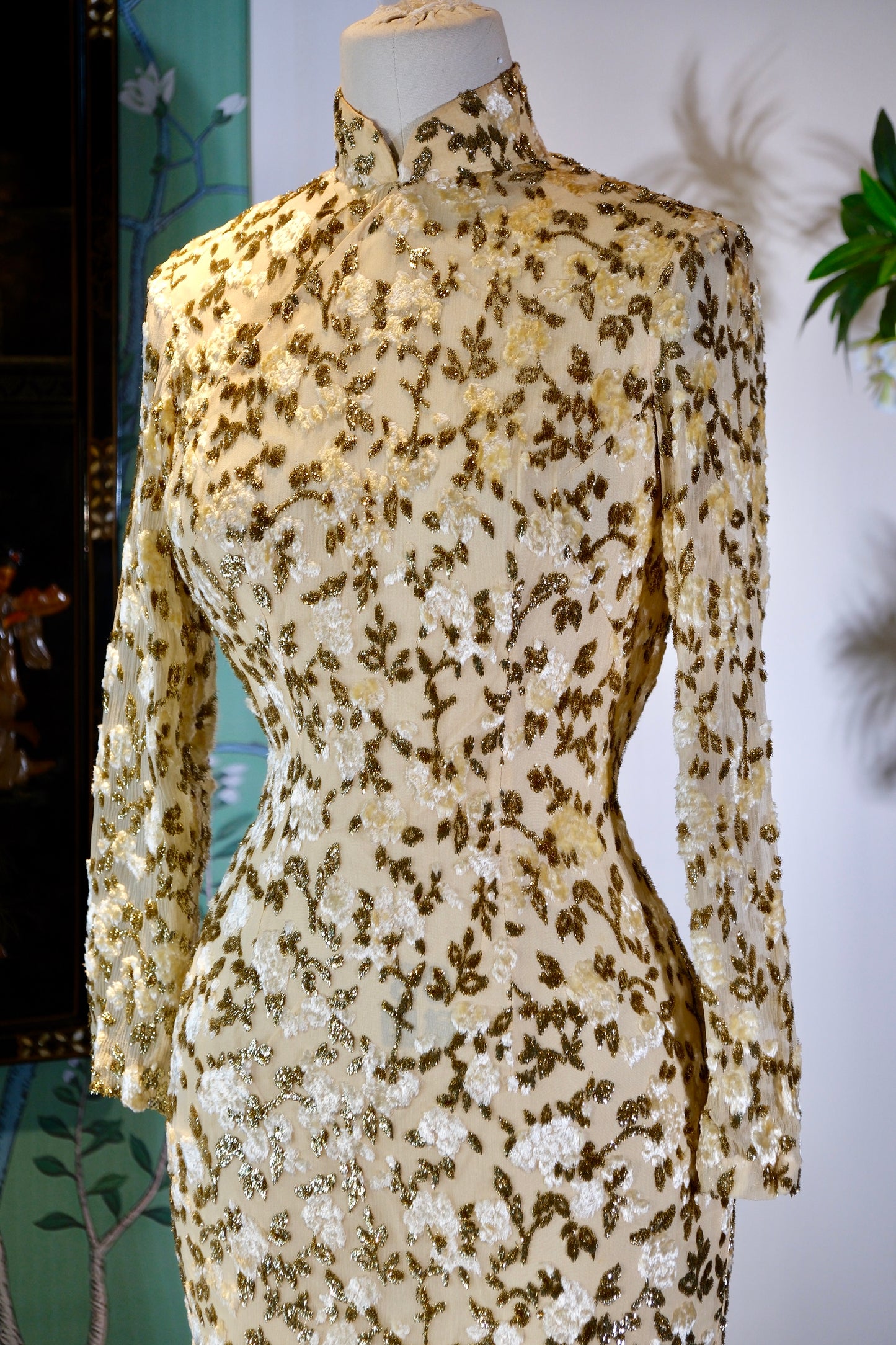
金枝玉叶——六十年代港产意大利丝绒旗袍
衣服尺寸:
胸围/腰围/臀围:84/66/90 厘米
衣长:132 厘米
细节描述:
图案意象:流动的“金枝玉叶”
旗袍通体以米白为地,其上缀满意大利进口的金线剪花,构成一幅“缠枝花卉”的画卷。这些花朵并非写实,而是抽象化的缠枝纹样,枝叶蜿蜒,花苞点点,仿佛春风拂过,金枝摇曳,玉叶婆娑。金线在光线下闪烁,如星子洒落,又似月下金波,与丝绒的哑光质感形成微妙对比,既显贵气,又不失温婉。
古董故事:香江旧梦,一针一线皆风华
这件旗袍诞生于上世纪六十年代的香港,彼时的香江,是中西文化交融的熔炉,也是旗袍艺术的黄金时代。意大利进口的织金剪花丝绒,是当时最顶级的面料,象征着主人的身份与品味。旗袍的剪裁极为考究,高领、收腰、开衩,每一处线条都贴合女性的曲线,既保留了传统旗袍的含蓄,又融入了西方的立体剪裁,展现出“中西合璧”的独特魅力。
艺术风格与稀缺性
这件旗袍的艺术风格,可追溯至宋代的“缂丝”工艺,其“通经断纬”的织法,使得图案如浮雕般立体。而意大利的剪花技术,则让金线在丝绒上形成微妙的凹凸感,触摸时仿佛能感受到花瓣的柔软与枝叶的坚韧。这种将东方传统纹样与西方高级面料结合的工艺,在六十年代的香港极为罕见,存世量极少。
正如《长物志》所言:“贵精不贵丽,贵新奇大雅,不贵纤巧烂漫。”这件旗袍正是“精”与“雅”的完美结合,其稀缺性不仅在于面料与工艺,更在于它承载了一个时代的风华与记忆。穿上它,仿佛能听见旧上海的留声机,看见香江的霓虹,感受到那个年代女性的独立与优雅。
Gold Branches and Jade Leaves: A 1960s Hong Kong Qipao in Italian Gold-Woven Velvet
Measurements / Size Guide:
Bust / Waist / Hips: 84/66/90 cm
Total Length: 132 cm
Detailed Description:
I. Pattern Imagery: The Fluidity of "Gold Branches and Jade Leaves"
The qipao features a creamy-white base adorned entirely with imported Italian gold-woven devoré (cut) velvet, creating a sprawling canvas of "intertwining floral vines." These blossoms are not literal depictions but abstracted scrolling patterns—sinuous branches and budding flowers that seem to sway like golden boughs in a spring breeze. The gold thread glimmers under the light like scattered starlight or golden ripples upon a moonlit lake, creating a sophisticated contrast with the matte texture of the velvet. It is an aesthetic that balances opulence with a gentle, refined grace.
II. The Antique Story: A Hong Kong Dream of Elegance in Every Stitch
This garment was born in 1960s Hong Kong—a melting pot of Eastern and Western cultures and the "Golden Age" of qipao artistry. The imported Italian gold-woven velvet was the pinnacle of luxury at the time, a symbol of the wearer's status and discerning taste. The tailoring is exceptionally meticulous: the high collar, cinched waist, and side slits are cut to contour the feminine silhouette perfectly. It preserves the traditional reserve of the qipao while integrating Western 3D draping, manifesting a unique "East-meets-West" charm.
III. Artistic Style and Scarcity
The artistic lineage of this qipao can be traced back to the "Kesi" (tapestry silk) craft of the Song Dynasty; its "interrupted weft" weaving technique gives the patterns a relief-like three-dimensionality. The Italian devoré technique further creates a subtle tactile contrast between the gold thread and the velvet pile—to touch it is to feel both the softness of the petals and the resilience of the stems. This specific fusion of traditional Oriental motifs with high-end Western fabrics was extremely rare in 1960s Hong Kong, making surviving pieces exceptionally scarce.
As the Treatise on Superfluous Things (Zhang Wu Zhi) suggests: "Value refinement over gaudiness; value the novel and elegant over the delicate and rambling." This qipao is the perfect marriage of refinement and elegance. Its scarcity lies not only in the materials and craftsmanship but in its role as a vessel for the memories and grace of a bygone era. To wear it is to hear the gramophones of old Shanghai and see the neon lights of Hong Kong, touching the independent and elegant spirit of the women of that generation.