深圳溯源
无法加载取货服务可用情况
衣服尺寸:
胸围/腰围/臀围:102/82/106 厘米
衣长:130 厘米
细节描述:
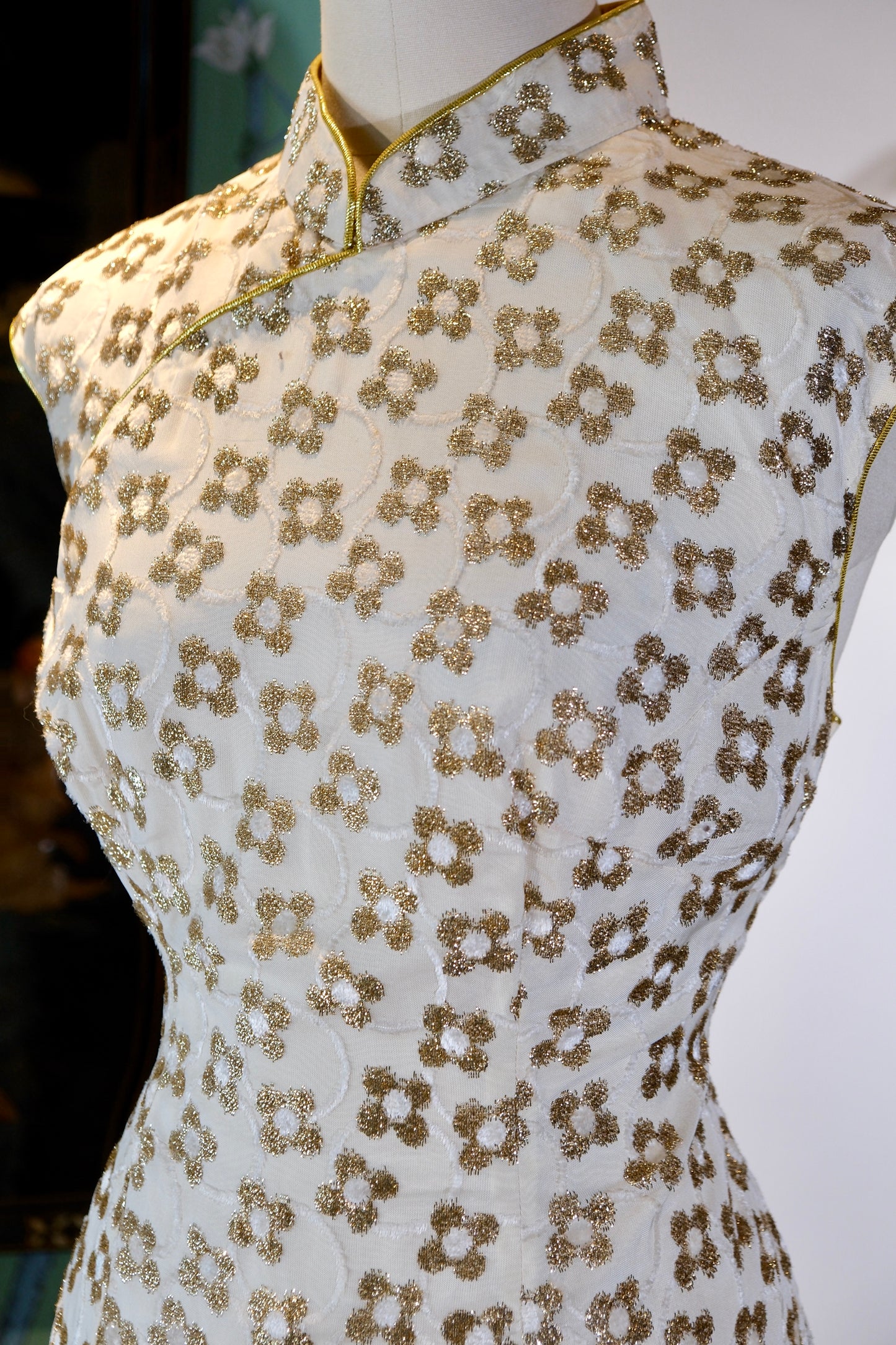
这件诞生于上世纪六十年代的香港产古董旗袍,以意大利进口织金剪花丝绒为衣料,将东方剪裁的婉约与西方织造的奢华熔于一炉。衣身通体铺陈着细密的几何花卉纹样——金线织就的四瓣花如星子散落,以规律的菱格为骨,在乳白色丝绒底上绽放出低调的璀璨。每一朵花都经剪花工艺雕琢,绒面凸起如浮雕,指尖抚过,既有丝绒的柔糯,又含金线的挺括,光影流转间,仿佛将维多利亚港的粼粼波光凝于方寸衣料。
六十年代的香港,是东西方文化碰撞的熔炉。彼时,意大利纺织业以“金线织锦”闻名欧洲,这种将金属丝与真丝交织的技艺,本是文艺复兴时期贵族礼服的专属。而香港旗袍匠人却大胆引入这种“洋面料”,以传统斜襟、立领、收腰的剪裁,赋予其东方的含蓄风骨。正如艺术史家贡布里希所言:“艺术的进步,在于不同传统的对话。”这件旗袍正是对话的产物——意大利的金线如罗马柱般华丽,香港的剪裁似苏州园林般婉转,二者相遇,成就了“中西合璧”的时尚传奇。
如今,这样的织金剪花丝绒旗袍已极为罕见。六十年代的香港成衣业虽盛,但进口面料成本高昂,多为定制孤品;而织金工艺的复杂性,更使其难以量产。衣襟处金线包边的针脚仍细密如初,侧腰的开衩高度恰到好处,既保留了传统旗袍的端庄,又暗合六十年代女性解放的思潮。它曾属于哪位名媛?是在半岛酒店的舞会上旋转生姿,还是在太平山顶的晚宴中惊艳四座?岁月的尘埃掩去了具体的故事,却为它镀上了一层历史的包浆。
这件旗袍,是流动的雕塑,是凝固的时光。它让我们看见,真正的奢华从不是浮夸的堆砌,而是工艺与文化的共生。当指尖触碰那金线织就的花朵,仿佛触到了六十年代的香江月色,触到了东西方文明在针线间的温柔相拥。
注明:下摆有脏需要改短
Measurements / Size Guide:
Bust / Waist / Hips: 102/82/106 cm
Total Length: 130 cm
Detailed Description:
This antique qipao, crafted in 1960s Hong Kong, features imported Italian gold-woven devoré (cut) velvet, fusing the grace of Oriental tailoring with the opulence of Western textile arts. The entire garment is adorned with a dense geometric floral motif—four-petaled flowers woven with gold thread scatter like stars, anchored by a rhythmic diamond lattice across a creamy-white velvet base. Each blossom is sculpted through the devoré process, creating a relief-like protrusion. To the touch, it offers both the supple softness of velvet and the crisp structure of gold thread; as light ripples across it, the fabric seems to condense the shimmering reflections of Victoria Harbour into its very fibers.
In the 1960s, Hong Kong was a melting pot where East met West. At that time, the Italian textile industry was renowned across Europe for its "gold-thread brocade," a technique interlacing metallic filaments with silk that was once the exclusive domain of Renaissance nobility. Hong Kong’s master tailors boldly introduced this "foreign fabric," using traditional diagonal closures, standing collars, and cinched waists to imbue it with an Oriental soul. As art historian E.H. Gombrich noted: "The progress of art lies in the dialogue between different traditions." This qipao is the quintessential product of that dialogue—Italian gold thread as grand as a Roman column meeting Hong Kong tailoring as winding as a Suzhou garden, culminating in a "East-meets-West" fashion legend.
Today, such gold-woven devoré velvet qipaos are exceptionally rare. Although Hong Kong’s garment industry flourished in the sixties, the high cost of imported materials meant most were bespoke, one-of-a-kind pieces; the complexity of the weaving process further prevented mass production. The fine stitching of the gold-thread piping along the lapels remains as meticulous as ever, and the side slits are cut to a height that perfectly balances traditional modesty with the burgeoning spirit of female liberation in the 1960s. To which socialite did it once belong? Did it sway at a ball in The Peninsula or dazzle at a dinner on Victoria Peak? The dust of time has obscured the specific story, yet it has left behind a rich historical patina.
This qipao is a fluid sculpture, a moment of frozen time. It reveals that true luxury is never a gaudy accumulation but a symbiosis of craft and culture. When your fingertips touch those gold-woven blossoms, it is as if you are touching the moonlight of 1960s Hong Kong and the gentle embrace of Eastern and Western civilizations within the stitches.
PS:The hem of this qipao needs to be shortened to remove the staining at the bottom.