深圳溯源
无法加载取货服务可用情况
衣服尺寸:
胸围/腰围/臀围:// 厘米
衣长: 厘米
细节描述:
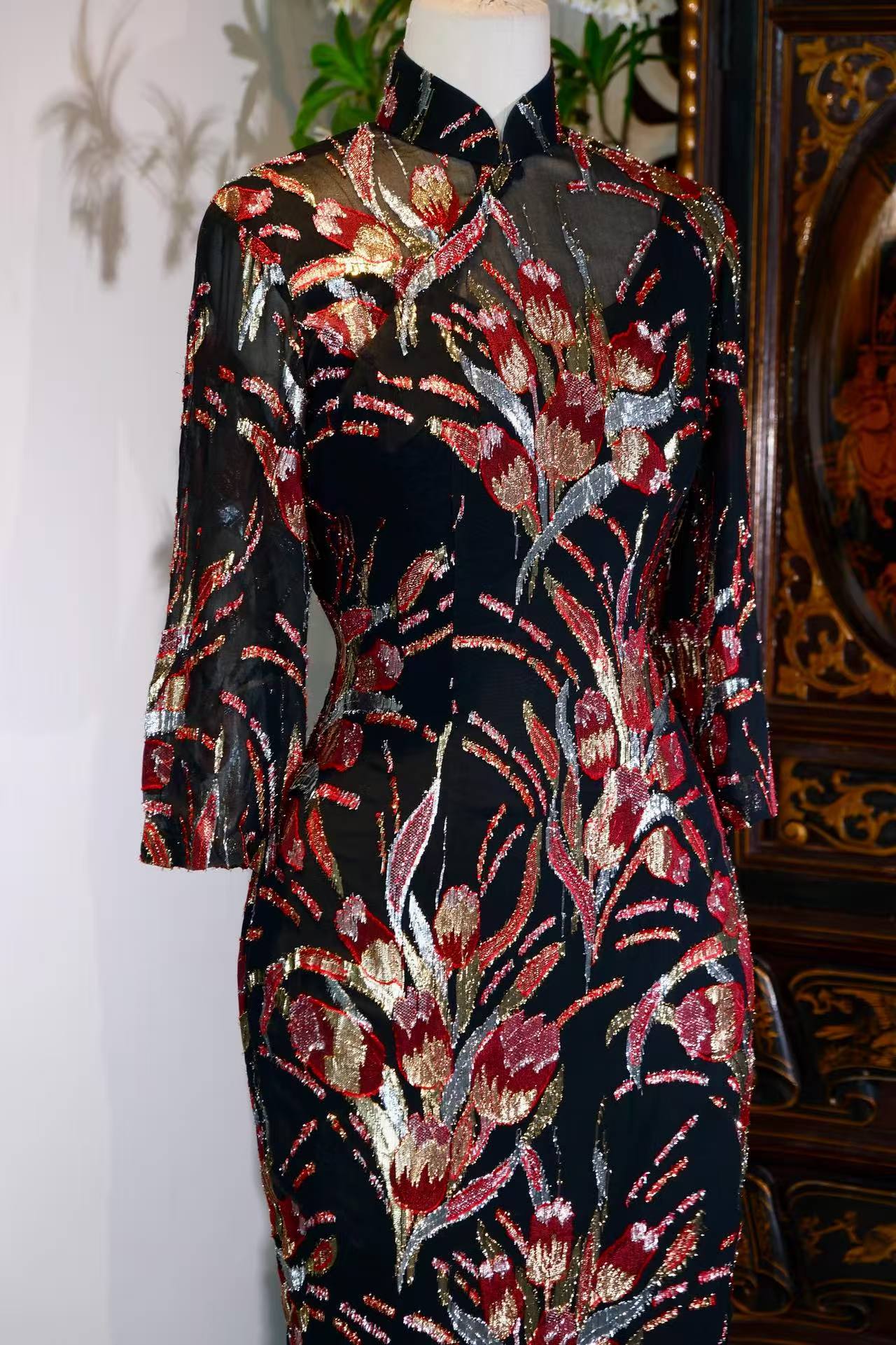
在时光的褶皱里,总有一些织物能缝合起东西方的审美对话。这件诞生于上世纪六十年代的香港产古董旗袍,以其意大利进口织金提花面料与大胆创新的挖胸设计,成为战后东方服饰现代化进程中一枚璀璨的坐标。当黑色底布上流转的红金花卉纹样在光影中苏醒,我们仿佛听见了那个年代东西方文明碰撞的清脆回响。
一、图案解码:织金提花里的巴洛克东方想象
这件旗袍的面料堪称纺织艺术的微缩史诗。意大利工匠以提花工艺在黑色雪纺基底上织就的花卉纹样,呈现出独特的“巴洛克式东方主义”风格——花瓣以金线与红丝线交织出立体浮雕感,枝叶则以银线勾勒出卷草纹的流动韵律,整体构图打破传统中式折枝花卉的留白意境,转而采用满幅铺陈的华丽手法。这种设计明显受到文艺复兴时期意大利织锦的影响,却又在花卉形态上融入了牡丹、芍药等东方意象,形成“西技东韵”的奇妙融合。
面料的稀缺性更体现在其工艺复杂度上。六十年代意大利纺织业正处于“黄金时代”,这种织金提花需经过24道手工工序,每平方厘米含28根金线,其光泽度与垂坠感至今仍难以复刻。当光线掠过衣身,金线折射出的暖光与黑纱的深邃形成戏剧性对比,恰如《天工开物》所言“织金为锦,其光如星”,在行走间营造出“步步生莲”的动态美学。
二、时代注脚:香港制造的全球化寓言
这件旗袍的“混血”身份,是冷战时期特殊历史语境下的产物。1960年代的香港作为“东方之珠”,既是西方奢侈品的中转站,也是本土服饰工业的创新工坊。意大利进口面料经香港裁缝之手,被赋予中式旗袍的骨架,这种“材料全球化+工艺在地化”的模式,正是战后香港“转口港经济”在服饰领域的微观呈现。
挖胸设计的大胆突破,更彰显了那个年代的时尚勇气。传统旗袍讲究“含蓄内敛”,而这件作品在领口处以几何形镂空打破封闭感,既保留了立领的端庄,又通过肌肤的若隐若现注入现代性感。这种“传统的创造性转化”,与同时期伊夫·圣罗兰的“吸烟装”形成跨文化呼应,共同诠释了六十年代女性解放的身体叙事。
三、艺术价值:稀缺性背后的文明对话
现存六十年代港制旗袍中,采用意大利织金提花者不足百件,而挖胸设计更是凤毛麟角。这件作品的稀缺性不仅在于面料的不可再生,更在于它凝固了特定历史时刻的文化交融。当我们在领口处看到意大利设计师对“中国风”的误读与重构,在剪裁中触摸到香港裁缝对西方时尚的本土化改造,这件旗袍便超越了服饰本身,成为一部可穿戴的“物质文化史”。
正如艺术史家贡布里希所言:“没有艺术,只有艺术家。”这件旗袍的真正价值,在于它让不同文明的“艺术家”在织物上实现了跨越时空的合作——意大利的织机、香港的手针、东方的纹样、西方的剪裁,共同编织出一曲关于美的复调乐章。当我们在博物馆的展柜前凝视它时,看到的不仅是六十年代的时尚,更是人类文明在差异中寻找共鸣的永恒努力。
这件鎏金旗袍,是时光的标本,也是未来的启示——它提醒我们,真正的经典从不是固守传统的化石,而是敢于在文明的交汇处绽放的火花。
Measurements / Size Guide:
Bust / Waist / Hips: / / cm
Total Length: cm
Detailed Description:
In the folds of time, certain fabrics stitch together an aesthetic dialogue between East and West. This 1960s antique qipao—crafted in Hong Kong from imported Italian Lurex jacquard and featuring a bold, innovative keyhole neckline—stands as a brilliant landmark in the modernization of post-war Oriental dress. As the red and gold floral patterns wake up against the black substrate, we hear the crisp echoes of two civilizations colliding in a bygone era.
The fabric of this qipao is a miniature epic of textile art. Italian artisans utilized jacquard techniques to weave floral motifs onto a black chiffon base, resulting in a unique "Baroque Orientalism" style. The petals are interwoven with gold and red silk threads to create a three-dimensional relief effect, while silver threads outline the fluid rhythm of scrolling vines. The overall composition abandons the traditional Chinese "broken branch" (Zhezhi) style of balanced white space, opting instead for the lush, full-coverage opulence characteristic of Renaissance-era Italian brocades. It incorporates Eastern icons like the peony and herbaceous peony through a Western lens—a masterful fusion of "Western technique, Eastern soul."
The rarity of this material is defined by its mid-century complexity. During Italy's "Golden Age" of textiles in the 1960s, this type of Lurex jacquard required 24 manual processes, boasting a density of 28 gold threads per square centimeter; its luster and drape remain nearly impossible to replicate today. When light sweeps across the garment, the warm glow of the gold thread contrasts dramatically with the depth of the black gauze, echoing the Tiangong Kaiwu: "Gold woven into brocade shines like stars," creating a dynamic aesthetic of "lotuses blooming with every step."
The "hybrid" identity of this qipao is a product of the unique historical context of the Cold War. In the 1960s, Hong Kong—the "Pearl of the Orient"—was both a transit hub for Western luxury and an innovative workshop for local garment industries. That an Italian fabric was shaped by a Hong Kong tailor into a Chinese silhouette represents a microcosm of the city’s "entrepôt economy" within the realm of fashion—a model of "globalized materials plus localized craftsmanship."
The bold breakthrough of the keyhole (hollow-out) design at the chest further highlights the sartorial courage of that era. While traditional qipaos emphasize modesty and containment, this piece uses a geometric cutout to break the enclosure of the high collar, preserving dignity while injecting modern sensuality through a glimpse of skin. This "creative transformation of tradition" echoes cross-cultural movements like Yves Saint Laurent’s Le Smoking, collectively narrating the 1960s story of female liberation through the body.
Among surviving 1960s Hong Kong qipaos, fewer than a hundred are known to feature Italian Lurex jacquard, and those with a keyhole design are even scarcer. The value of this piece lies not only in the non-renewable nature of its fabric but in its ability to freeze a specific moment of cultural fusion. As we observe the Italian designer's reinterpretation of Chinoiserie in the fabric and feel the Hong Kong tailor's localization of Western fashion in the cut, this qipao transcends clothing to become a wearable "History of Material Culture."
As art historian E.H. Gombrich noted: "There really is no such thing as Art. There are only artists." The true value of this qipao lies in how it allowed "artists" from different civilizations to collaborate across time and space—Italian looms, Hong Kong hand-needles, Eastern patterns, and Western tailoring together compose a polyphonic movement of beauty. Gazing at it in a museum, we see not just 1960s fashion, but humanity’s eternal effort to find resonance within difference.
This gilded qipao is a specimen of time and an inspiration for the future—it reminds us that true classics are never fossils guarding tradition, but sparks daring enough to bloom at the crossroads of civilizations.