深圳溯源
无法加载取货服务可用情况
衣服尺寸:
胸围/腰围/臀围:100/92/106 厘米
衣长:112 厘米
细节描述:
在维多利亚港的霓虹初上、旗袍风华正茂的六十年代,这件诞生于香港裁缝名店的旗袍,便已是一件融合了东西方美学的艺术品。它不仅是衣装,更是一段被织物封存的流动历史,一次跨越山海的匠心邂逅。
面料与图案:意式织造与东方意趣
这件旗袍最引人注目的,莫过于其选用的意大利进口粗花呢面料。在那个年代,将这种带有浓厚欧洲风情的材质用于制作旗袍,是香港上流社会与时尚先锋们的钟爱之选,体现了当时“西风东渐”的审美趣味。
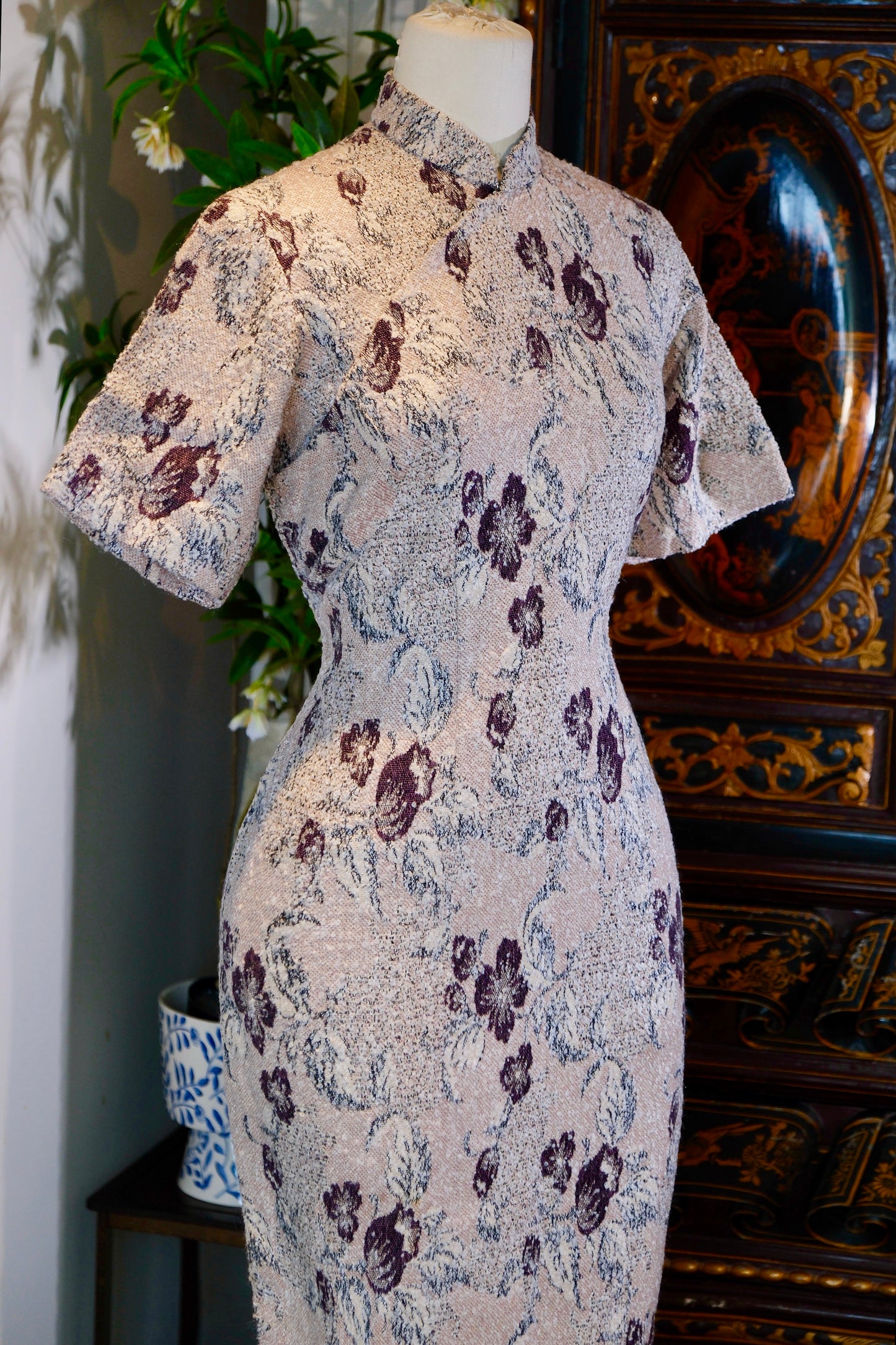
面料的底色是温润雅致的米灰色,仿佛一幅铺陈开来的宣纸。其上织就的图案,并非传统旗袍中常见的工笔花鸟或龙凤呈祥,而是一种更具现代感的写意花卉。深紫色与灰蓝色的花朵与枝叶,以一种看似随意、实则精心布局的方式散落于衣身,笔触感强烈,颇有几分法国印象派画作的朦胧与诗意。花朵形态抽象,或含苞、或盛放,枝叶则以流畅的线条勾勒,与粗花呢本身凹凸有致的肌理相结合,创造出丰富的视觉层次感。这种图案设计,既保留了东方美学中对自然意象的偏爱,又融入了西方现代艺术的抽象表达,显得既古典又摩登。
剪裁与工艺:海派风韵的香港演绎
旗袍的剪裁是典型的六十年代香港风格,它承袭了上海旗袍的精髓,又在此基础上进行了更为大胆的改良。
- 修身廓形:衣身极为贴合人体曲线,从胸、腰到臀部的线条一气呵成,精准地勾勒出女性的窈窕身姿。这种对曲线的强调,相较于早期旗袍的含蓄,更显自信与张扬。
- 改良细节:经典的立领设计,高度适中,既衬托出颈部的修长,又不失端庄。袖型为简洁的短袖,袖口略微外展,显得利落大方。衣长及膝下,是当时最时髦的长度,便于行动,也更符合现代都市生活。
稀缺性与故事:时代风华的绝响
在服装史的长河中,六十年代是香港旗袍制作的黄金时代。彼时,大批上海裁缝师傅南下,将海派旗袍的精湛工艺带到香港,并与本地的时尚潮流相结合,创造出独一无二的“港式旗袍”风格。然而,随着七十年代成衣工业的兴起和西方服饰文化的全面冲击,这种完全依赖手工、量身定制的旗袍制作业逐渐式微。
因此,一件保存完好、用料考究、剪裁精良的六十年代香港产旗袍,其稀缺性不言而喻。它不仅是一件古董衣,更是一个时代的缩影。我们可以想象,它或许曾属于一位在写字楼里工作的职业女性,或是一位出席社交晚宴的名媛。她穿着这件旗袍,行走在中环的街头,或在浅水湾的酒店里浅酌,衣香鬓影间,尽显那个年代香港女性的独立、优雅与风情。
《诗经·郑风》有云:“青青子衿,悠悠我心。”衣物,自古以来便是情感与记忆的载体。这件意大利粗花呢旗袍,以其独特的材质、别致的图案和经典的剪裁,无声地诉说着一段关于香江、关于风华、关于东西方文化交融的旧梦。它是一件值得被珍藏与传颂的艺术品,等待着新的主人,去续写它的故事。
Measurements / Size Guide:
Bust / Waist / Hips: 100/92/106 cm
Total Length: 112 cm
Detailed Description:
In the 1960s, as the neon lights first flickered over Victoria Harbour and the qipao reached the zenith of its elegance, this piece—born from a prestigious Hong Kong tailoring house—was already a masterpiece of East-West aesthetics. It is more than a garment; it is a fragment of flowing history preserved in fabric, a meeting of craftsmanship across mountains and seas.
The most striking feature of this qipao is the choice of imported Italian tweed. During that era, applying such a quintessentially European material to the qipao was a favorite among Hong Kong’s high society and fashion pioneers, reflecting the "West-meets-East" aesthetic of the time.
The base color is a warm, elegant rice-gray, akin to a spread of fine Xuan paper. Woven upon it is a pattern that eschews the traditional meticulous birds and flowers or dragons and phoenixes in favor of a more modern, freehand floral style. Blossoms and foliage in deep purple and grayish-blue are scattered across the body in a way that feels spontaneous yet meticulously composed, possessing a strong painterly quality reminiscent of the hazy poetry of French Impressionism. The floral forms are abstract—some budding, some in full bloom—while the leaves are outlined with fluid strokes. Combined with the tactile, rhythmic texture of the tweed itself, this creates a rich visual depth. This design retains the Oriental preference for natural imagery while integrating the abstract expression of Western modern art, resulting in a look that is both classical and chic.
The tailoring is quintessentially 1960s Hong Kong style, inheriting the essence of the Shanghai qipao while incorporating bolder modern refinements.
Sleek Silhouette: The garment fits the body’s curves with extreme precision; the line from bust to waist and hip is seamless, accurately contouring the feminine silhouette. This emphasis on curves, compared to the modesty of earlier qipaos, exudes a more confident and striking presence.
Modernized Details: The classic standing collar is of moderate height, flattering the neckline while maintaining dignity. The sleeves are a clean, short cut with slightly flared cuffs, appearing sharp and sophisticated. The knee-length hem—the height of fashion at the time—allowed for easier movement and suited the pace of modern urban life.
In the long river of fashion history, the 1960s was the Golden Age of Hong Kong qipao production. Large numbers of Shanghainese master tailors migrated south, bringing exquisite Haipai (Shanghai-style) techniques and blending them with local trends to create the unique "Hong Kong-style" qipao. However, with the rise of the ready-to-wear industry in the 1970s and the full impact of Western clothing culture, this bespoke, purely handmade industry gradually faded.
Therefore, a well-preserved 1960s Hong Kong qipao with premium materials and superb tailoring is undeniably rare. It is not merely an antique; it is a microcosm of an era. One can imagine it belonging to a professional woman working in a Central office tower or a socialite attending a gala. Walking through the streets of Central or sipping a drink at a hotel in Repulse Bay, she embodied the independence, grace, and allure of the Hong Kong woman of that time.
As the Book of Songs says: "Blue is your collar, deep is my longing." Clothing has always been a vessel for emotion and memory. This Italian tweed qipao, with its unique material, distinctive pattern, and classic cut, silently narrates an old dream of Hong Kong, of elegance, and of the fusion of East and West. It is a work of art worthy of being cherished and passed down, waiting for a new owner to continue its story.