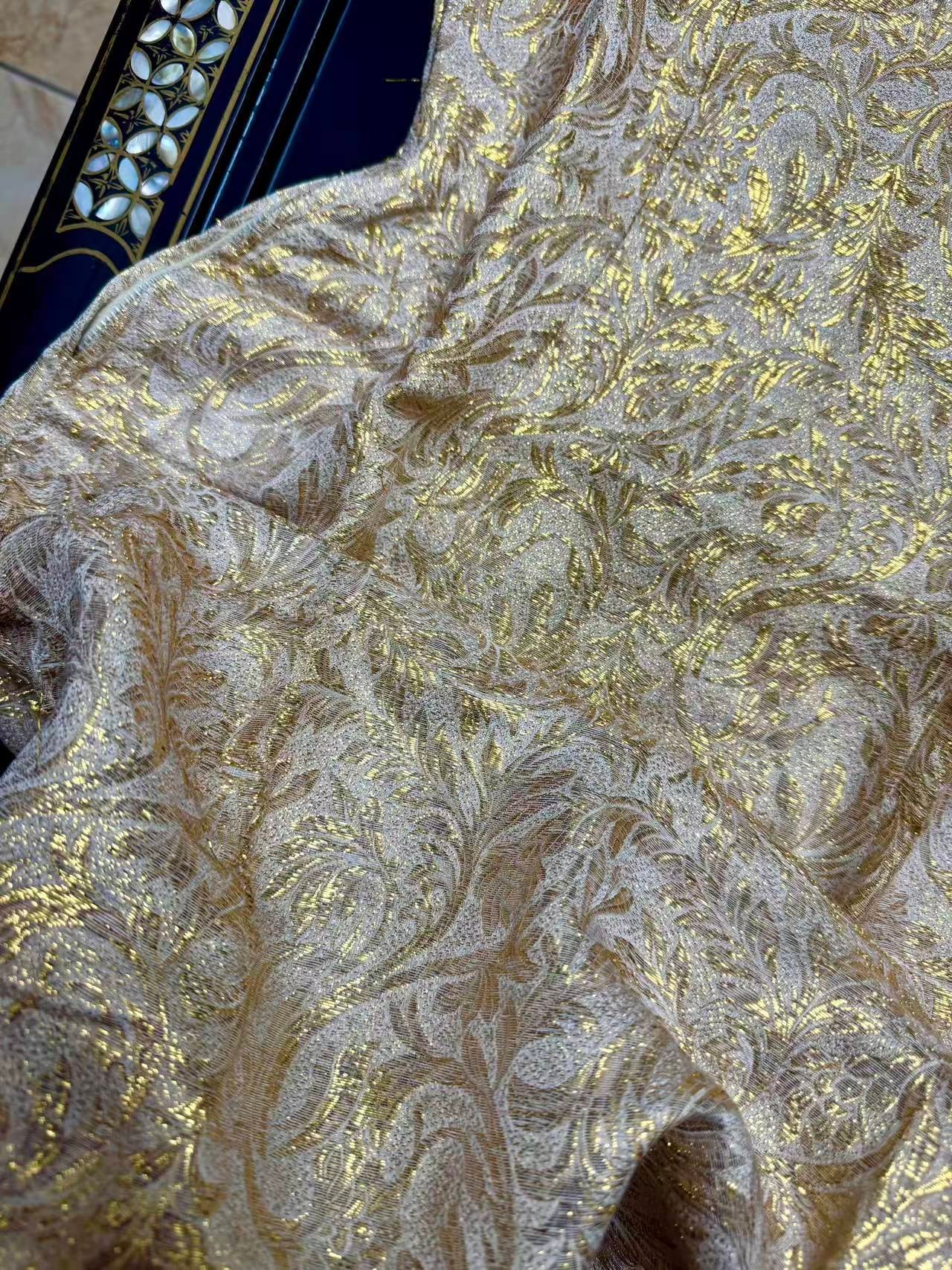
分享这件来自上世纪六十年代的香港织金提花浮雕古董旗袍。
这样一件凝结时光的东方珍宝,在经纬交织间镌刻着香江独有的文化密码。它不仅是传统织造技艺的巅峰之作,更是香港黄金时代中西交融的时尚缩影,承载着那个年代对奢华与精致的极致追求,在岁月长河中绽放出永恒的光芒。
旗袍通体以米色绸缎为底,金色丝线织就的缠枝莲纹如金波流淌,层层叠叠的莲花在衣襟上绽放,花瓣边缘微微翘起,呈现出浮雕般的立体效果,仿佛将敦煌壁画中的“宝相花”移植于衣料之上。莲纹作为佛教圣花,自古象征“出淤泥而不染”的高洁,而缠枝纹的连绵不绝,则暗合《周易》“生生不息”的哲学意境。传统纹样与西方美学在此碰撞交融,恰如张爱玲笔下“参差的对照”,既有东方的含蓄雅致,又不失现代的摩登气韵。
60年代的香港,正值经济腾飞、文化勃兴的“黄金时代”,旗袍作为女性身份的象征,既保留传统仪态,又注入现代风尚。此袍的剪裁巧妙融合中西:高立领延续旗袍经典,修身廓形则借鉴西方立体裁剪,开衩高度突破传统尺度,彰显香江女性的自信与开放。其产地身份更赋予特殊价值——香港作为当时“亚洲时尚枢纽”,面料多进口自欧洲,工艺融合粤港传统与沪上精髓,这件旗袍正是这种“混血美学”的实物见证。正如学者傅葆石所言:“香港旗袍是文化杂交的产物,既有唐装的灵魂,又着西装的骨架。”
当指尖抚过浮雕莲纹,仿佛触摸到香江黄金时代的脉搏。它不仅是衣物,更是一部“可穿的史书”:记录着60年代香港的繁华气象,诉说着传统工艺在现代浪潮中的坚守与创新,折射出东西方文化交融的璀璨光芒。正如旗袍大师褚宏生所言:“真正的旗袍,是穿在身上的文化。”这件香江遗珍,以金缕为笔,在时光的绸缎上写就了一曲永不褪色的东方史诗。
✨ A Golden Epic: A Vintage 1960s Hong Kong Gold Brocade Jacquard Relief Cheongsam
This Oriental treasure, condensed by time, is inscribed with the unique cultural code of Hong Kong (香江) within its interwoven threads. It is not only a masterpiece of traditional weaving techniques but also a fashion microcosm of the East-meets-West blend during Hong Kong's Golden Age. It embodies the era's ultimate pursuit of luxury and refinement, radiating an eternal glow across the long river of time.
The cheongsam is set on an off-white (米色) silk satin base, upon which layers of interlocking lotus patterns (缠枝莲纹) are woven with golden silk threads, flowing like golden waves. The densely layered lotuses bloom across the garment, their petal edges slightly raised to present a relief-like, three-dimensional effect. This resembles the "Jewel-Phase Flower" (宝相花) from Dunhuang murals being transplanted onto the fabric. The lotus, the sacred flower of Buddhism, has long symbolized purity and nobility ("untainted by the mud"), while the continuous nature of the interlocking vine pattern subtly aligns with the I Ching's* philosophical concept of "perpetual creation and vigorous life" (生生不息). Here, traditional motifs collide and fuse with Western aesthetics, creating a "contrast of disparity" (参差的对照) as described by Eileen Chang—possessing both Oriental subtlety and elegance, without losing modern, stylish verve.
The 1960s in Hong Kong were the "Golden Age" of economic takeoff and cultural prosperity. The cheongsam, as a symbol of female identity, retained traditional grace while injecting modern trends. The tailoring of this robe skillfully fuses Chinese and Western elements: the high stand collar maintains the cheongsam classic, while the slimming silhouette borrows from Western three-dimensional cutting. The slit height breaks traditional modesty, showcasing the confidence and openness of Hong Kong women. Its provenance confers special value—as the "Asian Fashion Hub" at the time, Hong Kong often imported fabrics from Europe, and its craftsmanship fused Cantonese tradition with Shanghai's sartorial essence. This cheongsam is a tangible witness to this "hybrid aesthetic." As the scholar Fu Baoshi stated: "The Hong Kong cheongsam is a product of cultural hybridization, possessing the soul of Tang-style attire and the framework of a Western suit."
When the fingertips trace the relief lotus patterns, one seems to feel the pulse of Hong Kong's Golden Age. It is more than clothing; it is a "wearable history book": recording the prosperity of 1960s Hong Kong, narrating the perseverance and innovation of traditional craftsmanship amidst modern trends, and reflecting the brilliant light of East-West cultural fusion. As the master cheongsam tailor Chu Hongsheng said: "A true cheongsam is culture worn on the body." This Hong Kong treasure, with golden threads as its pen, writes an unfading Oriental epic on the silk satin of time.