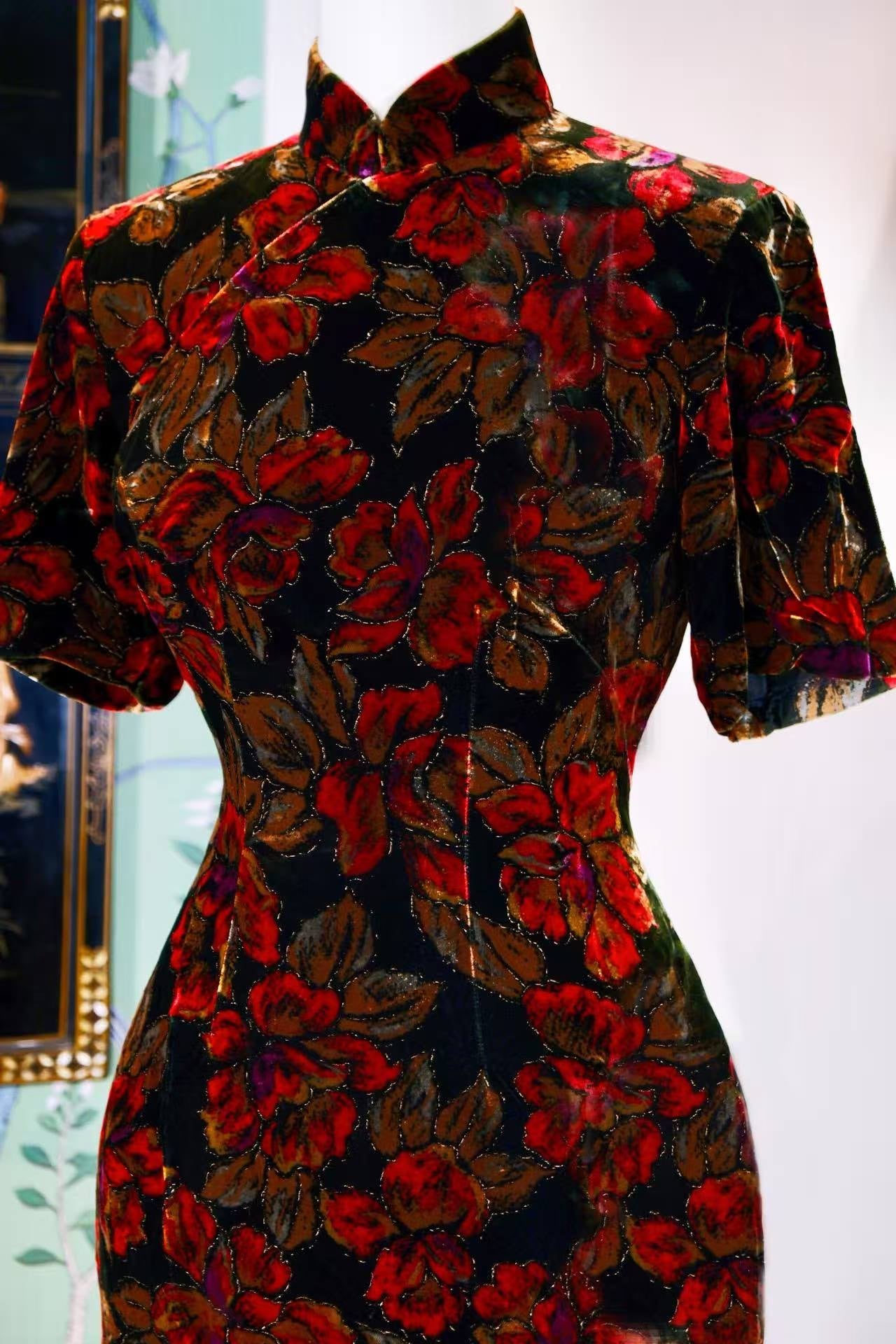
黑天鹅绒上的炽烈诗篇:六十年代香港产手绘描金油画旗袍。
天鹅绒深邃如墨的底子上,大朵牡丹以油画技法晕染——猩红花瓣边缘泛着赭石与绛紫的渐层,仿佛梵高调色盘里的炽烈笔触,又似徐渭泼墨牡丹的狂狷骨相。金笔勾勒的轮廓是点睛之笔:每道金线皆是写意皴法,既承袭宋代院体花鸟的工谨,又暗合岭南画派“撞水撞粉”的灵动,在暗色绒面上折射出晨曦透窗时金箔浮雕般的光泽。
此袍之珍,首在“三重工艺叠合”:天鹅绒织就暗纹肌理,油画印染赋予立体纵深,手绘描金再添层流动气韵。彼时香港旗袍匠人承袭广绣“钉金绣”的瑰丽传统,却将金线从刺绣针法解放为绘画语言,使每朵金边牡丹既存《簪花仕女图》的雍容,又具西方油画的光影跳脱。
面料上红金交织的牡丹,实为中西美学在方寸间的共振:其花型饱满如唐代铜镜纹饰,色彩浓烈却暗藏宋代汝窑天青底色上的红斑窑变,而描金线条的锐利,则让人联想到明代漆器上的戗金工艺。
六十年代香港作为东西方文化熔炉,此类“油画印花+手绘描金”旗袍存世极少,因天鹅绒印染需高温固色,描金又需在绒毛间隙毫厘不差,稍有不慎便毁料。此袍能保存至今,绒面无起球、金线无脱落,实为工艺史的活化石。它不仅是衣饰,更是一卷流动的《牡丹亭》:墨底如杜丽娘夜游的幽寂花园,红金牡丹则似柳梦梅笔下“姹紫嫣红”,在描金勾勒间,唱出东方古典与现代摩登交织的绝响。
🔥 A Fiery Poem on Black Velvet: A Vintage 1960s Hong Kong Hand-Painted Gilt-Accented Oil-Paint Cheongsam
On the deep, ink-like base of the velvet, large peonies are rendered and blended using the oil painting technique—the scarlet petals boast a gradient of ochre and dark crimson at the edges, resembling the fiery strokes of Van Gogh’s palette, yet carrying the wild, uninhibited spirit of Xu Wei’s ink peonies. The gilt outline is the defining touch: every gold line is rendered with the expressive cunfa (texture strokes) technique, inheriting the meticulousness of Song Imperial Academy flower-and-bird painting while subtly aligning with the dynamic "colliding water and powder" technique of the Lingnan School. On the dark velvet surface, it reflects a gold foil relief-like sheen when morning light streams through a window.
The rarity of this robe lies first in the "triple superposition of craftsmanship": the velvet is woven with an inherent subtle texture, the oil-paint printing gives it three-dimensional depth, and the hand-painted gilding adds a final layer of flowing vitality. At the time, Hong Kong cheongsam artisans inherited the magnificent tradition of "gold couching" (dìng jīn xiù) from Cantonese embroidery, yet they freed the gold thread from embroidery stitches and transformed it into a painting language. This makes every gilt-edged peony possess both the elegance of the Court Ladies Adorning Their Hair with Flowers (簪花仕女图) and the dynamic interplay of light and shadow found in Western oil painting.
The interplay of red and gold peonies on the fabric is a symbiotic resonance of Chinese and Western aesthetics within a small frame: the full flower shape is like the patterns on Tang Dynasty bronze mirrors; the intense colors conceal the red kiln-transmutation spots found on the pale blue-grey glaze of Song Dynasty Ru ware; and the sharpness of the gilt lines recalls the qiāng jīn (engraved and inlaid gold) technique on Ming Dynasty lacquerware.
In 1960s Hong Kong, a crucible of Eastern and Western cultures, such cheongsams featuring "oil-paint printing + hand-painted gilding" are extremely rare. This is because velvet printing requires high temperatures for color setting, and the gilding must be applied to the minute gaps in the velvet pile with absolute precision—a slight error would ruin the material. That this robe has survived to this day, with no pilling of the velvet and no flaking of the gold thread, makes it a living fossil of technological history. It is more than just clothing; it is a flowing Peony Pavilion (Mǔdān Tíng): the dark base is like Du Liniang’s secluded garden during her nocturnal journey, while the red and gold peonies are like the "brilliant and dazzling crimson" (姹紫嫣红) described in Liu Mengmei’s dreams. Outlined in gilt, it sings the ultimate resonance of Oriental classicism and modern glamour.