深圳溯源
无法加载取货服务可用情况
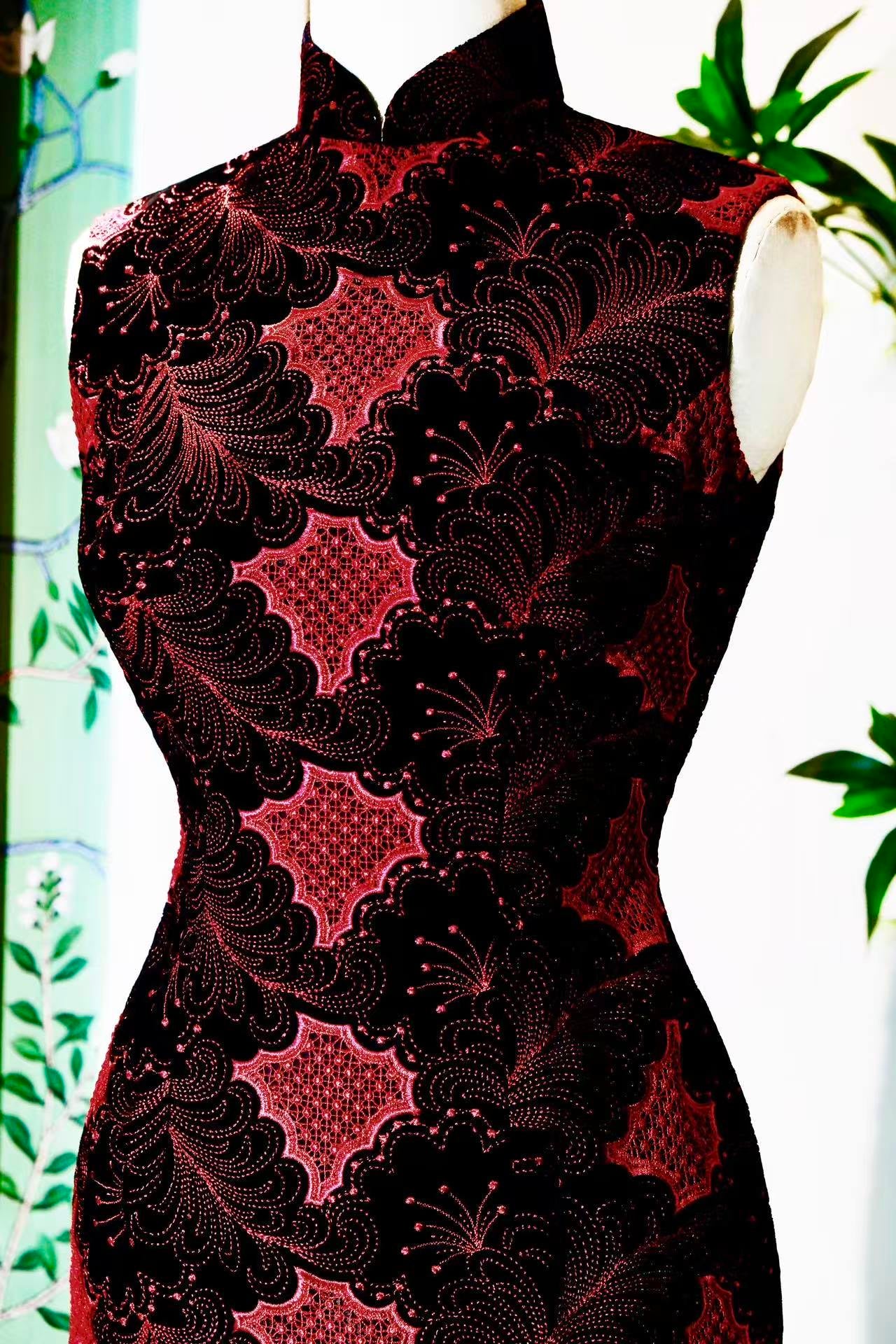
分享一件上世纪六十年代香港黑缎绒地海浪纹旗袍:
此件旗袍以黑色天鹅绒为地,其上以猩红丝线满绣海浪纹,
香港作为20世纪中期远东纺织重镇,
六十年代香港旗袍正处于“传统形制”向“国际时装”的转型期。
此袍的海浪纹并非单纯的装饰,而是承载着特殊时代的精神隐喻。
当黑绒的深邃与猩红的炽烈在针脚间交织,
This cheongsam is set on a base of black velvet (黑色天鹅绒), with the entire surface embroidered with scarlet silk threads in a sea-wave pattern, forming a typical Art Deco style motif. The wave pattern is laid out in a symmetrical composition, where each wave crest is based on a fan shape, filled with radiating short stitches to create a visual rhythm of "water ripples" (水纹涟漪). The choice of a black-and-red contrast inherits the ritual colors of the traditional "Black and Vermillion System" (玄纁制度) in China, where black is revered and red is used as ornamentation. It also aligns with the Art Deco movement's fascination with the metallic luster and contrasting colors of the industrial age—as stated in the Manual of Decorative Arts: "Red is the color of the mechanical age, black is the canvas of the universe."
Hong Kong, as a key textile center in the Far East during the mid-20th century, saw its machine embroidery technology fuse European mechanical craftsmanship with Lingnan embroidery aesthetics. In an era where machine embroidery was often more precious than hand embroidery, this robe used machinery to replace manual work. Dense flat gold stitching (平金绣) outlines the wave crests, and various lengths of radiating tacking stitches (钉线绣) fill the interior, creating a three-dimensional texture of a "thousand layers of waves" (千重浪). Notably, the jagged treatment of the wave edges abstracts the mountain imagery from the traditional Chinese "Seawater and Cliff Pattern" (海水江崖纹) into geometric lines, retaining the auspicious meaning of "Fortune as vast as the sea and Longevity as stable as the mountains" (福山寿海) while conforming to the Art Deco pursuit of "mechanized cutting" aesthetics.
The 1960s Hong Kong cheongsam was in a transitional phase from "traditional form" to "international fashion." This robe's sleeveless design and high-slit cut depart from the traditional straight silhouette, emphasizing the female body's curves, echoing the fashion declaration reported in the Hong Kong Industrial and Commercial Daily at the time that "the new style cheongsam must fit like a second skin." The combination of black velvet and machine embroidery is particularly rare—at that time, Hong Kong cheongsams were mostly made of brocade or satin, and velvet was seldom used for cheongsams due to its tendency to shed fibers. This piece's machine embroidery reinforces the velvet surface, preserving the fabric's luxurious texture while enhancing its practicality, making it a singular example of technical innovation.
The sea-wave pattern on this robe is not merely decorative; it carries the spiritual metaphor of a special era. With the economic boom of 1960s Hong Kong, the ocean, as a symbol linking the world, was imbued with the enterprising spirit of "riding the wind and breaking the waves" (乘风破浪). The introduction of the Art Deco style, as scholar Leo Ou-fan Lee noted in Shanghai Modern, indicated that "decorative art is the manifestation of colonial modernity, yet it sprouted new branches in the Oriental context." This cheongsam uses traditional auspicious patterns as its structure, modern mechanical craftsmanship as its substance, and Oriental aesthetics as its soul, making it a tangible witness to Hong Kong as the "nexus of East-West culture."
When the depth of the black velvet interweaves with the intensity of the scarlet in the stitches, and when the rhythm of the sea-waves collides with the geometric order of Art Deco, this cheongsam transcends the category of clothing, becoming a slice of the era solidified in silk thread. It is not only a pinnacle of the 1960s Hong Kong fashion industry but also an elegant turn of Oriental aesthetics in the wave of globalization—its scarcity lies not in the preciousness of its material, but in its use of needle and thread to write an epic dialogue about tradition and modernity, East and West, across the warp and weft.