深圳溯源
60年代 - 黑金经纬里的时光密码——六十年代香港织金烧花丝绒Art Deco古董旗袍 | 1960s - Time Codes in Black and Gold: 1960s Hong Kong Metallic Burn-out Velvet Art Deco Antique Qipao
60年代 - 黑金经纬里的时光密码——六十年代香港织金烧花丝绒Art Deco古董旗袍 | 1960s - Time Codes in Black and Gold: 1960s Hong Kong Metallic Burn-out Velvet Art Deco Antique Qipao
无法加载取货服务可用情况
黑金经纬里的时光密码——六十年代香港织金烧花丝绒Art Deco古董旗袍
一、图案解构:几何诗学与东方肌理的共振
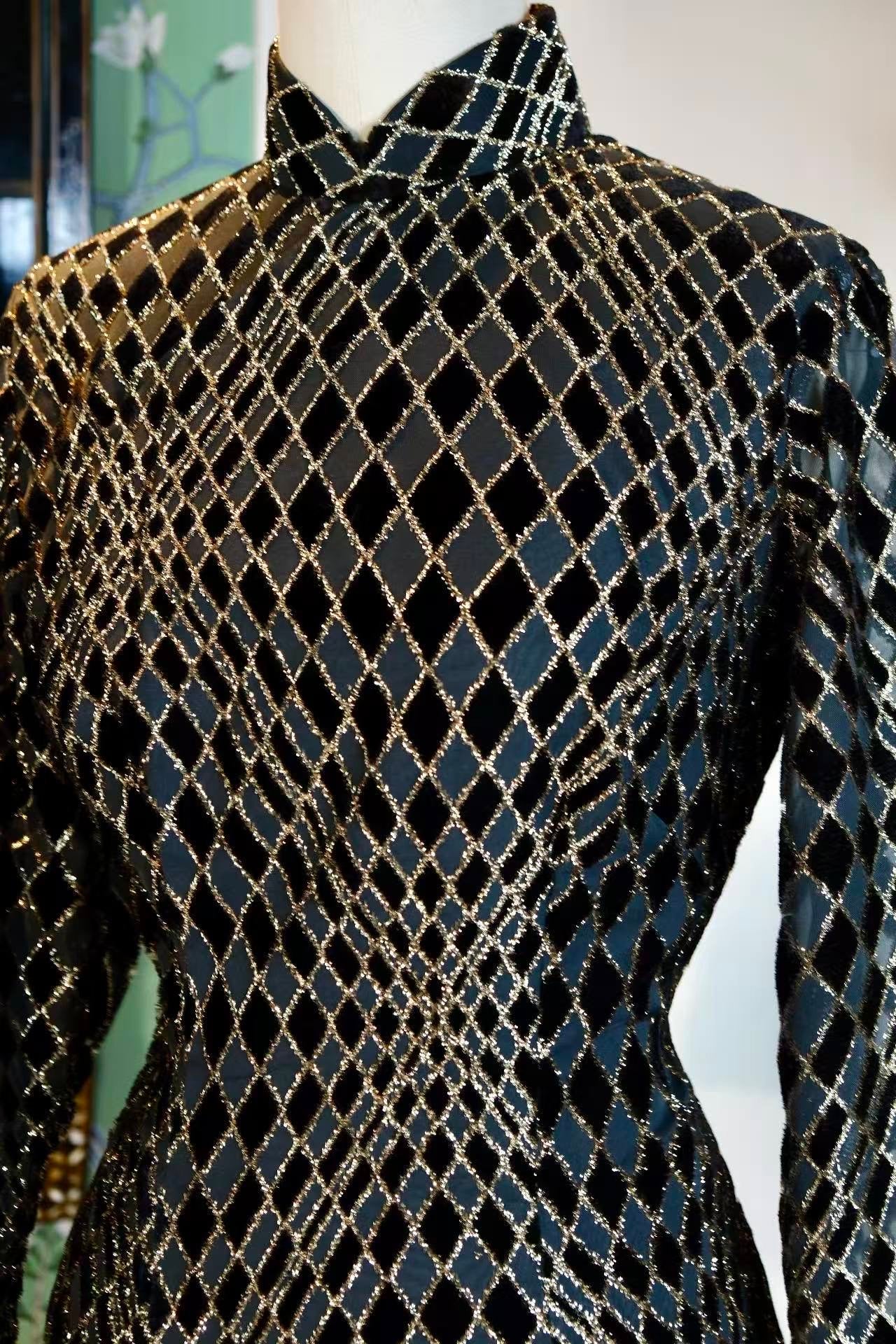
这件旗袍最摄人心魄处,是其通体覆盖的菱形几何纹。
二、工艺绝唱:织金烧花,丝绒上的浮雕诗
“织金烧花”工艺堪称丝绒界的“活化石”。工匠以金线为骨,
三、Art Deco魂魄:摩登东方的时空切片
上世纪六十年代的香港,是东西方文明碰撞的熔炉。
四、稀缺性:孤品级的时光标本
香港产古董旗袍本就稀少,织金烧花丝绒材质者更是凤毛麟角。
五、结语:穿在身上的历史诗篇
当黑金菱形纹在光影中流转,
Time Codes in Black and Gold: 1960s Hong Kong Metallic Burn-out Velvet Art Deco Antique Qipao
I. Iconography: The Resonance of Geometric Poetics and Oriental Texture
The most soul-stirring feature of this Qipao is the lozenge (diamond) geometric motif that blankets the entire garment. Metallic gold threads outline the structured diamond frames, while the burn-out velvet creates deep, shadowed textures within. Between these black and gold latitudes, one finds the rational order of Art Deco intertwined with the subtle rhythms of Oriental aesthetics. The diamond pattern is a modern deconstruction of the traditional "Fang Sheng" (interlocking rhombuses) motif, symbolizing "eternal connection and enduring luck." Here, the frames stand as firm as architectural pillars, while the dark velvet textures flow like ink wash—a duality that echoes the philosophy of The I Ching: "The firm and the supple displace each other, giving rise to continuous change."
II. A Masterpiece of Craft: Metallic Burn-out—A Relief Poem on Velvet
The "Metallic Burn-out" (Zhi Jin Shao Hua) technique is a "living fossil" in the world of velvet. Artisans use gold thread as the bone and velvet as the flesh; they first weave a distinct metallic grid, then use a specialized etching process to "burn away" excess pile. This leaves the gold outlines as sharp as if carved by a blade while preserving the velvet's legendary softness. The requirements are immense: the gold thread must be spun from real gold foil, and the "firing" process requires such precision that a slight error would incinerate the base fabric. In 1960s Hong Kong, only a handful of masters possessed this skill. Each piece is truly a unique treasure of "inch of silk, inch of gold."
III. The Soul of Art Deco: A Temporal Slice of Modern Orient
1960s Hong Kong was a melting pot of Eastern and Western civilizations. This Qipao’s Art Deco style is a perfect microcosm of that era. Its tailoring discards the complex trimmings of tradition in favor of fluid, linear silhouettes that contour the body. The high collar stands tall like a skyscraper, and the three-quarter sleeves offer a crisp, clean finish—contours that align with the "Machine Aesthetic" of simplicity and power. The repetitive diamond pattern beats with the syncopated rhythm of jazz, full of urban vitality. It is a materialization of the "magnificent yet desolate" urban imagery of Eileen Chang's prose.
IV. Scarcity: A Unique Specimen of Time
Hong Kong antique Qipaos are rare, but those crafted from metallic burn-out velvet are truly one in a million. In the 1960s, despite the industry's prosperity, this specific craft was reserved for high-end bespoke orders due to its prohibitive cost. Given that velvet is delicate and gold threads are prone to breakage, finding a piece in such pristine condition is like finding a "lost pearl from the sea." It retains the original labels and stitching of its era—every fold hides a story of the old days.
Conclusion: A Historical Poem Worn on the Body
As the black and gold diamonds shift in the light, one can almost hear the tram bells of 1960s Hong Kong and see the silhouette of a tailor hunched over a desk in an old tenement house. This Qipao is more than clothing; it is "liquid architecture, a poem worn on the body." To collect it is to preserve an unfading memory of Oriental modernity.
分享