深圳溯源
无法加载取货服务可用情况
衣服尺寸:
胸围/腰围/臀围:90/80/98 厘米
衣长:88 厘米
细节描述:
一、形制与纹样:素面胜繁花
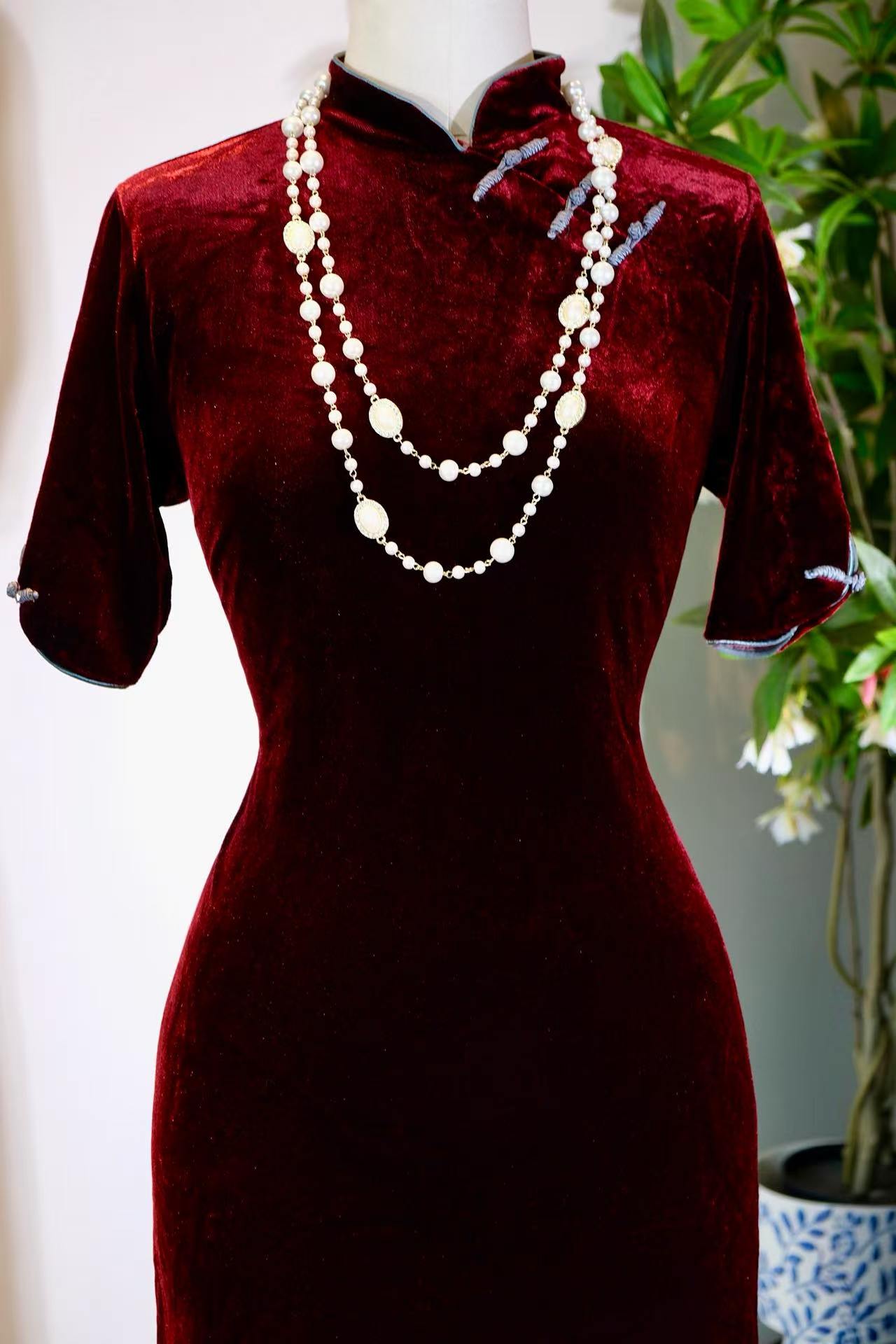
此件旗袍以酒红金丝绒为料,未施刺绣纹样,却以材质本身的华贵暗藏机杼。金丝绒的织造工艺,可追溯至明代《天工开物》所载“绒花”技法,其绒毛细密如粟粒,光线流转间泛出琥珀色光泽,恰似《红楼梦》中“软烟罗”的现代演绎。立领、斜襟、盘扣皆为经典形制,领口三枚盘扣以浅灰色丝线盘绕,形如“如意结”,暗合《长物志》“宁古无时”的审美追求。袖口微敞,边缘以浅灰滚边勾勒,如工笔画的细劲线条,于浓烈中透出清雅,正应了张爱玲所言“素色是最强烈的颜色”。
二、时代印记:海岛风华的回响
上世纪九十年代的台湾,正处于传统与现代的交汇点。彼时旗袍虽已褪去日常服饰的光环,却在高端定制领域焕发新生。这件旗袍的剪裁尤为考究:腰线略高于自然腰位,裙摆呈A字微张,既保留民国旗袍的曲线美,又融入西方立体裁剪的利落感,恰如余光中笔下“中西合璧的文化混血儿”。台湾产金丝绒面料,因当时进口织机稀缺,产量极低,存世者多被家族珍藏。
三、稀缺性:时光淬炼的孤品
金丝绒材质的娇贵,使其难以经受岁月侵蚀——绒毛易倒伏、褪色,能完整保存至今者,堪称凤毛麟角。此件旗袍历经三十余载,绒面仍饱满挺括,色泽未减分毫,足见当年工艺的精湛与藏家的珍视。相较于同期大陆流行的化纤面料旗袍,台湾产金丝绒旗袍因产量稀少、工艺复杂,如今在古着市场已成“可遇不可求”的收藏级单品。
四、艺术风格:东方的含蓄与热烈
酒红金丝绒的浓烈,与立领盘扣的含蓄形成奇妙张力,恰如中国传统美学中的“中和之美”。这种风格,既不同于民国旗袍的素净淡雅,也异于当代旗袍的夸张创新,而是带着九十年代特有的“温润的奢华”——不张扬却自显贵气,不繁复却暗藏匠心。它让人想起林语堂在《生活的艺术》中所言:“东方人的美,在于‘藏’字,如深闺佳人,半遮半掩间更见风致。”
五、结语:穿在身上的历史
这件旗袍,不仅是一件衣物,更是一段被织物封存的时光。它见证了九十年代台湾的服饰风尚,承载了金丝绒工艺的巅峰水准,更以“素面朝天”的姿态,诠释了中国传统美学的永恒魅力。正如《衣冠中国》所写:“每一件古董衣,都是历史的碎片,拼凑出时代的容颜。”当指尖抚过那细腻的绒面,仿佛能触摸到三十年前某个夜晚,一位女子穿着它赴宴时的心跳——那是属于东方的、含蓄而热烈的,永不褪色的风华。
Measurements / Size Guide:
Bust / Waist / Hips: 90/80/98 cm
Total Length: 88 cm
Detailed Description:
This cheongsam (qipao) is crafted from wine-red gold-silk velvet. Unadorned by embroidery, it hides its ingenuity within the sheer luxury of the material. The weaving technique of gold-silk velvet can be traced back to the "Velvet Flower" methods recorded in the Ming Dynasty's Tiangong Kaiwu. Its pile is as fine as grains of millet, emitting an amber glow as light shifts across it—a modern interpretation of the "Soft Smoke Gauze" described in Dream of the Red Chamber. The standing collar, diagonal closure, and frog buttons follow classic forms; three "Ruyi Knot" buttons, hand-wound with light grey silk thread, align with the aesthetic pursuit of "valuing the ancient over the trendy" found in Treatise on Superfluous Things. The slightly flared cuffs, edged with light grey piping, resemble the precise, forceful strokes of a fine-brush painting—elegant amidst intensity, echoing Eileen Chang’s sentiment that "plain color is the most intense color."
In the 1990s, Taiwan sat at the crossroads of tradition and modernity. While the qipao had stepped back from daily wear, it underwent a renaissance in the realm of high-end bespoke tailoring. The cut of this piece is exceptionally refined: the waistline is slightly higher than the natural waist, and the hem flares into a subtle A-line. This preserves the curvaceous beauty of Republic-era qipaos while integrating the crispness of Western 3D draping—resembling what poet Yu Kwang-chung called a "cultural hybrid of East and West." Due to the scarcity of imported looms in Taiwan at the time, the production of such gold-silk velvet was extremely low, with most surviving pieces kept as family heirlooms.
The delicacy of gold-silk velvet makes it susceptible to the ravages of time; the pile can easily collapse or fade. To find a piece preserved perfectly today is as rare as a "phoenix feather or unicorn horn." After more than thirty years, the velvet of this qipao remains full and structured, its color undiminished—a testament to both the exquisite craftsmanship of the era and the meticulous care of the collector. Compared to the synthetic fiber qipaos popular in mainland China during the same period, these Taiwanese velvet pieces are "once-in-a-lifetime" collectibles due to their limited yield and complex production.
The intensity of the wine-red velvet creates a fascinating tension with the restraint of the high collar and frog buttons, embodying the "Aesthetic of Neutrality" (Zhonghe zhi Mei) in traditional Chinese thought. This style differs from the plainness of early Republic qipaos and the exaggerated innovations of contemporary ones. Instead, it carries the "mellow luxury" unique to the 1990s—dignified without being ostentatious, ingenious without being complex. It brings to mind Lin Yutang’s words in The Importance of Living: "The beauty of the Oriental lies in the word 'Concealment'... a subtle grace found in half-hidden charm."
This qipao is more than a garment; it is a moment in time sealed in fabric. It witnessed the fashion trends of 1990s Taiwan, represents the pinnacle of gold-silk velvet craftsmanship, and interprets the eternal charm of Chinese aesthetics through its "unadorned" posture. As written in Apparel in China: "Every vintage garment is a fragment of history, piecing together the visage of an era." As fingertips brush the delicate velvet, one can almost feel the heartbeat of a woman heading to a banquet thirty years ago—an Oriental, reserved yet passionate, and eternally unfading elegance.