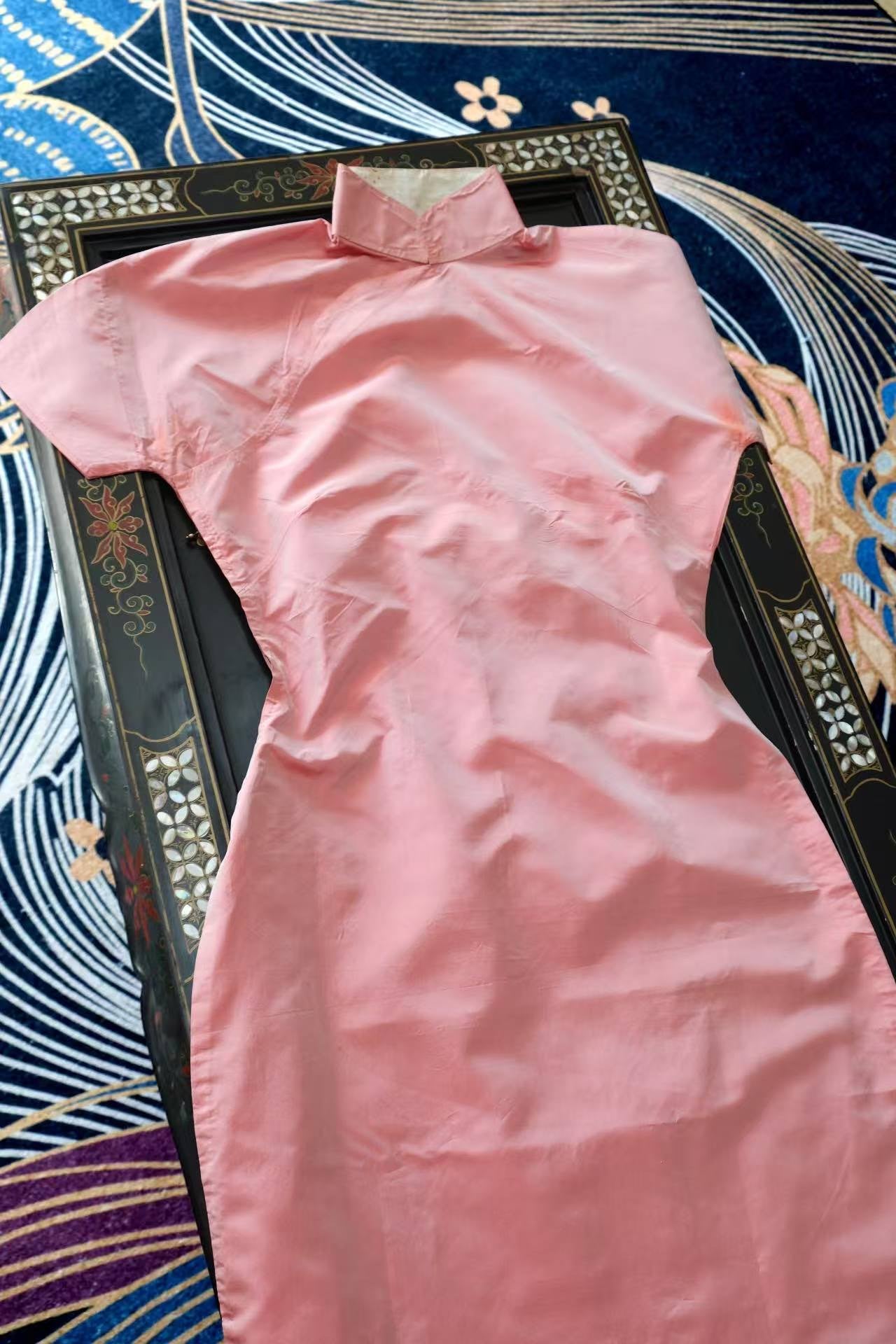
五十年代泰丝幻光泡泡袖蝴蝶结大陆产古董旗袍套装:时光淬炼的东方美学
在时光的长河中,每一件古董旗袍都是凝固的历史,是东方美学的立体注脚。这件上世纪五十年代中期的泰丝幻光泡泡袖蝴蝶结大陆产古董旗袍套装,宛如从旧上海的弄堂风月里走来的佳人,以丝绸的温润与剪裁的诗意,诉说着一个时代的优雅密码。
旗袍采用泰国进口 premium silk,泰丝以其纤维粗壮、光泽度高著称,不同于江南丝绸的婉约,多了几分热烈与张扬。在光线的折射下,面料呈现出“幻光”效果,如同晨曦穿透薄雾,霞光在丝绸表面流转,粉色调如桃花初绽,温柔中透着贵气。这种材质在五十年代的大陆产旗袍中尤为稀缺——彼时中泰外交关系特殊,泰丝进口量极少,多为高端定制旗袍所用,如今存世者更是凤毛麟角,堪称“丝绸中的琥珀”。
泡泡袖的设计是这套旗袍的灵魂所在。袖口蓬松如云朵,恰似《红楼梦》中“云肩罗袖”的现代变奏,既保留了东方女性的柔美,又融入了五十年代西方时尚的浪漫元素(当时上海、天津等大城市的裁缝坊常借鉴巴黎时装的泡泡袖造型)。腰部的黑色蝴蝶结则是点睛之笔:黑色丝绒与粉色泰丝形成强烈对比,蝴蝶结的“结”字暗合“同心结”的意象,《诗经·邶风》有云:“结发同枕席,黄泉共为友”,寓意情意绵长;而蝴蝶结的造型又似“比翼双飞”的蝴蝶,呼应着五十年代女性追求独立与浪漫并存的时代精神。
旗袍保留了传统立领的经典造型,领口挺括,线条流畅,从领口到裙摆一气呵成,凸显女性的修长身姿。腰部收褶自然,贴合身体曲线,既延续了旗袍“引领时尚,重塑东方美学之曲线”的精髓,又融入了五十年代“简约实用”的设计理念(五十年代中期,大陆旗袍受苏联风格影响,逐渐从繁复走向简洁,但依然保留了东方剪裁的灵魂)。这种“改良式”旗袍,正是当时中西文化交融的见证——正如张爱玲在《更衣记》中所言:“旗袍的下摆忽长忽短,袖子忽肥忽瘦,无非是时代的镜子。”
五十年代中期的大陆产古董旗袍,正处于“传统旗袍向现代旗袍转型”的关键节点:一方面,它保留了立领、收腰、开衩等传统元素;另一方面,泡泡袖、蝴蝶结等设计又融入了西方时尚的符号。这种“过渡性”使得它在服装史上具有极高的研究价值。而泰丝材质、手工缝制的工艺(从旗袍的针脚可看出,每寸针脚均匀,无任何机器痕迹),以及保存完好的状态,更让它成为“活化石”般的存在——它不仅是服饰,更是一个时代的缩影,是研究五十年代社会文化、审美变迁的珍贵实物。
这套泰丝幻光泡泡袖蝴蝶结旗袍套装,如同一本打开的史书,每一道褶皱里都藏着故事,每一缕光泽中都映着时光。它让我们在触摸历史的同时,也触摸到了东方美学的永恒脉搏。
1950s Iridescent Thai Silk Qipao Suit with Puff Sleeves and Bow: A Refined Epic of Oriental Aesthetics
The Amber of Silk: A Rare Luster Within the river of time, every antique qipao is a frozen chapter of history. This mid-1950s qipao suit, crafted from premium Thai silk, exudes the aura of a lady walking out from the lane-houses of old Shanghai. Unlike the subtle gentleness of Jiangnan silk, Thai silk is known for its robust fibers and high-intensity luster. Under light, the fabric creates an "iridescent" effect—resembling dawn breaking through mist. This material was exceptionally rare in mainland China during the 1950s due to limited imports, making this garment a "living amber" of the silk world.
Puff Sleeves and Bows: A Dialogue of East and West The soul of this suit lies in its puff sleeves. The billowing cuffs resemble clouds, serving as a modern variation of the traditional "Cloud Shoulder" (Yunjian). It preserves feminine softness while embracing the romantic elements of 1950s Western fashion—a style often adopted by elite tailors in Shanghai and Tianjin who looked toward Paris for inspiration. The black velvet bow at the waist provides a striking contrast; the "knot" (Jie) symbolizes eternal devotion, while the butterfly shape echoes the 1950s spirit of seeking both independence and romance.
The Silhouette: A Mirror of Transition The qipao retains the classic standing collar and fluid lines, accentuating the wearer's slender form. The natural waist pleats reflect the 1950s "minimalist and functional" design philosophy, influenced by the burgeoning Soviet style of the era, yet remaining rooted in the soul of Oriental tailoring. As Eileen Chang wrote in Chronicle of Changing Clothes: "The hemline and sleeves of the qipao rise and fall, widen and narrow—they are but the mirrors of their time."
Conclusion: A Cultural Fossil This suit stands at a critical juncture in costume history: the transition from traditional to modern qipao. Its handmade craftsmanship—visible in the uniform, manual stitching—and its pristine condition make it a "living fossil." It is more than just attire; it is a microcosm of an era, a precious physical artifact for studying the social culture and aesthetic evolution of mid-century China.