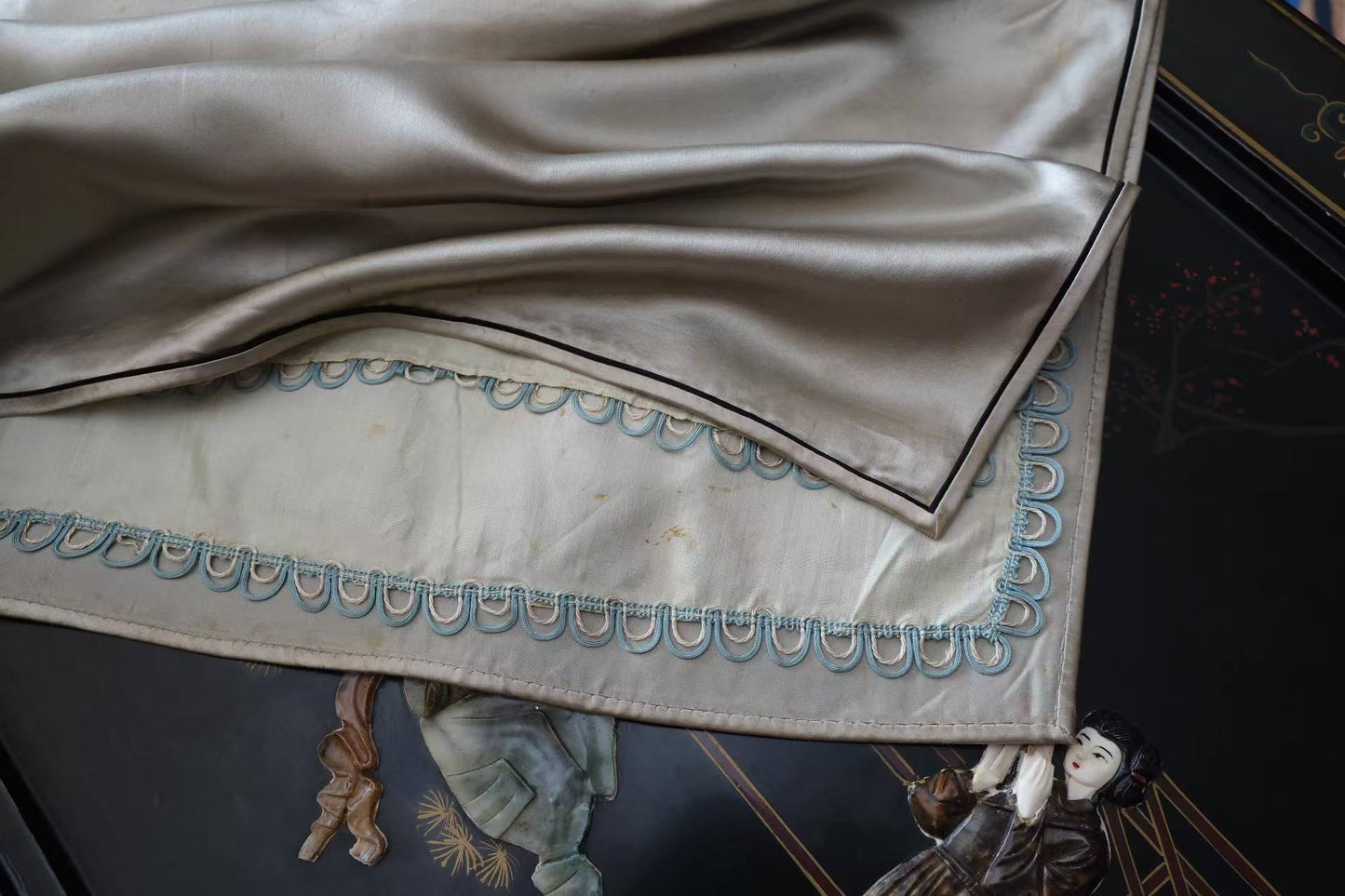
三十年代真丝素缎旗袍:素华流年中的海派风华
此件旗袍选用真丝素缎为材,缎面莹润如月,肌理细腻若绸,乃民国时期高档面料之典范。素缎无纹,却以材质本身的光泽与垂坠感取胜,恰如《释名·释采帛》所言“素,朴素也,裁之为衣,无华饰也”,以素为美,反显贵气天成。
尤为珍贵者,乃其“活衬”工艺——内衬下摆缀手工花边里衬,可随步履轻晃而摆动,如《洛神赋》中“飘飘兮若流风之回雪”,为端庄之姿添一抹灵动,此设计在三十年代旗袍中极为罕见,足见匠人巧思。
三十年代的上海,租界林立,中西交融,旗袍作为“国服”象征,成为时代精神的载体。此件旗袍的“素缎为体,细节为用”,恰是海派服饰文化的缩影:素缎的简约,暗合西方现代主义“少即是多”的设计理念;而盘扣、云纹花边等元素,则是对本土文化的坚守与重构。
尤为难得的是,其“活衬”工艺打破了传统旗袍内衬的固定模式——当穿着者行走时,花边里衬随动作轻摆,如《诗经·卫风》中“巧笑之瑳,佩玉之傩”的动态之美。这种“静中有动”的设计,在现存三十年代旗袍实物中极为稀见,堪称“移动的服饰艺术”。
存世的三十年代旗袍多以印花、织锦为饰,素缎旗袍本就稀少,加之“活衬花边”工艺者,更是凤毛麟角。据《上海服饰志》记载,此类旗袍多为沪上名媛定制,由红帮裁缝手工制成,每件耗时数月,故存世量极低。
此袍虽历八十余载,仍保存完好,素缎光泽未减,花边绣线无损,实为研究民国服饰工艺的活化石。其价值不仅在于材质与工艺,更在于它承载了那个时代女性的审美追求——既保留传统之端庄,又拥抱现代之自由,如一朵素净的玉兰,开在历史的褶皱里,暗香浮动。
这件真丝素缎旗袍,是素与华的辩证,是传统与现代的对话,更是历史与当下的共鸣。它以素缎为纸,以纹饰为墨,在时光中写下一段关于美的传奇。正如沈从文在《中国古代服饰研究》中所言:“服饰之变,实为时代精神之镜像。”此袍之稀缺,正在于它定格了三十年代上海最灵动的风华,成为永不褪色的时代印记。
1930s Plain Silk Satin Qipao: Shanghai Elegance in the River of Time
The Nobility of Simplicity: Plain Silk Satin This qipao is crafted from premium plain silk satin (Su Duan), a material where the surface is as lustrous as moonlight and the texture as delicate as fine silk—a definitive example of high-end fabrics from the Republic era. Without ornate patterns, it triumphs through the inherent sheen and drape of the silk itself. As the ancient lexicon Shi Ming notes: "Su (plain) implies simplicity; when tailored into a garment, it eschews flamboyant decoration." In this context, simplicity becomes the ultimate form of innate nobility.
The Ingenious "Floating Lining" (Huo Chen) The most precious feature of this piece is the "Floating Lining" craft. The hem of the interior lining is adorned with handcrafted lace or floral borders, designed to sway gently with every step. This evokes the imagery from the Ode to the Goddess of the Luo River: "Floating like the drifting wind over swirling snow." This design, adding a layer of dynamic vitality to a dignified silhouette, is exceptionally rare in 1930s qipaos and demonstrates the profound ingenuity of the artisan.
A Microcosm of Haipai Culture In 1930s Shanghai, a hub of East-West synthesis, the qipao became a vessel of the zeitgeist. The philosophy of "Plain satin as the body, intricate detail as the utility" perfectly encapsulates Haipai fashion: the minimalist satin aligns with the Western modernist "Less is More" ideology, while the frog buttons and cloud-patterned lace reflect a steadfast commitment to and reconstruction of local culture.
The Rarity of a "Moving Work of Art" While most surviving 1930s qipaos feature prints or brocades, plain satin versions are rare, and those with "floating lace linings" are truly one-of-a-kind. According to the Shanghai Costume Annals, such qipaos were bespoke creations for the city’s socialites, handcrafted by "Hong Bang" (Red Gang) tailors over several months. This piece remains in pristine condition after eighty years, serving as a "living fossil" of Republican-era craftsmanship.
Conclusion: An Immortal Impression As the scholar Shen Congwen noted in Research on Ancient Chinese Costumes: "Changes in attire are the mirror of the spirit of the age." The rarity of this qipao lies in its ability to freeze the most dynamic grace of 1930s Shanghai into an immortal impression—a pure magnolia blooming within the folds of history.