深圳溯源
无法加载取货服务可用情况
衣服尺寸:
胸围/腰围/臀围:90/68/92 厘米
衣长:133 厘米
细节描述:
【形制与风骨:移步换影的民国遗韵】
这件诞生于上世纪六十年代末期的台湾产古董旗袍,
在形制上,它严格恪守着民国以来的旗袍美学:高领紧贴下颌,
【图案与细节:指尖上的云纹密码】
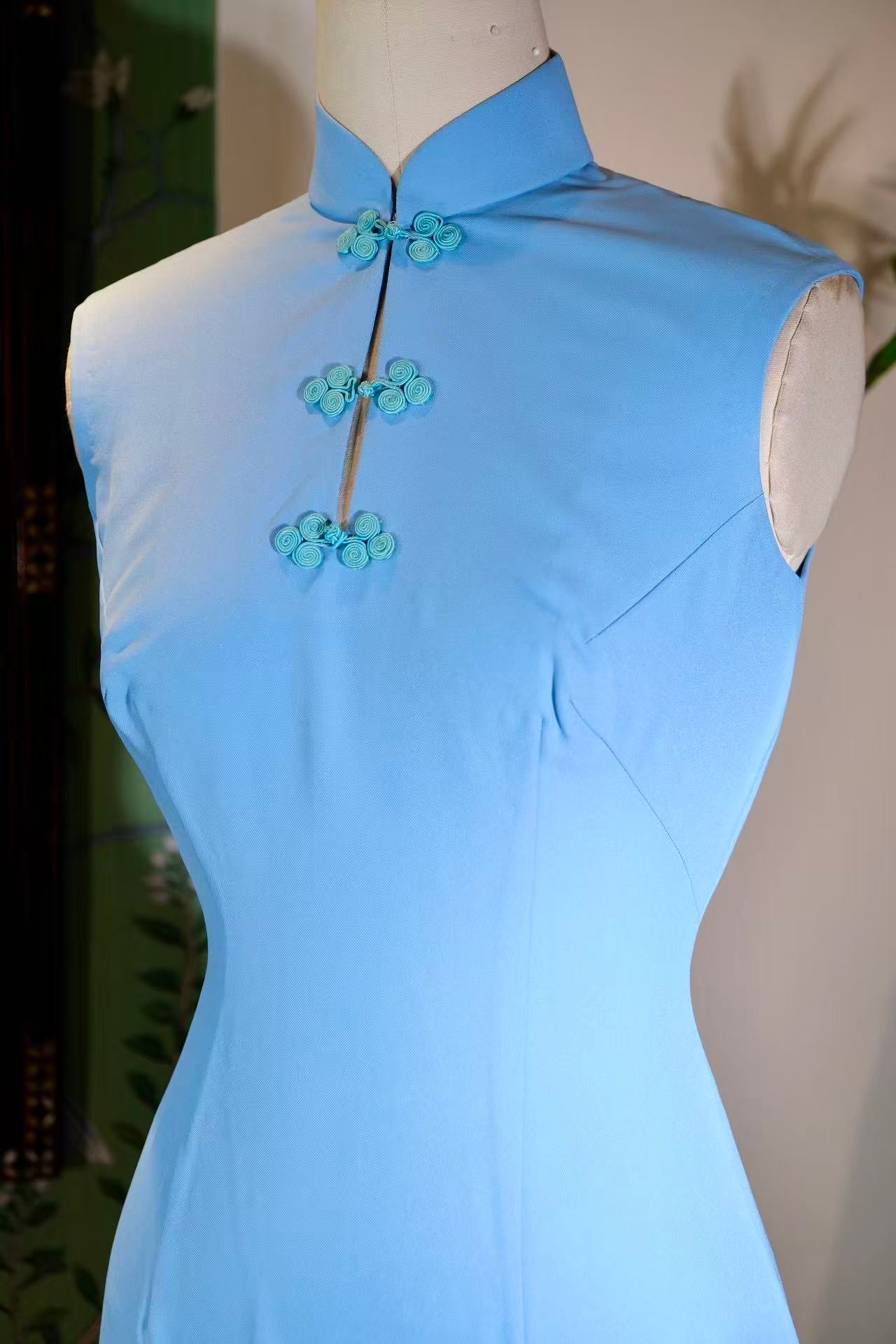
若说旗袍的布料是画纸,那么领口那几枚“盘香如意扣”
这并非普通的纽扣,而是以同色系但略深一度的丝线手工盘织而成。
盘扣的排列并非繁复堆砌,而是极简的“三对”布局,
【故事与考据:那一湾浅浅的乡愁】
六十年代末的台湾,正处于经济起飞与文化寻根的十字路口。彼时,
这件旗袍的面料,看似素雅,实则大有乾坤。
在那个物质尚不丰沛的年代,拥有一件如此色泽纯净、
【稀缺性与艺术价值:流动的博物馆】
从服装史学的角度来看,这件旗袍具有极高的标本价值。
1. 时代断代清晰:六十年代末的旗袍,处于“海派旗袍”
2. 手工技艺的绝唱:现代工业早已能批量生产仿盘扣,
3. 色彩美学的典范:在那个染织技术尚未完全工业化的年代,
【结语】
这不仅仅是一件衣服,它是一段凝固的历史,是一幅流动的工笔画。
当你轻轻触摸它,仿佛能听到六十年代末台北的风声,
备注:这件旗袍与以下两件有着相同的来源/出处:
Measurements / Size Guide:
Bust / Waist / Hips: 90/68/92 cm
Total Length: 133 cm
Detailed Description:
Born in the late 1960s, this Taiwan-made antique qipao stands like a dignified lady from a scholarly family, poised in the long corridor of time. Eschewing flamboyant brilliance, it embraces a "Sky-Blue" (Tian Qing) hue—a shade rooted in the warmth of Song Dynasty porcelain. Hovering between blue and green, it possesses both the clarity of the sky and the depth of lake water.
In terms of form, it strictly adheres to the qipao aesthetics established since the Republican era: the high collar rests close to the jawline, sketching the slender neck unique to Oriental women. The sleeveless (or cut-away shoulder) design boldly reveals the lines of the arms—a subtle breakthrough from traditional conservatism and a reflection of the burgeoning female liberation movements of the 1960s. The tailoring is not the modern "hip-hugging" style; instead, it retains the spacious waist transitions and echoes of the "inverted bell sleeve" (Dao Da Xiu) era. As the wearer moves, the hem flutters, epitomizing the restrained charm of a "captivating glance."
If the fabric is the canvas, then the "Ruyi Coil Buttons" (Pan Xiang Ru Yi Kou) at the neckline are the finishing touch that brings the dragon to life.
These are no ordinary buttons; they are hand-woven from silk threads a shade deeper than the base fabric. Upon close inspection, each pair of frog fasteners curls into a vortex, resembling auspicious clouds or the head of a Ruyi scepter. In traditional Chinese culture, this "Ruyi Cloud Pattern" symbolizes luck and heart’s desire. In 1960s Taiwan, artisans integrated this ancient totem into daily wear—not just as decoration, but as a prayer for a beautiful life.
The buttons are arranged in a minimalist "triple-pair" layout, elegantly trailing down the right diagonal closure. This rhythmic play of spacing is a perfect realization of the traditional aesthetic concepts of "treating white space as black" and the "interplay of void and solid." Every twist of the silk thread represents the hours spent by a lady or a professional tailor under the lamp, forever freezing the warmth of time and the agility of fingertips within this small space.
Taiwan in the late 1960s stood at the crossroads of economic takeoff and cultural root-seeking. Although the qipao faced the impact of Western clothing, it remained the "battle armor" for formal occasions among the upper class and intellectual families who valued etiquette.
The fabric, seemingly simple, holds great depth. It is highly likely crafted from "Poplin," a textile that was the pride of Taiwan's weaving industry at the time. This fabric is crisp yet supple, with an excellent drape that maintains the qipao's sharp lines while allowing the body to breathe comfortably. In an era where material goods were not yet abundant, owning such a pure-colored, well-tailored qipao was no ordinary feat. It may have accompanied its owner to literati gatherings or appeared on Taipei’s Zhongshan North Road or by the Tamsui River on a spring afternoon. It witnessed the gentleness and resilience of Taiwanese women as they quietly absorbed modern civilization within the embrace of tradition.
From the perspective of costume history, this qipao possesses immense value as a specimen:
Clear Chronological Marker: As a piece from the late 60s, it sits at the tail end of the transition from "Shanghai-style" to modern reformed qipaos. It preserves core elements like the high collar and frog fasteners but pursues a more comfortable, daily-wear cut.
The Swan Song of Hand-Craftsmanship: While modern industry can mass-produce imitation buttons, the hand-woven texture, the luster of the silk, and the subtle creases left by time on this piece are biological traces that machines cannot replicate. It is the final echo of an era of "slow work for fine results."
A Model of Color Aesthetics: In an age before fully industrialized dyeing, achieving such an even, steady, and layered monochromatic tone was a remarkable feat. The use of "Sky-Blue" reflects the high aesthetic taste of the Taiwanese tailors of that era—it is as if the minimalist aesthetics of the Song Dynasty were being worn on the body.
This is not merely a garment; it is a frozen piece of history and a flowing fine-brush painting (Gongbi). When you touch it gently, you can almost hear the wind of late 60s Taipei and smell the faint aroma of tea from an old teahouse. It waits for a kindred spirit to continue its story for the next sixty years, letting that shade of Sky-Blue continue to circulate in the fragrance of time.
PS: This piece shares the same provenance as the two ones listed below: